《燕歌行》

Search documents
“床前明月光”里的“床”
Xin Lang Cai Jing· 2026-01-13 00:13
Group 1 - The article discusses the widespread popularity of Li Bai's poem "Quiet Night Thoughts," highlighting its emotional depth and connection to nostalgia for one's hometown [1] - The poem consists of four lines and twenty characters, expressing the feelings of a traveler missing home while observing the moonlight [1] - In 2015, UNESCO selected "Quiet Night Thoughts" as the only Chinese poem to be featured on commemorative stamps for World Poetry Day [1] Group 2 - A recent online article argues that Li Bai may have seen the moonlight from a "well railing" rather than from "beside the bed," referencing a long-standing debate about the interpretation of the poem [2] - This interpretation has historical roots, with earlier discussions suggesting that the term "bed" might refer to a "hu bed" or "maza," indicating that ancient homes may not have allowed moonlight to enter [2] - The article critiques this interpretation, emphasizing that regardless of the setting, the essence of the poem remains intact, as it captures the beauty of the moonlight [3]
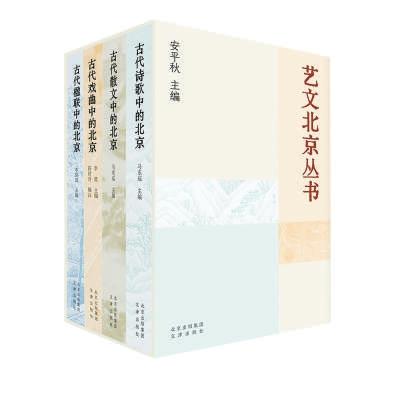
《艺文北京》丛书:从传统文脉中读北京
Bei Jing Ri Bao Ke Hu Duan· 2025-09-29 00:51
Core Insights - The article discusses the cultural significance of Beijing, highlighting its rich historical and literary heritage, which is explored through the publication of the "Art and Literature Beijing" series by Wenjin Publishing House [1][14] - The series aims to delve into the cultural connotations of Beijing through classical poetry, prose, drama, and couplets, showcasing the city's long-standing literary traditions [1][14] Summary by Sections Historical Context - Beijing has over 3,000 years of city-building history and more than 800 years as a capital, serving as a cultural center of the nation [1] - The article emphasizes the importance of ancient literary works that have become integral to the Chinese cultural identity [1] Poetry and Literature - The earliest known poetry referencing Beijing is attributed to the Han Dynasty, with the poem "Yanzhi Wangdan Ge" being highlighted as a significant work [5][6] - The Tang Dynasty is noted for its peak in Chinese poetry, with poets like Gao Shi and Li Yi contributing significantly to the literary landscape of Beijing [7] - The Song and Yuan Dynasties saw a shift in poetic themes, reflecting cultural exchanges and observations of minority customs [8] Prose and Essays - The Yuan, Ming, and Qing Dynasties marked a flourishing of prose, particularly travel essays that captured the beauty of Beijing's landscapes [9][10] - Notable prose writers from these periods, including Yuan Hongdao, depicted the changing seasons and the relationship between nature and the city [10] Cultural Practices and Drama - The development of drama, particularly Yuan Zaju, is highlighted as a significant cultural achievement, with prominent playwrights originating from Beijing [12][13] - The article discusses how the cultural landscape of Beijing evolved during the Jin and Yuan Dynasties, leading to a rich tapestry of artistic expression [13] Conclusion - The article concludes that Beijing's cultural identity is multifaceted, shaped by its historical significance and the contributions of various literary forms, making it a unique cultural hub [14]