《爱错》

Search documents
谁杀死了爆款热歌?
3 6 Ke· 2025-11-25 09:54
Core Insights - The music industry is witnessing a shift where artists are increasingly deviating from traditional hit-making formulas, as exemplified by Rosalía's recent album release and Lily Allen's surprise album drop [1][3] - The rapid rise of songs on platforms like TikTok is not translating into long-term streaming success, indicating a decline in the conversion rate from viral moments to sustained popularity [5][8][9] Group 1: Trends in Music Consumption - The time required for songs to reach 100,000 uses on TikTok has drastically decreased from 340 days in 2020 to just 48 days in 2025, showcasing the acceleration of song virality [5][8] - Despite the increased speed of song uptake, the impact of TikTok on Spotify plays has diminished, with a TikTok video in 2025 equating to only 275 Spotify plays compared to 738 in 2020 [8][9] - The phenomenon of songs achieving peak popularity quickly but fading just as fast is evident, with nearly 40% of songs in Spotify's top 50 reaching their peak on the release day [13][20] Group 2: The Changing Landscape of Hits - The current environment has led to a proliferation of short-lived hits rather than enduring classics, with many songs only achieving significant traction for a brief period [20][32] - The traditional model of music release, which once involved anticipation and a ceremonial launch, has been replaced by a formulaic approach driven by social media algorithms [25][31] - The music industry is increasingly characterized by "micro-hits," where success is often fleeting and reliant on momentary algorithmic favor rather than sustained audience engagement [32][36] Group 3: Challenges for Artists - Artists face a dilemma between chasing short-term viral success and creating music with lasting value, leading to a compressed career trajectory [43][44] - Data indicates that less than 60% of Spotify's Top 50 artists since 2017 have entered the charts with a single song, highlighting the need for multiple hits to achieve sustained success [38][41] - The age demographic of successful artists is skewing younger, with a significant portion of popular singles coming from artists under 36, suggesting a trend towards shorter career spans [41][43]


年轻人的“发疯”BGM,又变异了
3 6 Ke· 2025-11-11 10:23
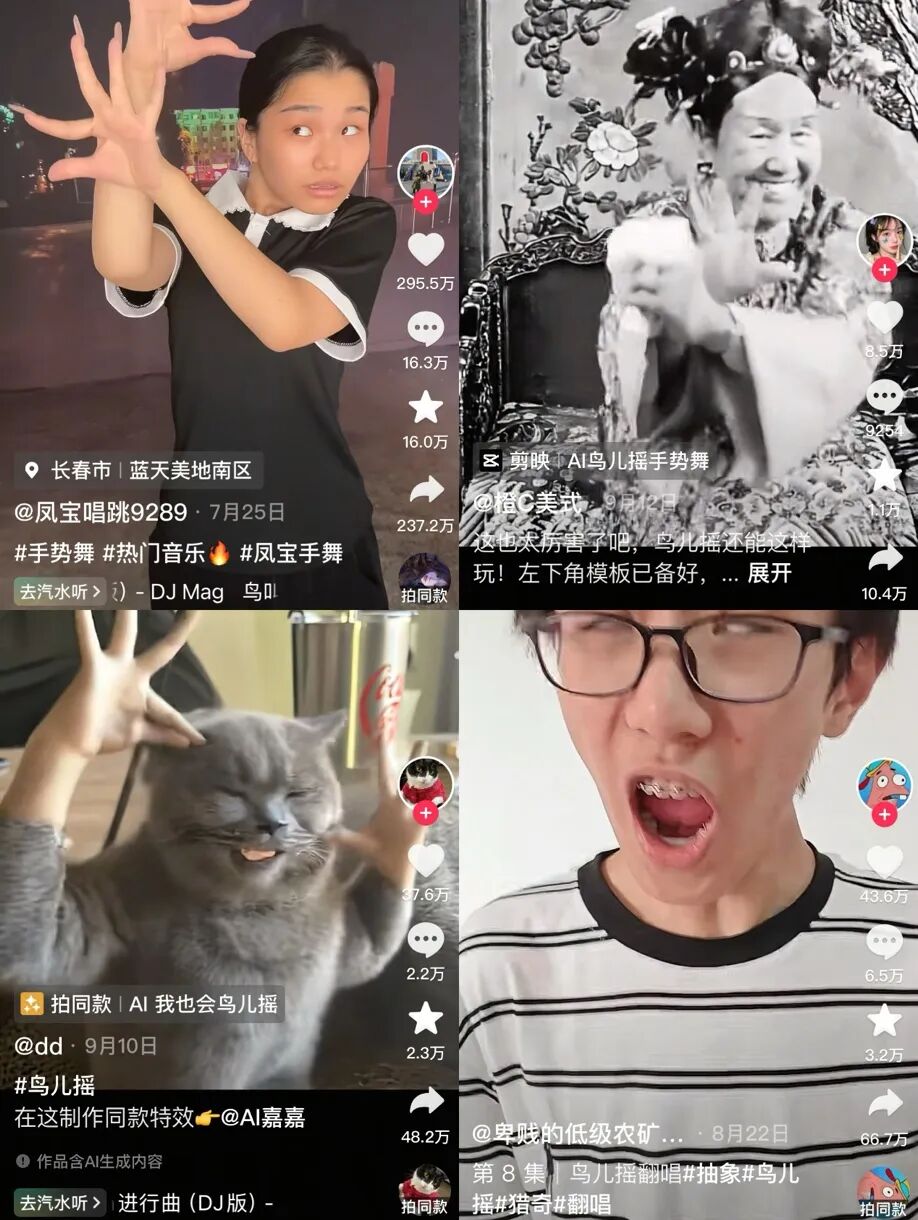
Core Viewpoint - The rise of abstract background music (BGM) in short videos has captivated young audiences, characterized by illogical lyrics and electronic sounds, creating a new cultural phenomenon that thrives on absurdity and instant gratification [1][16][30] Group 1: Characteristics of Abstract BGM - Abstract BGMs lack traditional musical structure and emotional logic, instead focusing on absurdity, sound effects, and rhythm, which resonate with the audience's desire for immediate emotional stimulation [19][24] - Popular tracks like "Bird Shake" have achieved massive engagement, with nearly 40 billion topic views on Douyin, showcasing the viral nature of these abstract compositions [1][3] - The phenomenon has led to various adaptations and interactions in live performances, further embedding these BGMs into popular culture [3][5] Group 2: Cultural Impact and Trends - The trend of abstract BGM reflects a broader cultural shift among young people, who increasingly favor content that is immediate and devoid of deep narrative or emotional complexity [24][30] - The emergence of "Italian brainrot" music, characterized by bizarre and nonsensical elements, parallels the rise of abstract BGM in China, indicating a global trend towards absurdist entertainment [21][25] - This cultural movement is marked by a rebellion against traditional aesthetics, with young audiences embracing the chaotic and nonsensical as a form of identity and expression [27][30] Group 3: Market and Commercialization - Brands are quickly adapting to this trend, with campaigns that incorporate elements of popular abstract BGMs, such as JD's "Skill Buy Furniture" event, indicating a recognition of the commercial potential of this cultural wave [5][24] - The gaming industry is also capitalizing on this trend, integrating popular dance moves from abstract BGMs into gameplay, further blurring the lines between music, gaming, and social media [5][24] Group 4: Future Considerations - As the novelty of abstract BGM begins to wear off, there is a concern about audience fatigue and the potential for a decline in engagement with similar content [29][30] - The overconsumption of low-quality, absurdist music may lead to a cultural shift where young audiences become increasingly reliant on instant gratification, potentially diminishing their capacity for deeper engagement with more traditional forms of art and music [29][30]