《技能五子棋》

Search documents
我爱我,但我是谁? | 2025流行文化盘点
Xin Lang Cai Jing· 2025-12-30 03:29
Group 1 - The article reflects on the emotional state of individuals in 2025, highlighting a shift towards self-love and introspection amidst societal pressures and uncertainties [1][2][4] - The concept of "self-love" is emphasized, with individuals encouraged to appreciate their own struggles and imperfections rather than seeking validation from others [6][8][9] - The rise of "situationships" and the use of AI for emotional support indicate a new trend in relationships, where traditional commitments are being redefined [10][13] Group 2 - There is a growing backlash against elite privilege and a desire for grassroots success stories, as seen in the public's reaction to various influencers and their perceived failures [19][20][24] - The narrative around success is shifting, with younger generations questioning the traditional pathways to achievement and expressing skepticism towards the glorification of hardship [24][31] - The emergence of cultural phenomena, such as the popularity of "Labubu" and "邪修," reflects a desire for authenticity and a rejection of conventional success metrics [32][34] Group 3 - The article discusses the impact of cultural exchanges, particularly between China and the West, highlighting the role of social media in bridging gaps and fostering understanding [35][39] - The phenomenon of "China Travel" showcases a new wave of tourism and cultural interaction, driven by changes in visa policies and social media trends [35][40] - The narrative of nostalgia is prevalent, with individuals reminiscing about past cultural moments and expressing a longing for a time when success seemed more attainable [46][57]


年轻人的“发疯”BGM,又变异了
3 6 Ke· 2025-11-11 10:23
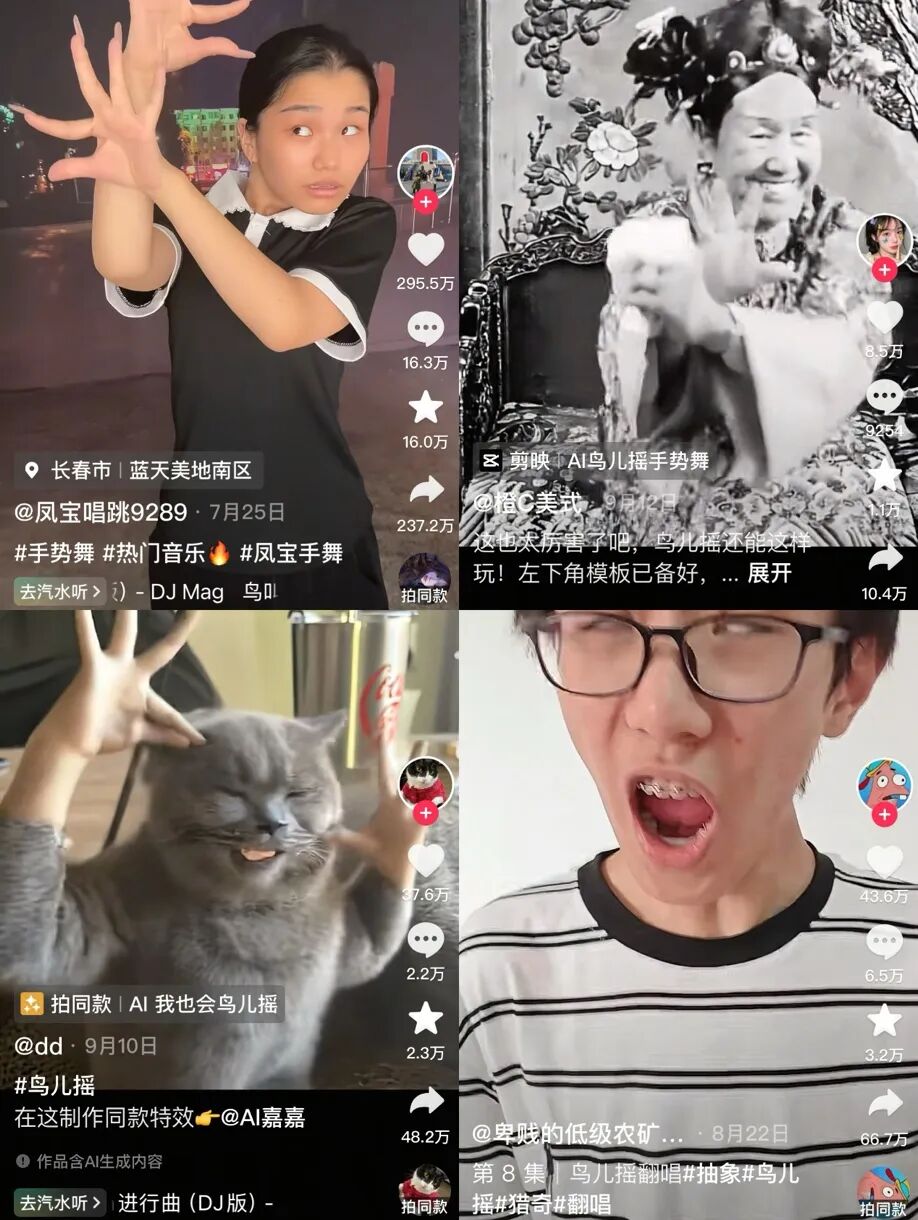
Core Viewpoint - The rise of abstract background music (BGM) in short videos has captivated young audiences, characterized by illogical lyrics and electronic sounds, creating a new cultural phenomenon that thrives on absurdity and instant gratification [1][16][30] Group 1: Characteristics of Abstract BGM - Abstract BGMs lack traditional musical structure and emotional logic, instead focusing on absurdity, sound effects, and rhythm, which resonate with the audience's desire for immediate emotional stimulation [19][24] - Popular tracks like "Bird Shake" have achieved massive engagement, with nearly 40 billion topic views on Douyin, showcasing the viral nature of these abstract compositions [1][3] - The phenomenon has led to various adaptations and interactions in live performances, further embedding these BGMs into popular culture [3][5] Group 2: Cultural Impact and Trends - The trend of abstract BGM reflects a broader cultural shift among young people, who increasingly favor content that is immediate and devoid of deep narrative or emotional complexity [24][30] - The emergence of "Italian brainrot" music, characterized by bizarre and nonsensical elements, parallels the rise of abstract BGM in China, indicating a global trend towards absurdist entertainment [21][25] - This cultural movement is marked by a rebellion against traditional aesthetics, with young audiences embracing the chaotic and nonsensical as a form of identity and expression [27][30] Group 3: Market and Commercialization - Brands are quickly adapting to this trend, with campaigns that incorporate elements of popular abstract BGMs, such as JD's "Skill Buy Furniture" event, indicating a recognition of the commercial potential of this cultural wave [5][24] - The gaming industry is also capitalizing on this trend, integrating popular dance moves from abstract BGMs into gameplay, further blurring the lines between music, gaming, and social media [5][24] Group 4: Future Considerations - As the novelty of abstract BGM begins to wear off, there is a concern about audience fatigue and the potential for a decline in engagement with similar content [29][30] - The overconsumption of low-quality, absurdist music may lead to a cultural shift where young audiences become increasingly reliant on instant gratification, potentially diminishing their capacity for deeper engagement with more traditional forms of art and music [29][30]
从《没出息》到《五子棋》,这届爆火神曲,都得会玩梗
3 6 Ke· 2025-10-28 10:22
Core Viewpoint - The viral success of the song "没出息" reflects a cultural shift towards humor and lightheartedness in political discourse, resonating with the contemporary audience's desire for entertainment over seriousness [4][6][17]. Group 1: Cultural Impact - The transformation of serious political content into entertaining snippets has made it more accessible and relatable to the general public, allowing even those who typically avoid political discussions to engage with the material [4][6]. - The humorous tone of the song, particularly the line "统一那天谁哭哭啼啼才是真没出息," effectively wraps national sentiments in a light-hearted manner, reducing the emotional distance often associated with political topics [4][6]. Group 2: Audience Engagement - The song's popularity is attributed to its ability to resonate with shared frustrations in daily life, allowing listeners to express their feelings through humor, thus creating a communal experience [6][17]. - The collaborative nature of content creation, where individuals from various backgrounds contribute to the meme culture surrounding the song, has fostered a sense of community and active participation among audiences [6][17]. Group 3: Entertainment Trends - The emergence of "技能五子棋" as a follow-up viral sensation showcases a trend where traditional concepts are reimagined through absurdity and humor, appealing to a wide audience regardless of their prior knowledge [11][17]. - Both "没出息" and "技能五子棋" exemplify a shift towards "effortless joy," where the focus is on providing immediate emotional gratification rather than deep intellectual engagement, catering to the fast-paced lifestyle of modern audiences [17][18].