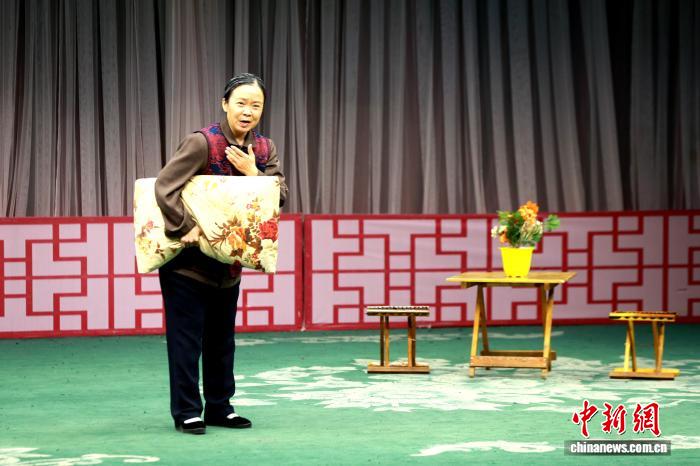
《老邪上任》

Search documents
“活下去”到“火起来”:从两个剧种看山东地方戏保护与传承
Da Zhong Ri Bao· 2026-02-09 01:08
Core Insights - The article discusses the revival and preservation of local theater in Shandong, particularly focusing on the success of two regional forms: Zhanhua Yu Opera and Dingtao Liangjiaxian, highlighting their journey from near extinction to international recognition [4][10][12]. Group 1: Revival of Local Theater - The Zhanhua Yu Opera and Dingtao Liangjiaxian have successfully transitioned from being on the brink of disappearance to gaining international acclaim, showcasing the importance of storytelling and emotional connection in local theater [4][10]. - The revival efforts included extensive documentation and preservation of traditional performances, with Zhanhua Yu Opera recording 47 segments and restoring 21 musical pieces [7][8]. - Government initiatives and funding have played a crucial role in supporting these local theaters, with over 10 million yuan invested in Zhanhua Yu Opera since 2014 [8][9]. Group 2: Creative Innovation - The article emphasizes the need for innovation in local theater, advocating for a blend of tradition and modern storytelling to resonate with contemporary audiences [10][12]. - Successful productions like "Lao Xie Shang Ren" and "Gong Ji Guo Shou" have emerged from real-life events, demonstrating the effectiveness of addressing current social issues through local narratives [11][12]. - The focus on creating shorter, impactful performances has allowed these local theaters to thrive despite limited resources, with productions often costing around 1 million yuan [11][12]. Group 3: Youth Engagement and Education - Engaging younger generations is vital for the sustainability of local theater, with initiatives to incorporate local opera into school curriculums and provide training for young performers [15][16]. - The Zhanhua Yu Opera has successfully integrated young talent, with 60% of its performers under 35 years old, fostering a new generation of artists [15]. - Educational programs and community involvement have been essential in revitalizing interest in local theater, with performances tailored to audience preferences and feedback [17][18]. Group 4: Digital Transformation and Outreach - The article highlights the importance of digital platforms for promoting local theater, with significant online viewership for performances, indicating a shift towards modern engagement strategies [17][19]. - Local theaters are exploring various outreach methods, including live streaming and social media, to attract younger audiences and expand their reach beyond traditional venues [17][19]. - The need for professional content creation and digital preservation of performances is emphasized to ensure the longevity and accessibility of local theater [19].
(寻味中华 | 艺林)渤海湾畔听渔鼓 道情古韵三百年
Zhong Guo Xin Wen Wang· 2026-02-08 02:09
中新社山东沾化2月8日电 题:渤海湾畔听渔鼓 道情古韵三百年 作者 王采怡 周艺伟 梁犇 三百年前的渤海湾渔船上,劳累的渔民常在歇息时围坐,一人手执渔鼓击节领唱,众人随声应和。这是 渔鼓戏最初的"盘凳子"形态。如今,渔鼓声已从海上飘向陆地。 "扔下牲口撇下筐,庄里传出渔鼓腔。"在山东滨州沾化,渔鼓一响,农忙都为它"让路"。每年冬闲时, 艺人们聚集在戏房切磋技艺、排演新戏,一般从春节开始演出,一直演到农历正月结束。当下,《老邪 上任》《墙角》等渔鼓戏正在乡村戏台轮番上演。 沾化渔鼓戏,根植于中国戏曲的一个古老体系——道情戏。道情原是道教宣教布道的声腔艺术,源头可 追溯至唐代《承天》《九真》等道曲,在宋元时期演化为民间道歌,与各地方言、民俗融合,逐渐衍生 出陕北、晋北道情等众多分支,形成覆盖多地的道情戏"家族"。 1723年,道情戏随流布至此的道士传入渤海湾畔的沾化。它与当地独特的渔家生活、豪迈的民间武术以 及劳动号子、俚俗小调深度融合,逐渐演变成如今的沾化渔鼓戏。 "台上演员'一人唱',伴唱'众人和','一呼百应'是沾化渔鼓戏最鲜明的特色。"青年演员翟方梅说,其唱 腔以"三句一扣"为基本板式,每至关键处便有一铿 ...