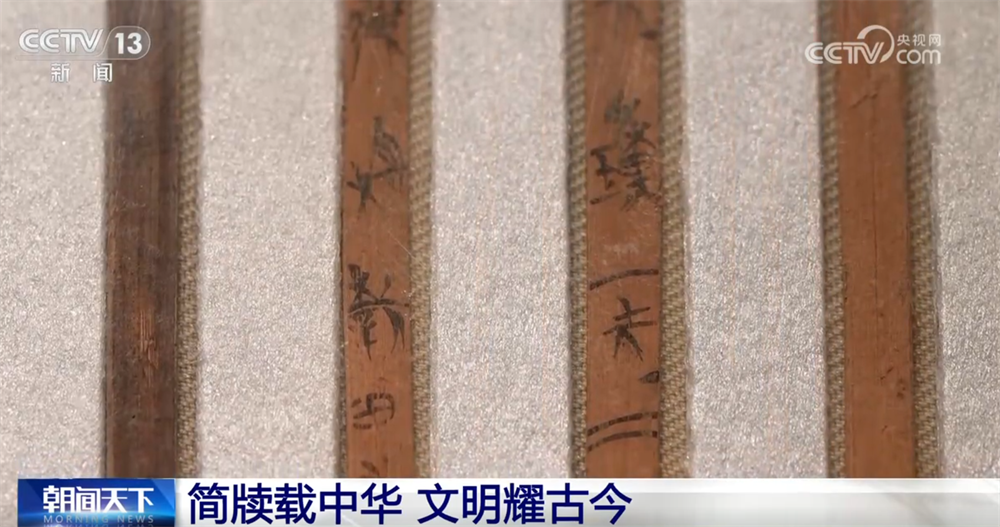
《质日》

Search documents
文化中国行丨乘法口诀表倒着背、基层小吏工作日志 千年简牍再现古人日常
Yang Shi Xin Wen Ke Hu Duan· 2025-11-30 11:19
Core Viewpoint - The exhibition "Reading China - The Unearthed Bamboo and Wooden Slips of China" showcases the historical significance of bamboo and wooden slips as vital writing mediums in ancient China, providing irreplaceable evidence for literature, cultural transmission, and historical research from the Warring States to the Wei-Jin period [1][2]. Group 1: Historical Significance - Bamboo and wooden slips, referred to as "jian" and "du," were used as early as the Shang Dynasty, with the earliest archaeological finds dating back to the Warring States period [2]. - The exhibition features the oldest bamboo slip discovered, measuring approximately 75 centimeters, which has remained legible for over 2400 years [4]. - A collection of 230 artifacts, including slips from various historical periods, illustrates the evolution of bamboo and wooden slips as the main writing medium and their role in recording Chinese civilization [8]. Group 2: Cultural Insights - The exhibition includes the "Legal Q&A" from the Sleep Tiger Earth Qin slips, which contains the earliest known "minor protection law," defining minors by height rather than age [10]. - The exhibition also showcases the earliest known multiplication table, discovered on a wooden slip from the Qin Dynasty, which is formatted in reverse order compared to modern versions [12][14]. - Various slips document daily life, such as the "work logs" of local officials and the earliest known "chicken consumption" records from the Silk Road, highlighting the administrative and social aspects of ancient life [15][19]. Group 3: Culinary Records - The Han slips from Youlin Tiger Creek record detailed recipes for dishes like beef porridge and steamed fish, representing the earliest known culinary documentation in China [17]. - The exhibition emphasizes the similarities between ancient and modern lifestyles, fostering a "dialogue across time" and a resonance between past and present [19].

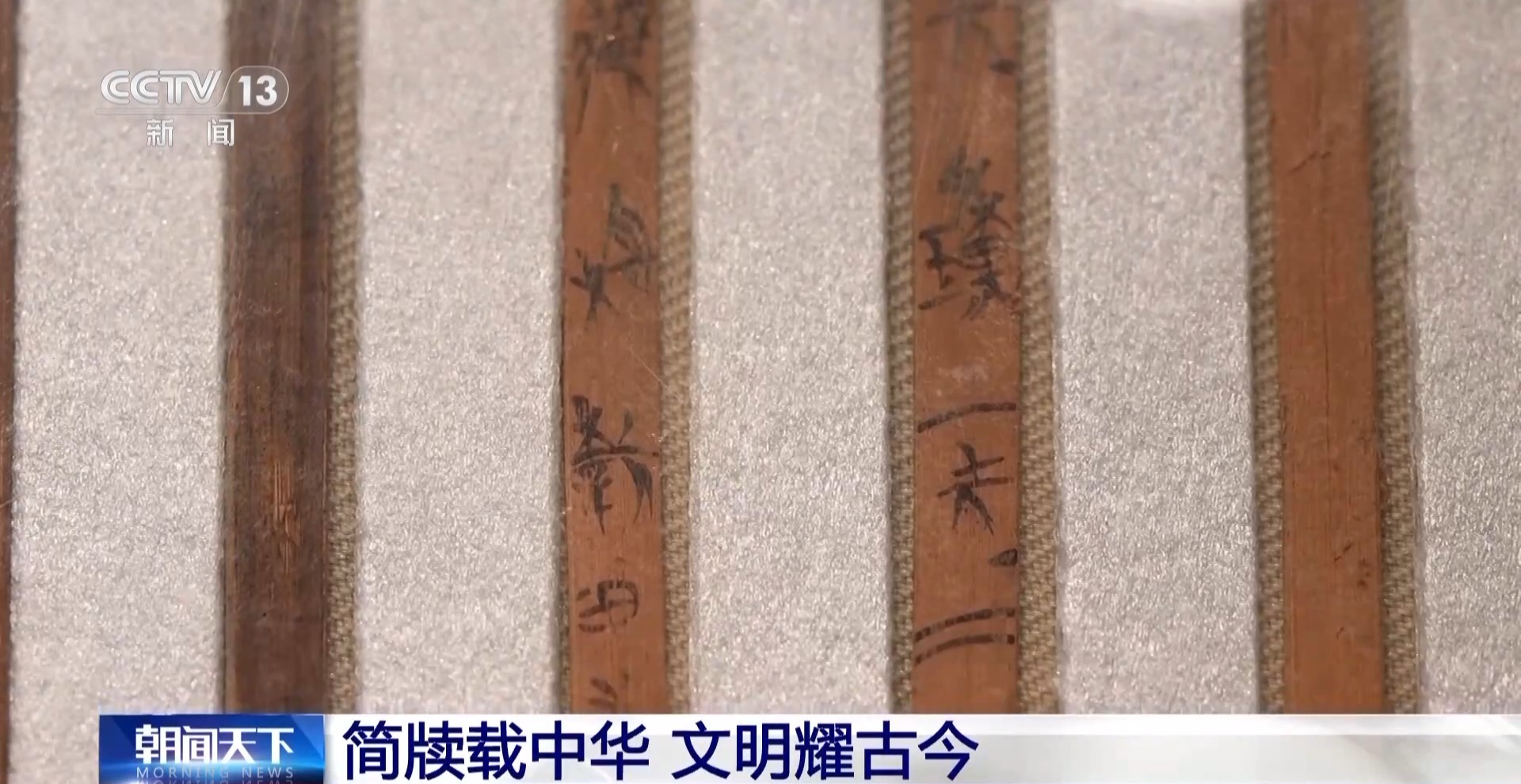
文化中国行|“豪车”“律法”“吃鸡”……简牍载中华 文明耀古今
Yang Shi Wang· 2025-11-30 03:21
Core Viewpoint - The exhibition "Reading China - The Unearthed Bamboo Slips of China" showcases the historical significance of bamboo slips as a primary writing medium in ancient China, providing invaluable evidence for cultural transmission and historical research over nearly a thousand years from the Warring States to the Wei and Jin dynasties [1]. Group 1: Historical Significance - Bamboo slips were used as early as the Shang Dynasty, with the earliest discovered slips dating back to the Warring States period [1]. - The exhibition features the oldest bamboo slips discovered, which were unearthed from the tomb of Marquis Yi of Zeng, with some measuring approximately 75 centimeters and remaining legible after 2400 years [1]. Group 2: Unique Artifacts - The exhibition includes 230 artifacts, such as the Chu slips from the Warring States, Qin slips from the Shuihudi site, and Han slips from the Xuanquan site, illustrating the evolution of bamboo slips as a mainstream writing medium and their role in recording Chinese civilization [5]. - A notable artifact is the "Legal Inquiry" from the Shuihudi Qin slips, which contains the earliest known "juvenile protection law," defining minors by height rather than age [7]. Group 3: Daily Life Insights - The exhibition reveals aspects of ancient daily life, such as a log from the Shuihudi Han slips detailing public and private matters, and a record from the Gansu Xuanquan Han slips documenting the consumption of 44 chickens by a government institution [14]. - The exhibition also features the earliest known detailed recipes, including dishes like beef porridge and steamed fish, showcasing the culinary practices of ancient China [14]. Group 4: Cultural Resonance - The bamboo slips provide insights into the similarities between ancient and modern life, allowing for a dialogue across time and evoking a sense of shared human experience [17].