《还珠格格》

Search documents
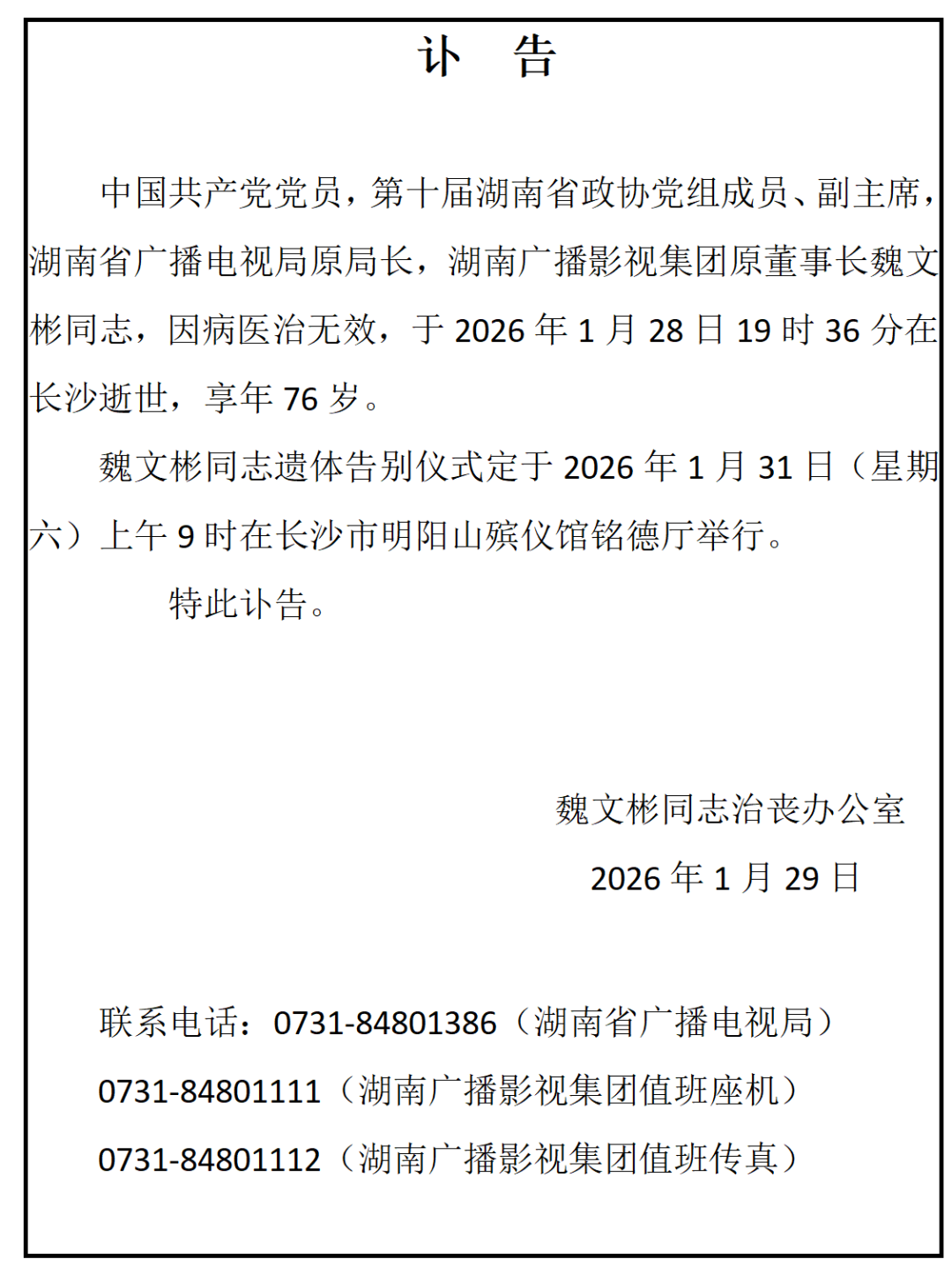
那个创办《快乐大本营》的人,离开了
凤凰网财经· 2026-01-29 10:28
Core Viewpoint - The article reflects on the legacy of Wei Wenbin, a pivotal figure in Chinese television, highlighting his contributions to the entertainment industry through programs like "Happy Camp" and "Super Girl," which transformed the landscape of Chinese media and created a lasting cultural impact [4][15][28]. Group 1: Wei Wenbin's Influence - Wei Wenbin, known as the "soul of the TV army," significantly shaped the evolution of Chinese television during his tenure from 1993 to 2008, overseeing the launch of iconic shows that became collective memories for a generation [4][24]. - His leadership style emphasized breaking traditional norms and fostering a creative environment, which led to the successful establishment of Hunan Economic TV and later Hunan Satellite TV, marking a departure from the previously stagnant media landscape [10][14][27]. - The introduction of "Happy Camp" in 1997 and "Super Girl" in 2004 marked a shift towards entertainment-focused programming, moving away from the serious tone that characterized earlier Chinese television [15][21]. Group 2: Cultural Impact of Programs - "Happy Camp" redefined the image of Hunan Satellite TV, transforming it from a "farmer's channel" to a vibrant entertainment platform, significantly influencing the entertainment culture in China [15][17]. - "Super Girl" initiated a nationwide craze for talent shows, with its second season in 2005 attracting over 150,000 participants, showcasing a new model for celebrity production that emphasized grassroots talent [18][21]. - The collaboration with Qiong Yao on "My Fair Princess" achieved unprecedented viewership, with ratings reaching as high as 58% in Hunan, setting records for the channel and influencing the entire television industry [22][24]. Group 3: Legacy and Future Directions - Wei Wenbin's reflections on the current state of the media industry emphasize the need for innovation and adaptation in the face of changing viewer preferences and technological advancements [29][31]. - He advocates for a departure from comfort zones, urging new generations of media professionals to embrace change and create new narratives, as exemplified by the ongoing success of contemporary shows like "Sisters Who Make Waves" [33][34]. - The article concludes with a call to remember the past as a foundation for future endeavors, highlighting the importance of continuous evolution in the media landscape [34].


湖南广电原局长魏文彬逝世,曾打造《快乐大本营》《超级女声》,享年76岁
21世纪经济报道· 2026-01-29 04:10
Core Viewpoint - The article highlights the significant contributions of Wei Wenbin to the transformation of Hunan Television, which became a leading force in China's television industry, particularly through innovative programming and audience engagement strategies [3][4][6]. Group 1: Background and Career - Wei Wenbin was born in 1950 and became the Party Secretary and Director of Hunan Provincial Radio and Television Bureau in 1993 [3]. - Under his leadership, Hunan Television underwent a profound transformation, leading to the popularization of television programs in China [4]. Group 2: Key Achievements - Wei Wenbin successfully turned Hunan Television into a nationally recognized station, producing popular shows such as "Happy Camp," "Country Discovery," and "The Rose's Appointment," which received widespread acclaim [6]. - The launch of "Super Girl" in 2004 marked a significant milestone, utilizing an innovative model of "zero-threshold registration and public voting," which ignited nationwide audience participation [7]. - The second season of "Super Girl" in 2005 saw over 150,000 registrations and a record-breaking viewership rating of over 49%, with more than 8 million SMS votes cast [7]. Group 3: Industry Context - In 1993, Hunan Television faced severe financial difficulties, generating less than 60 million yuan annually and struggling to attract quality advertisements, leading to a reputation as a "fertilizer and feed television station" [7]. - Wei Wenbin emphasized the need for the broadcasting industry to adopt a market-oriented and industrialized approach to overcome challenges [7]. - The establishment of Hunan Economic Television in 1995 and the official launch of Hunan Satellite TV in 1997 marked significant steps in the station's evolution, leading to the introduction of popular programs that revitalized the network [7].

著名传媒人,电视湘军开创者魏文彬去世,享年76岁,曾推出现象级节目《快乐大本营》《超级女声》
Mei Ri Jing Ji Xin Wen· 2026-01-29 03:37
Core Viewpoint - The article reports the passing of Wei Wenbin, a significant figure in the Hunan broadcasting industry, who contributed greatly to the development of media in Hunan and was recognized for his pioneering efforts in media industrialization in China [1][4]. Group 1: Contributions and Achievements - Wei Wenbin served as the head of Hunan Broadcasting and Television Bureau and was instrumental in reforming the management system and promoting the industrialization of media in Hunan [1][4]. - Under his leadership, Hunan TV became one of the most influential provincial television stations in China, with programs like "Happy Camp" and "Super Girl" gaining national acclaim [5][7]. - He was recognized as a pioneer in media industrialization, receiving numerous awards, including the "Star of Reform" and being named one of the "Top Ten Contributors to Chinese Media" [1][4]. Group 2: Legacy and Impact - Wei Wenbin's philosophy of "guidance is invaluable" remains a guiding principle for Hunan broadcasting professionals [1]. - His efforts led to a significant transformation in local broadcasting, making Hunan TV a leader in popularizing television programs in China [4][8]. - The impact of his work is evident in the continued success of Hunan TV and its influence on platforms like Mango TV, showcasing the long-term effects of his contributions to the media landscape [8].
1590万!消失的赵薇又出事了!
商业洞察· 2025-08-08 09:37
Core Viewpoint - The article discusses the downfall of Zhao Wei, a former star and capital market player, highlighting her recent stock freezes and the implications of her past actions in both the entertainment and financial sectors [3][4][10]. Group 1: Stock Freezes and Legal Issues - Zhao Wei's shares in three companies have been frozen, totaling 15.9 million shares with a three-year freeze period, indicating ongoing legal troubles [10][13]. - This is not the first instance of stock freezes for Zhao Wei; she previously faced similar issues due to disputes with China Minsheng Trust [13][14]. - The article suggests that Zhao Wei's current situation may stem from unresolved legal disputes or new debt crises [13][14]. Group 2: Rise and Fall in Capital Markets - Zhao Wei gained fame as a star in "My Fair Princess" and later ventured into the capital market, initially achieving success by acquiring a stake in Alibaba Pictures for HKD 3.1 billion [16][18]. - Her reputation as the "female Buffett" was solidified after she profited HKD 1 billion from this investment [18][19]. - However, her ambitious acquisition of shares in Wan Jia Group for HKD 3 billion faced regulatory scrutiny, leading to the termination of the deal and subsequent penalties [23][24]. Group 3: Impact of Past Controversies - The "military flag incident" from 2001 remains a significant stain on Zhao Wei's public image, leading to widespread backlash and a decline in her career [28][30]. - Despite attempts to mitigate the damage through public apologies, the incident severely affected her professional opportunities [32][34]. - Zhao Wei's journey reflects a broader narrative of ambition leading to downfall, as her attempts to balance fame and financial success ultimately resulted in significant personal and professional losses [36].