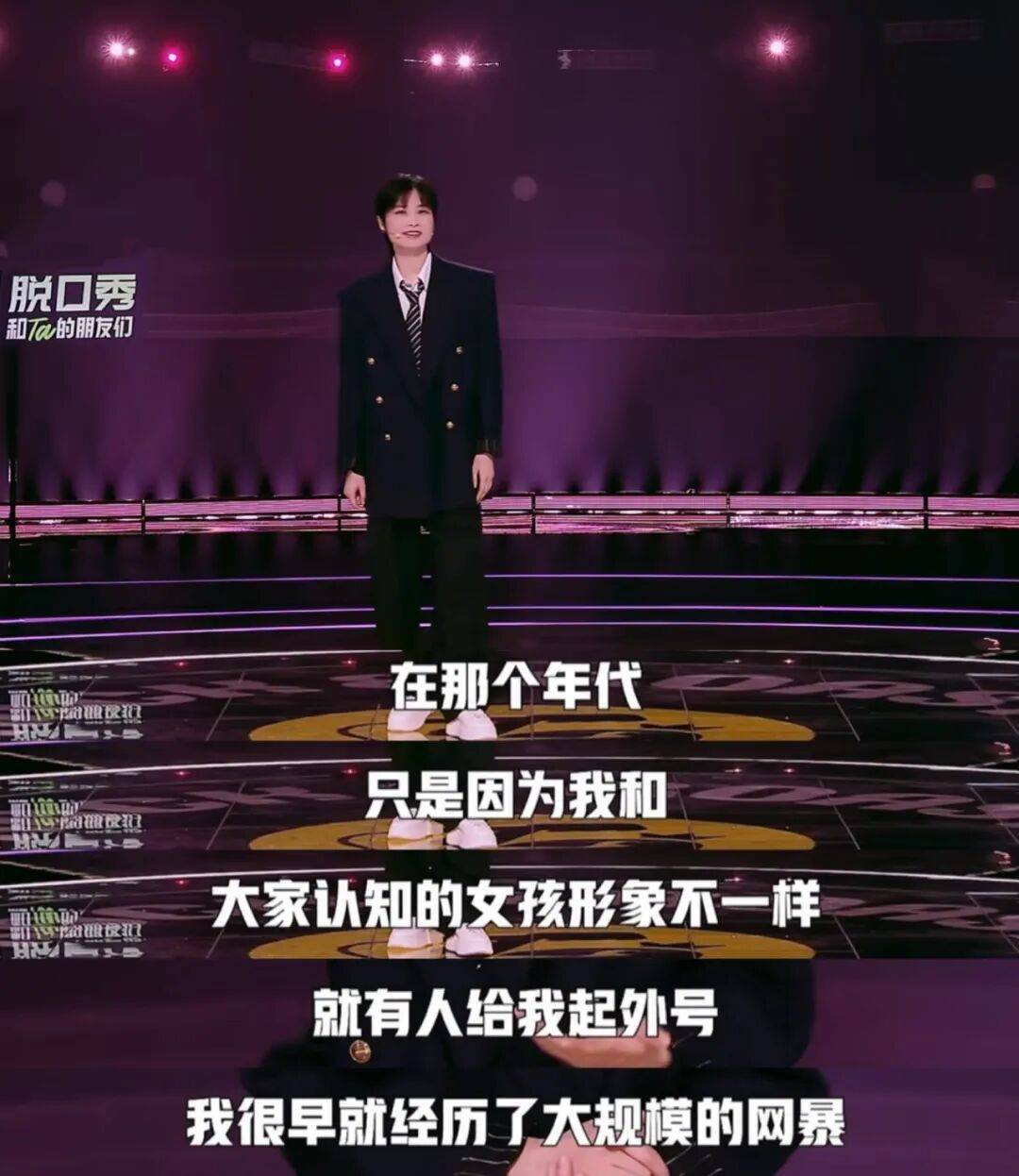
《超级女声》

Search documents
那个创办《快乐大本营》的人,离开了
凤凰网财经· 2026-01-29 10:28
Core Viewpoint - The article reflects on the legacy of Wei Wenbin, a pivotal figure in Chinese television, highlighting his contributions to the entertainment industry through programs like "Happy Camp" and "Super Girl," which transformed the landscape of Chinese media and created a lasting cultural impact [4][15][28]. Group 1: Wei Wenbin's Influence - Wei Wenbin, known as the "soul of the TV army," significantly shaped the evolution of Chinese television during his tenure from 1993 to 2008, overseeing the launch of iconic shows that became collective memories for a generation [4][24]. - His leadership style emphasized breaking traditional norms and fostering a creative environment, which led to the successful establishment of Hunan Economic TV and later Hunan Satellite TV, marking a departure from the previously stagnant media landscape [10][14][27]. - The introduction of "Happy Camp" in 1997 and "Super Girl" in 2004 marked a shift towards entertainment-focused programming, moving away from the serious tone that characterized earlier Chinese television [15][21]. Group 2: Cultural Impact of Programs - "Happy Camp" redefined the image of Hunan Satellite TV, transforming it from a "farmer's channel" to a vibrant entertainment platform, significantly influencing the entertainment culture in China [15][17]. - "Super Girl" initiated a nationwide craze for talent shows, with its second season in 2005 attracting over 150,000 participants, showcasing a new model for celebrity production that emphasized grassroots talent [18][21]. - The collaboration with Qiong Yao on "My Fair Princess" achieved unprecedented viewership, with ratings reaching as high as 58% in Hunan, setting records for the channel and influencing the entire television industry [22][24]. Group 3: Legacy and Future Directions - Wei Wenbin's reflections on the current state of the media industry emphasize the need for innovation and adaptation in the face of changing viewer preferences and technological advancements [29][31]. - He advocates for a departure from comfort zones, urging new generations of media professionals to embrace change and create new narratives, as exemplified by the ongoing success of contemporary shows like "Sisters Who Make Waves" [33][34]. - The article concludes with a call to remember the past as a foundation for future endeavors, highlighting the importance of continuous evolution in the media landscape [34].


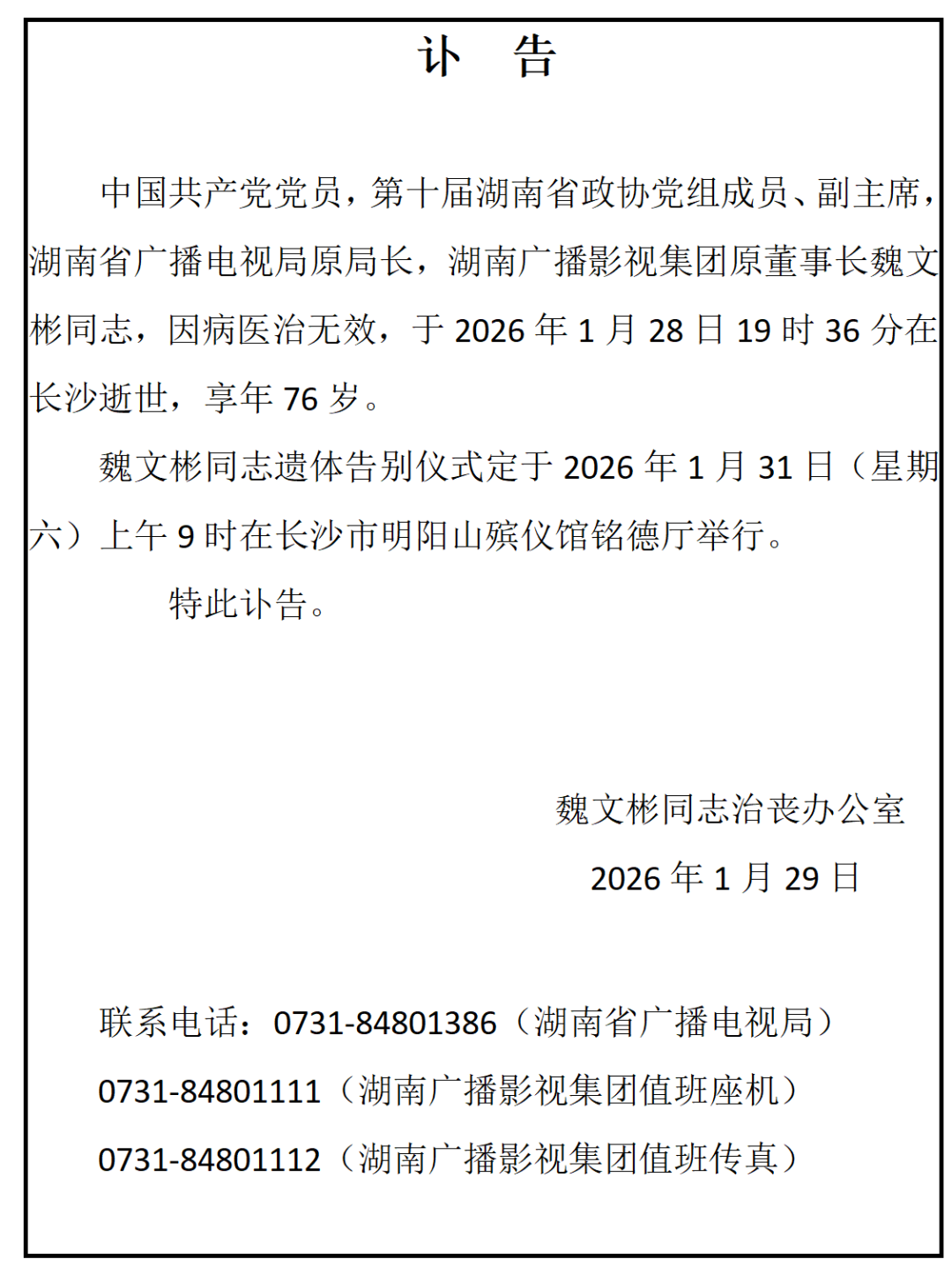
湖南广电原局长魏文彬逝世,曾打造《快乐大本营》《超级女声》,享年76岁
21世纪经济报道· 2026-01-29 04:10
Core Viewpoint - The article highlights the significant contributions of Wei Wenbin to the transformation of Hunan Television, which became a leading force in China's television industry, particularly through innovative programming and audience engagement strategies [3][4][6]. Group 1: Background and Career - Wei Wenbin was born in 1950 and became the Party Secretary and Director of Hunan Provincial Radio and Television Bureau in 1993 [3]. - Under his leadership, Hunan Television underwent a profound transformation, leading to the popularization of television programs in China [4]. Group 2: Key Achievements - Wei Wenbin successfully turned Hunan Television into a nationally recognized station, producing popular shows such as "Happy Camp," "Country Discovery," and "The Rose's Appointment," which received widespread acclaim [6]. - The launch of "Super Girl" in 2004 marked a significant milestone, utilizing an innovative model of "zero-threshold registration and public voting," which ignited nationwide audience participation [7]. - The second season of "Super Girl" in 2005 saw over 150,000 registrations and a record-breaking viewership rating of over 49%, with more than 8 million SMS votes cast [7]. Group 3: Industry Context - In 1993, Hunan Television faced severe financial difficulties, generating less than 60 million yuan annually and struggling to attract quality advertisements, leading to a reputation as a "fertilizer and feed television station" [7]. - Wei Wenbin emphasized the need for the broadcasting industry to adopt a market-oriented and industrialized approach to overcome challenges [7]. - The establishment of Hunan Economic Television in 1995 and the official launch of Hunan Satellite TV in 1997 marked significant steps in the station's evolution, leading to the introduction of popular programs that revitalized the network [7].
著名传媒人,电视湘军开创者魏文彬去世,享年76岁,曾推出现象级节目《快乐大本营》《超级女声》
Mei Ri Jing Ji Xin Wen· 2026-01-29 03:37
Core Viewpoint - The article reports the passing of Wei Wenbin, a significant figure in the Hunan broadcasting industry, who contributed greatly to the development of media in Hunan and was recognized for his pioneering efforts in media industrialization in China [1][4]. Group 1: Contributions and Achievements - Wei Wenbin served as the head of Hunan Broadcasting and Television Bureau and was instrumental in reforming the management system and promoting the industrialization of media in Hunan [1][4]. - Under his leadership, Hunan TV became one of the most influential provincial television stations in China, with programs like "Happy Camp" and "Super Girl" gaining national acclaim [5][7]. - He was recognized as a pioneer in media industrialization, receiving numerous awards, including the "Star of Reform" and being named one of the "Top Ten Contributors to Chinese Media" [1][4]. Group 2: Legacy and Impact - Wei Wenbin's philosophy of "guidance is invaluable" remains a guiding principle for Hunan broadcasting professionals [1]. - His efforts led to a significant transformation in local broadcasting, making Hunan TV a leader in popularizing television programs in China [4][8]. - The impact of his work is evident in the continued success of Hunan TV and its influence on platforms like Mango TV, showcasing the long-term effects of his contributions to the media landscape [8].
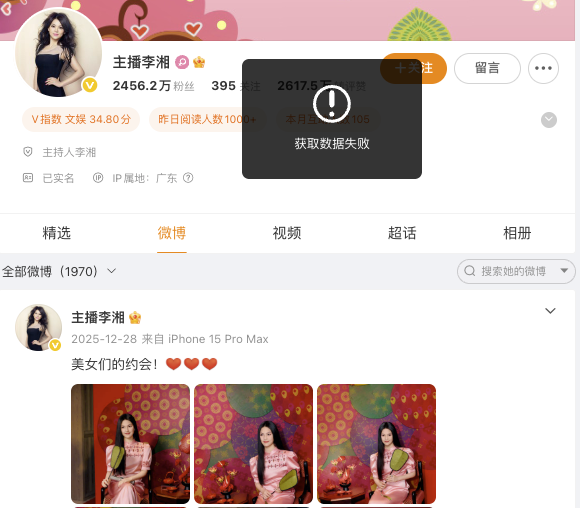
李湘多平台账号被禁止关注,名下多家公司已注销
Xin Lang Cai Jing· 2026-01-16 05:32
Core Viewpoint - The news highlights the recent ban on popular host Li Xiang's accounts across multiple platforms, sparking significant public interest and discussion [1][6]. Group 1: Account Status and Audience Engagement - As of January 16, Li Xiang's video platform follower count stands at 4.21 million, with a loss of 14,600 followers in the past 30 days [1][6]. - The commercial value of her video content is indicated by advertising rates: 200,000 yuan for 1-20 seconds, 250,000 yuan for 21-60 seconds, and 300,000 yuan for videos over 60 seconds [1][6]. Group 2: Business Affiliations - Li Xiang is associated with 20 companies, of which 6 are currently active and 14 have been deregistered [3][8]. - Active companies include Changde Dacheng Chuanghong Private Equity Investment Enterprise and Hunan Jinkaiyan Film and Television Media Co., Ltd., where she holds a 99% stake [3][8]. - Among the deregistered companies is Beijing Mango Fruit Film and Television Culture Media Co., Ltd., which she fully owned, and Beijing Happy Star Culture Media Co., Ltd., established when she was 28, which was dissolved in December 2018 [3][8]. Group 3: Career Highlights - Li Xiang is recognized as a pioneer among celebrities transitioning to internet executive roles, having co-hosted the highly rated show "Happy Camp" since 1997, achieving a 40% viewership rating [5][10]. - She served as Deputy Director of Shenzhen Satellite TV in 2013 and joined Qihoo 360 in 2016 as Vice President and Chief Content Officer, later becoming President of 360 Entertainment [5][10]. - In 2019, she launched her live-streaming sales debut, becoming one of the first well-known hosts to enter the live commerce space [5][10]. - In August 2023, Li Xiang announced her retirement via her Weibo account [5][10].
《超级女声》20年,我们为何怀念那份抽象的勇敢?
Hu Xiu· 2025-09-27 03:10
Core Viewpoint - The article reflects on the cultural impact of the "Super Girl" talent show in China, highlighting its role in democratizing the entertainment industry and fostering a sense of nostalgia for a time when ordinary individuals could pursue their dreams on a public platform [1][10][22]. Group 1: Historical Context - "Super Girl" emerged during a period of market transformation in Chinese television, allowing for a low-cost, accessible platform for aspiring singers, which contrasted with previous elite-driven talent competitions [10][15]. - The show attracted approximately 150,000 participants in 2005, showcasing a wide demographic range from ages 4 to over 80, emphasizing its inclusive nature [10][17]. - The format of "Super Girl" was inspired by Western shows like "American Idol," but it localized the concept to resonate with Chinese audiences, promoting a sense of community and participation [10][17]. Group 2: Cultural Significance - The show represented a shift towards a more egalitarian entertainment model, where the audience had a direct role in the selection process through SMS voting, thus enhancing viewer engagement [11][17]. - The success of contestants like Li Yuchun, who won with 3.52 million votes, symbolized a challenge to traditional beauty standards and the emergence of a new aesthetic that embraced diversity [17][19]. - The phenomenon of "Super Girl" also coincided with the rise of internet culture, where alternative voices and subcultures began to gain visibility, indicating a broader societal shift towards individual expression [18][19]. Group 3: Nostalgia and Reflection - Current audiences reflect on the bravery and authenticity of participants from the "Super Girl" era, contrasting it with contemporary talent shows that may feel more judgmental and less forgiving [9][22]. - The nostalgia for the "Super Girl" era is tied to a sense of lost simplicity and optimism, as expressed by commentators who note the straightforwardness and enthusiasm of participants at that time [9][19]. - The article suggests that the current landscape of entertainment, such as stand-up comedy, echoes the earlier "Super Girl" ethos but with a different tone, focusing more on shared vulnerabilities rather than aspirational dreams [22][24].