
《追忆似水年华》

Search documents
普鲁斯特笔下的人物原型:爱书是一种性格缺陷
Xin Lang Cai Jing· 2026-02-11 00:11
Core Insights - The article discusses the literary significance of Marcel Proust's "In Search of Lost Time" and its portrayal of the decline of aristocratic ideals through the character of the Duchess of Guermantes and her social circle [2][3][4]. Group 1: Key Characters and Their Influence - The Duchess of Guermantes is depicted as an ideal representation of aristocratic life, influenced by three prominent women who embody elegance and grace [3]. - The three women are Geneviève Alvares, the Countess of Chevigné, and the Countess of Greffulhe, each known for their social prominence and influence in Parisian society [3][4]. - The article highlights how these women accepted a worldview rooted in superficiality, focusing on appearances rather than substance, which reflects a broader cultural decline [4]. Group 2: Social Dynamics and Cultural Context - Proust's narrative captures the complexities of social interactions within salons, where membership was based on a mix of social prestige, creativity, and privilege [5][6]. - The salons served as cultural hubs, attracting notable figures from various artistic and literary backgrounds, although Proust himself faced challenges in gaining acceptance [5][6]. - The article notes the decline of traditional salons in favor of male-dominated clubs, reflecting a shift in social dynamics and the evolving landscape of intellectual discourse in post-war France [12][16]. Group 3: Artistic and Literary Contributions - The article discusses the artistic contributions of figures like Georges Bizet, whose marriage to Geneviève Alvares influenced his work, particularly the opera "Carmen," which was noted for its realistic portrayal of life [8][9]. - The salons were not only social gatherings but also platforms for intellectual exchange, where discussions on literature and politics took place among prominent artists and writers [15][16]. - The decline of salons and the rise of clubs marked a significant change in the cultural fabric of France, impacting the way ideas were shared and developed [12][16].

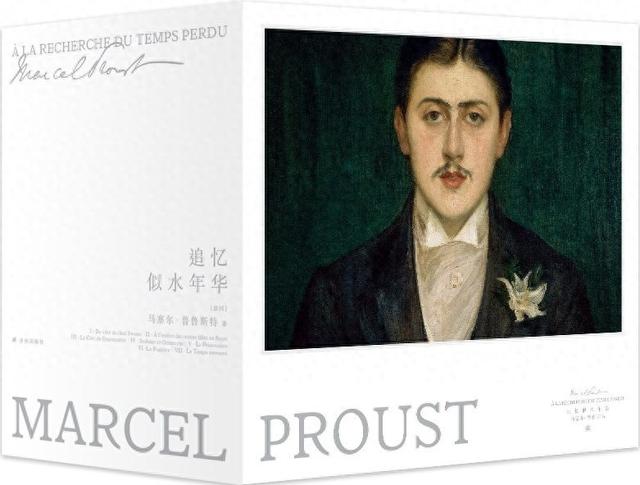
马塞尔·普鲁斯特的“方式”
Jing Ji Guan Cha Bao· 2025-08-18 09:41
Core Idea - "In Search of Lost Time" is not merely a novel but a mythic representation of an individual's life, creating a complete vision without relying on external systems [1][2] Summary by Sections Narrative Structure - The protagonist, Marcel, writes a biography rather than an autobiography, with the narrative being a reflection of his ongoing writing process [2] - The duality of the narrator and author, both named Marcel, highlights the theme of self-preservation from the oblivion of time [3][11] Themes and Motifs - The novel explores two distinct paths represented by Swann and the Guermantes family, symbolizing different life possibilities: one of love and the other of social status [5][6] - The metaphor of the "garden" encapsulates themes of love, while "party" signifies social interactions, revealing underlying social ethics [6][7] Artistic Representation - The narrative employs a duality of perception through the use of a microscope and telescope, illustrating the relationship between detail and broader truths [8][9] - Marcel's experiences and realizations are shaped by time, emphasizing the relativity of perception and the impact of memory on reality [10][12] Conclusion and Reflection - Memory serves as a preservative against time, with art being the pursuit that allows for the fixation of time [14]
工作着始终是美丽的(文思)
Ren Min Ri Bao· 2025-04-29 22:31
Group 1 - The concept of "labor" has evolved significantly in Chinese society, transitioning from a lack of recognition to gaining social respect and value for workers [2][3] - The modern process of Chinese modernization has been marked by laborers gradually obtaining their historical subjectivity, leading to a widespread acceptance of the notion that "labor is glorious" [2] - The distinction between "labor" and "work" in English reflects a broader understanding of various types of work, moving beyond traditional definitions and acknowledging the dignity of different professions [3] Group 2 - The phrase "Working is beautiful" resonates with the changes in societal attitudes towards labor, highlighting the humanistic values associated with work [1][3] - The historical context of labor in China has been shaped by intellectual movements that have redefined the value of laborers, culminating in a significant societal shift [2] - The breakdown of discrimination among different fields and industries emphasizes the enduring truth of the statement "Working is beautiful" [3]