
《阿房宫赋》

Search documents
“《阿房宫赋》原来是唐朝人造秦朝人的谣”阿房宫考古结果反转后我们能这样理解《阿房宫赋》吗?
Xin Lang Cai Jing· 2025-12-27 06:21
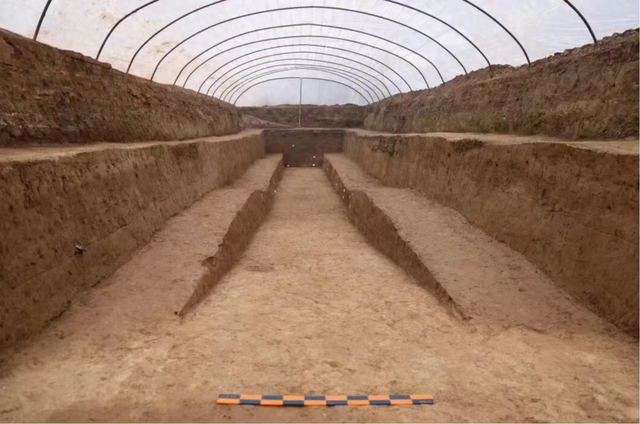
Core Viewpoint - The recent archaeological findings at the A Fang Palace site reveal that the palace's earthen foundation was built on drained lake sediment, overturning previous beliefs that it was constructed on solid land. It has been confirmed that the A Fang Palace was never completed and was not burned down [1][3]. Group 1: Archaeological Findings - The excavation results confirm that the A Fang Palace's foundation was built on drained lake sediment, not on solid ground [1]. - The findings provide a clear process of how the foundation was constructed, challenging long-held perceptions about the palace's location and construction [1]. Group 2: Historical Context and Literary Analysis - The findings contrast sharply with the descriptions in Du Mu's "A Fang Palace Fu," leading to humorous discussions online about the accuracy of historical narratives [3]. - Scholars have long recognized that the content of "A Fang Palace Fu" is not a factual account, as it reflects the author's critique of the ruling class during the Tang Dynasty rather than an accurate depiction of the Qin Dynasty [3][4]. - Du Mu's work serves as a metaphor for the decline of the Tang Dynasty, using the historical context of the Qin to comment on contemporary issues [5][6].

阿房宫考古新证背后的历史与文学之辨
Xin Lang Cai Jing· 2025-12-21 19:39
Core Insights - The archaeological findings at the A Fang Palace site in 2025 reveal that the palace was neither completed nor destroyed, contradicting the literary depiction in Du Mu's "A Fang Palace Fu" [1][2] - This discovery prompts a reevaluation of the relationship between historical facts and literary imagination, highlighting the dual narratives of objective history and subjective literary expression [2][3] Archaeological Findings - The site features a 0.5-meter thick layer of black silt, indicating the challenges faced by builders in a marshy environment [1] - Evidence such as pillar holes and wheel ruts suggests an unfinished construction project rather than the grand palace described in literature [1] Literary Analysis - Du Mu's portrayal of the A Fang Palace serves as a metaphor for the extravagance of the Tang dynasty, rather than an accurate representation of Qin architecture [2] - The literary work critiques contemporary societal issues, demonstrating how literature can transcend historical records to provide social commentary [2] Historical Interpretation - The A Fang Palace's incomplete status symbolizes the ephemeral nature of the Qin dynasty and the cyclical rise and fall of feudal dynasties [3] - The interplay between archaeological evidence and literary narratives enriches the understanding of history, emphasizing that history is not merely a collection of facts but a tapestry woven from both reality and imagination [3][4]