
《集古录》

Search documents
百姓称便,即是良吏
Xin Lang Cai Jing· 2026-02-06 12:41
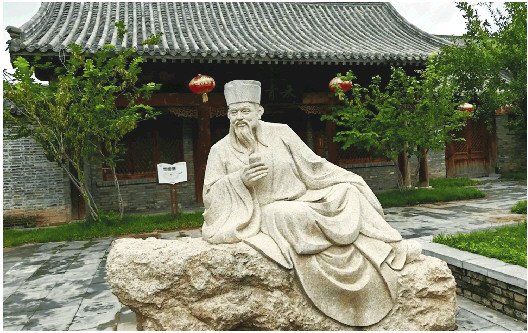
Core Viewpoint - The article highlights the life and contributions of Ouyang Xiu, emphasizing his dual role as a prominent literary figure and a compassionate politician who prioritized the welfare of the people during his governance in Qingzhou. Group 1: Historical Context - Ouyang Xiu faced political challenges and was demoted to Bozhou before being appointed as the governor of Qingzhou at the age of 62, despite his reluctance to continue in public service [3] - His journey to Qingzhou included a visit to Jinan, where he was inspired by the natural beauty and historical significance of the area, leading him to compose notable poetry [4] Group 2: Governance Philosophy - Ouyang Xiu's governance style was characterized by a principle of "leniency and simplicity," aiming to avoid burdening the populace with heavy taxes and regulations [7][8] - He initiated disaster relief efforts in response to a famine, distributing aid and managing resources to alleviate the suffering of the people [7][8] Group 3: Literary Contributions - Ouyang Xiu was a prolific writer, producing over a thousand poems and numerous essays, with his literary style influencing many future writers [10] - His poetry often reflected his deep connection to nature and his longing for a simpler life, as seen in his works written during his time in Qingzhou [12][13] Group 4: Legacy and Impact - His governance led to a period of stability and prosperity in Qingzhou, as indicated by the reduction in crime and the flourishing of agriculture [9][14] - Ouyang Xiu's contributions to literature and governance left a lasting legacy, with memorials established in his honor after his departure from Qingzhou [14]

从关洛学子到考古鼻祖 吕大临藏着怎样的金石梦
Jing Ji Guan Cha Bao· 2025-10-23 02:03
Core Viewpoint - The article highlights the life and contributions of Lü Dalin, a pioneering figure in Chinese archaeology, who created the first systematic catalog of ancient artifacts, "Kao Gu Tu," despite facing the irony of his own tomb being looted centuries later [1][22]. Group 1: Background and Education - Lü Dalin was born into a prominent family in the Northern Song dynasty, known for its scholarly achievements, with several family members holding significant political and cultural positions [2][3]. - He was influenced by the academic thoughts of his time, particularly the "Qi Ben Lun" of the Guanzhong school, which emphasized practical knowledge over theoretical discussions [2][3]. Group 2: Contributions to Archaeology - Lü Dalin's work "Kao Gu Tu" was completed in 1092 and included 234 artifacts, meticulously documenting their shapes, inscriptions, and historical significance, establishing a rigorous academic standard for artifact cataloging [9][10]. - The book was innovative in its classification system, organizing artifacts by their uses, which influenced future scholars and remains relevant in modern studies [10][11]. Group 3: Methodology and Techniques - Lü Dalin developed six distinct drawing methods to accurately represent artifacts, including central projection and isometric projection, which allowed for a comprehensive visual understanding of the objects [12][19]. - His approach to documenting artifacts involved detailed descriptions of dimensions, inscriptions, and historical context, providing a reliable reference for future scholars [11][12]. Group 4: Personal Legacy and Irony - Despite his efforts to protect his own tomb with advanced designs, Lü Dalin's burial site was ultimately looted in a modern theft, highlighting the tragic irony of his life dedicated to preserving history [21][22]. - The article reflects on how Lü Dalin's contributions to archaeology and his vision for understanding ancient artifacts continue to resonate, even as his own legacy faced destruction [22].