《新五代史》

Search documents
百姓称便,即是良吏
Xin Lang Cai Jing· 2026-02-06 12:41
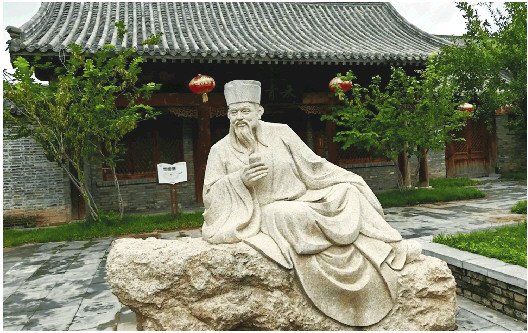
Core Viewpoint - The article highlights the life and contributions of Ouyang Xiu, emphasizing his dual role as a prominent literary figure and a compassionate politician who prioritized the welfare of the people during his governance in Qingzhou. Group 1: Historical Context - Ouyang Xiu faced political challenges and was demoted to Bozhou before being appointed as the governor of Qingzhou at the age of 62, despite his reluctance to continue in public service [3] - His journey to Qingzhou included a visit to Jinan, where he was inspired by the natural beauty and historical significance of the area, leading him to compose notable poetry [4] Group 2: Governance Philosophy - Ouyang Xiu's governance style was characterized by a principle of "leniency and simplicity," aiming to avoid burdening the populace with heavy taxes and regulations [7][8] - He initiated disaster relief efforts in response to a famine, distributing aid and managing resources to alleviate the suffering of the people [7][8] Group 3: Literary Contributions - Ouyang Xiu was a prolific writer, producing over a thousand poems and numerous essays, with his literary style influencing many future writers [10] - His poetry often reflected his deep connection to nature and his longing for a simpler life, as seen in his works written during his time in Qingzhou [12][13] Group 4: Legacy and Impact - His governance led to a period of stability and prosperity in Qingzhou, as indicated by the reduction in crime and the flourishing of agriculture [9][14] - Ouyang Xiu's contributions to literature and governance left a lasting legacy, with memorials established in his honor after his departure from Qingzhou [14]

人工智能产业背后的隐形劳动者|荐书
Di Yi Cai Jing· 2025-11-07 02:47
Core Insights - The book "Feeding AI: A Documentary on the Global Underclass of the AI Industry" reveals the paradoxical foundation of advanced AI, which relies on the invisible labor of millions of workers globally, challenging the narrative of AI as a self-evolving entity [3][4] Group 1: Labor Dynamics in AI - The book highlights the plight of "digital laborers" from the Global South, such as data annotators in Kenya and gig workers in Venezuela, who perform essential tasks for AI development but remain largely unseen and undercompensated [3][4] - It emphasizes the alienation of labor, where the more effective the training of AI by these workers, the quicker they are replaced, leading to a paradox where they become marginalized despite their contributions [4] Group 2: Ethical Considerations - The narrative calls for a reevaluation of ethical standards in AI, urging that the rights and dignity of data laborers should be central to discussions about AI ethics [4] - It raises critical questions about how to provide fair compensation, psychological support, and professional respect to those who contribute to the development of AI technologies [4]