
三元乙丙橡胶板

Search documents
银巴铁路桥梁用橡胶材料被曝“以次充好”,国家铁路局:查
Guan Cha Zhe Wang· 2025-11-14 11:12
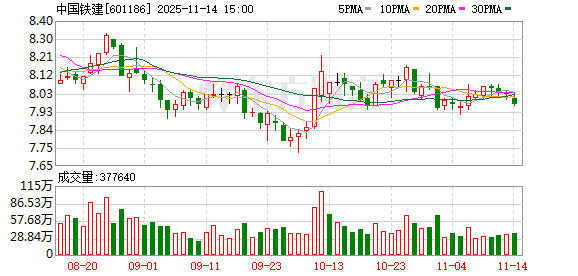
Core Viewpoint - The investigation into the quality of rubber materials used in the Yinba Railway bridge has been initiated due to concerns about substandard materials being used, which could pose safety risks [1][3]. Group 1: Investigation and Findings - The National Railway Administration has formed an investigation team to verify the quality issues related to rubber materials used in the Yinba Railway bridge [1]. - A report from the Economic Reference Daily revealed that the rubber material used by China Railway Construction Corporation's China Railway 16th Bureau has significant quality issues, with tensile strength measured at only 1.78 MPa, which is 15% of the required standard of ≥12 MPa [3]. - The rubber material in question is primarily composed of inferior isoprene rubber instead of the specified ethylene propylene diene monomer (EPDM) rubber, raising concerns about potential fraud [3][6]. Group 2: Material Specifications and Implications - The EPDM rubber boards are critical for preventing direct contact between rigid structures, ensuring even stress distribution, and extending the lifespan of the bridge [6]. - An expert indicated that the substandard quality of the EPDM rubber boards could lead to a reduced lifespan of the bridge structure, posing safety hazards over time [9]. - The project manager from China Railway 16th Bureau stated that they will address any issues with the materials if they arise in the future, including potential recalls and claims against the supplier [9]. Group 3: Market Impact - On November 14, shares of China Railway Construction Corporation experienced a slight decline, closing at 7.97 yuan, reflecting a more than 10% drop year-to-date [10].

一割就开,一扯就断!银巴铁路桥梁用橡胶材料被曝“以次充好”
Mei Ri Jing Ji Xin Wen· 2025-11-14 09:51
Core Viewpoint - Recent investigations revealed potential quality issues with rubber materials used in the construction of the Yinba Railway, specifically concerning the inferior quality of ethylene propylene diene monomer (EPDM) rubber sheets, which could pose safety risks and affect the longevity of bridge structures [1][6][18]. Group 1: Quality Issues - Investigative reports indicated that the EPDM rubber sheets could be easily cut and torn, with laboratory tests showing a tensile strength of only 1.78 MPa, which is merely 15% of the required standard of ≥12 MPa [6][9][18]. - The materials tested were found to be primarily made of isoprene rubber rather than the specified EPDM, raising concerns about their durability and performance under harsh conditions [9][18]. - The presence of rough edges and irregularities in the rubber sheets suggested that they may not meet the quality standards expected for EPDM products [9][18]. Group 2: Regulatory Response - The National Railway Administration responded to media reports by forming an investigation team to verify the claims regarding the substandard rubber materials used in the railway project [1][18]. - The project manager from China Railway 16th Bureau expressed a lack of understanding regarding the material properties and stated that they relied solely on inspection reports to accept the materials [10][15][18]. Group 3: Financial Impact - Following the news of the quality issues, shares of China Railway Construction Corporation (601186.SH) experienced a slight decline, closing at 7.97 yuan, with a year-to-date drop exceeding 10%, resulting in a total market capitalization of 108.2 billion yuan [4].
“一割就开 一扯就断” 银巴铁路桥梁用橡胶材料被曝“以次充好”:核心指标仅为标准的15%!负责人:不了解这种材料!国家铁路局:查
Mei Ri Jing Ji Xin Wen· 2025-11-14 09:38
Core Viewpoint - Recent investigations revealed potential quality issues with rubber materials used in the construction of the Yinba Railway, specifically concerning the EPDM rubber sheets supplied by China Railway Construction Corporation's subsidiary, China Railway 16th Bureau Group [2][5][17]. Group 1: Quality Issues - The EPDM rubber sheets were found to be easily cut and torn, with testing showing that their tensile strength was only 1.78 MPa, which is 15% of the required standard of ≥12 MPa [5][8][17]. - The material analysis indicated that the rubber was primarily isoprene rubber rather than the specified EPDM, which has inferior weather resistance and a shorter lifespan [8][17]. - The presence of rough edges and "fuzz" on the rubber sheets suggested that they were not manufactured to the expected quality standards [8][17]. Group 2: Regulatory Response - The National Railway Administration responded to media reports by forming an investigation team to verify the quality issues raised regarding the rubber materials used in the Yinba Railway [2][5]. - The project manager from China Railway 16th Bureau Group acknowledged a lack of understanding regarding the material properties and stated that they relied solely on inspection reports for quality assurance [10][15]. Group 3: Procurement and Compliance - The project had previously issued a procurement announcement for approximately 25,000 EPDM rubber pads, with 9,000 already delivered in three batches, all of which were reported as compliant based on inspection results [11][14]. - There is a discrepancy between the inspection results, with some reports indicating compliance while others reveal significant deficiencies, raising concerns about the quality control processes [15][17]. - The procurement announcement explicitly prohibited the use of recycled rubber in the EPDM sheets, yet the materials in question appeared to be substandard [17].
“一割就开,一扯就断”,银巴铁路桥梁用橡胶材料被曝“以次充好”:核心指标仅为标准的15%!负责人:不了解这种材料!国家铁路局:查
Mei Ri Jing Ji Xin Wen· 2025-11-14 09:23
Core Viewpoint - Recent investigations revealed potential quality issues with rubber materials used in the construction of the Yinba Railway, specifically concerning the EPDM rubber sheets, which may compromise bridge safety and longevity [1][6][18]. Group 1: Quality Issues - The rubber sheets tested were found to be easily cut and torn, with a tensile strength of only 1.78 MPa, which is just 15% of the required standard of ≥12 MPa [6][8][18]. - The material analysis indicated that the rubber was primarily isoprene rubber rather than the specified EPDM, which has inferior weather resistance and durability [8][18]. - The presence of rough edges and irregular particles in the rubber sheets suggests that they may not meet the quality standards expected for EPDM products [8][18]. Group 2: Regulatory Response - The National Railway Administration has taken the issue seriously, forming an investigation team to verify the claims regarding the substandard rubber materials [1][6]. - The project manager from China Railway 16th Bureau expressed a lack of understanding regarding the material properties and relied solely on inspection reports for quality assurance [9][16]. Group 3: Financial Impact - Following the news, shares of China Railway Construction Corporation (601186.SH) experienced a slight decline, closing at 7.97 yuan, with a year-to-date drop exceeding 10%, resulting in a total market capitalization of 108.2 billion yuan [4].