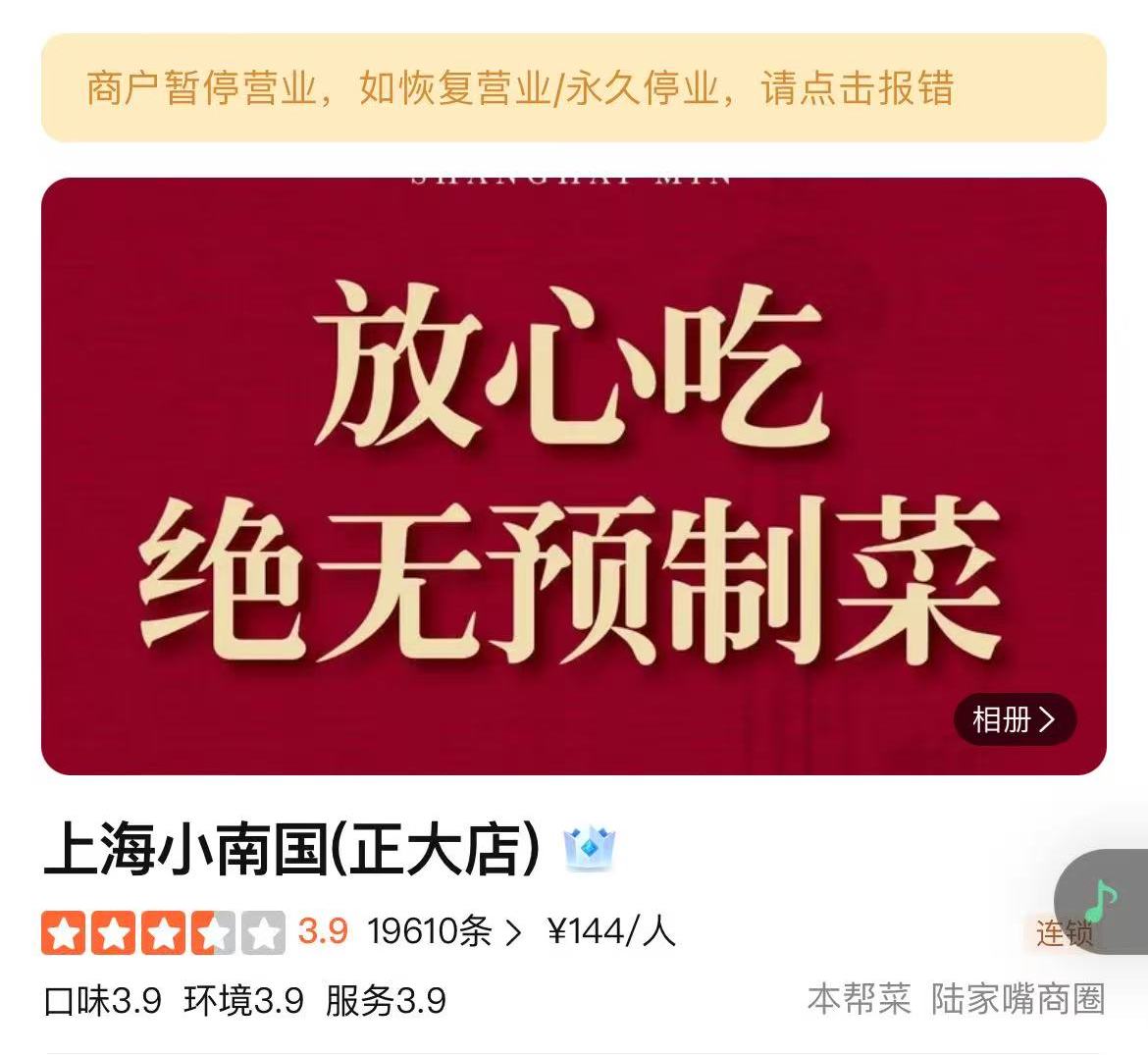
上海小南国餐饮服务

Search documents
港股异动丨上海小南国盘初再跌20%,旗下10间餐厅暂停营运
Ge Long Hui A P P· 2026-02-11 02:47
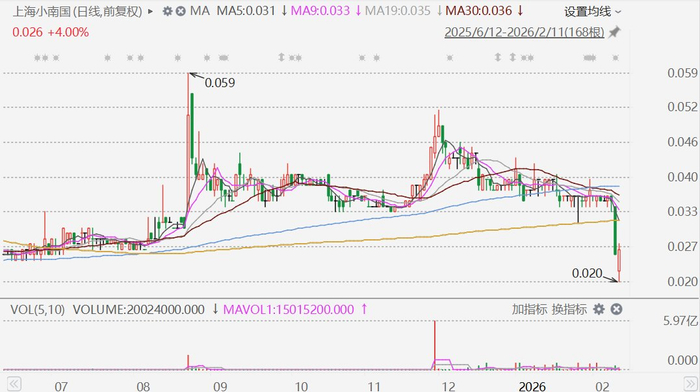
Core Viewpoint - Shanghai Xiao Nan Guo (3666.HK) has experienced significant stock price decline, with a drop of over 28% followed by a further decrease of 20% to 0.02 HKD, before a slight recovery to 0.026 HKD. The company is undergoing a strategic restructuring due to ongoing profitability issues in the mainland Chinese restaurant sector [1] Group 1: Company Operations - The company has temporarily suspended operations of its ten restaurants under the "Shanghai Xiao Nan Guo" brand in Shanghai as part of its strategic restructuring efforts [1] - The board clarified that reports of all restaurants being closed were inaccurate, and they are processing refunds for deposits while prepaid cards are secured in designated accounts for customer refunds [1] Group 2: Strategic Restructuring - The strategic restructuring is part of a broader investment portfolio reorganization aimed at streamlining operations and reallocating resources to core markets [1] - The decision to pause operations is a response to the ongoing lack of profitability in the mainland restaurant business, intended to reduce financial losses in a challenging business environment [1] - The restructuring plan is expected to enhance operational efficiency, improve product and service quality, and lower costs [1]

上海小南国(03666):相关文章中所述“按金及预付卡不可退还”的说法并不正确 正为顾客办理按金退还
智通财经网· 2026-02-10 14:01
Core Viewpoint - The company is undergoing a strategic restructuring, temporarily halting operations of its ten "Shanghai Xiao Nan Guo" restaurants to improve operational efficiency and address ongoing financial losses in the mainland China dining sector [1][2]. Group 1: Company Operations - The company confirmed that the operations of its ten restaurants under the "Shanghai Xiao Nan Guo" brand have been temporarily suspended as part of a strategic restructuring [1]. - The company is processing refunds for deposits and clarifies that prepaid cards have funds stored in designated accounts, which are available for refunds [1]. Group 2: Strategic Restructuring - The board views the strategic restructuring as part of an ongoing portfolio reorganization aimed at streamlining operations and reallocating resources to core markets [2]. - The decision to pause operations reflects the lack of profitability in the mainland dining business and aims to reduce financial losses in a challenging business environment [2]. - The company plans to enhance operational efficiency, improve product and service quality, and lower costs as part of a broader strategy [2]. - Future focus will be on resource allocation efficiency and implementing a comprehensive business overhaul and brand revitalization plan to align with evolving consumer preferences [2].
上海小南国难过“年关”:总部人去楼空,商务部门正推进协商解决
Xin Lang Cai Jing· 2026-02-10 08:02
Core Viewpoint - Shanghai Xiao Nan Guo, a mid-to-high-end dining brand, has abruptly closed all its restaurants in Shanghai, leaving consumers with unfulfilled reservations and prepaid cards, indicating a significant operational failure and potential financial distress for the brand [1][4][14]. Company Overview - Xiao Nan Guo was established in Shanghai and became a representative of mid-to-high-end Chinese dining, expanding rapidly after 2000 into major cities like Beijing, Guangzhou, and Shenzhen [9]. - The brand was listed on the Hong Kong Stock Exchange in 2014, marking a significant milestone in the capitalization of Chinese restaurant chains [9]. Recent Developments - All 13 Xiao Nan Guo restaurants in Shanghai have ceased operations, with remaining sub-brands also closing down, affecting consumer reservations and prepaid card balances [1][4]. - The company’s headquarters has been vacated, with reports of employees and suppliers facing unpaid wages and outstanding payments [6][10]. Financial Situation - As of mid-2025, Xiao Nan Guo reported current liabilities of approximately 247 million RMB, with trade payables around 76.33 million RMB and lease liabilities of 26.63 million RMB [10]. - The total employee count was about 181, with total employee costs amounting to 44.8 million RMB, representing 44% of revenue [10]. Market Challenges - The brand's business model heavily relies on formal dining and business banquets, which have seen a decline in demand, leading to reduced frequency of high-end dining experiences [10]. - Rising operational costs, including rent and labor, have further eroded profit margins, making the brand vulnerable to market fluctuations [10]. Strategic Adjustments - The founder has attempted to diversify the brand's offerings by introducing new dining concepts, but these efforts have not successfully penetrated either the mass market or established a strong differentiation in the high-end segment [11][13]. - Recent restructuring plans include selling the Hong Kong subsidiary and rebranding existing locations to attract a younger demographic, indicating a shift in strategy to adapt to changing consumer preferences [14]. Consumer Impact - Consumers with prepaid cards and reservations have been left in a difficult position, with some receiving refunds for their reservations, while others await resolution for their prepaid balances [14].