资源分配

Search documents
大中华金融拟出售和锋有限公司
Zhi Tong Cai Jing· 2026-02-27 14:37
Core Viewpoint - The company intends to sell all issued share capital of a subsidiary to Mr. Guo Guangxiong for HKD 1.00, aiming to alleviate financial burdens and reallocate resources more efficiently to its remaining tobacco flavor business [1] Group 1: Sale Details - The sale involves a subsidiary that holds full ownership of nine companies established in China, primarily engaged in financial guarantee, loan financing, micro-lending, loan referral, and consulting services [1] - The subsidiary has ceased its loan financing operations in Beijing due to adverse impacts from the Chinese economy and business environment, and has not generated any revenue since 2024 [1] Group 2: Financial Implications - The board believes that the proposed sale will help reduce the financial burden on the group, which has recorded losses for several consecutive years and is in a net debt position [1] - The sale is expected to free up working capital that was previously allocated to the subsidiary, allowing for more efficient resource distribution to the company's other business segments [1]
大中华金融(00431.HK)拟1港元出售亏损贷款融资业务 专注烟草香精主业
Ge Long Hui· 2026-02-27 14:35
Core Viewpoint - The company has agreed to sell a subsidiary for 1.00 HKD due to ongoing financial losses and high debt levels, aiming to alleviate financial burdens and reallocate resources to more profitable areas [1][2] Group 1: Financial Performance - The company's loan financing business has been negatively impacted by the Chinese economy and business environment, resulting in losses since 2019 [1] - The pandemic has worsened borrowers' financial conditions, leading to increased defaults on loans and interest repayments, significantly raising credit risk [1] - The subsidiary has recorded continuous losses and is in a net debt position, with no clear future business plan [1] Group 2: Strategic Decisions - The board believes that the sale will reduce the financial burden on the company, allowing for more efficient allocation of resources to other business areas, particularly the tobacco flavoring business [2] - Since 2023, the company has suspended new loans and financial referral services, focusing instead on recovering outstanding loans and interest [1]
大中华金融(00431)拟出售和锋有限公司
智通财经网· 2026-02-27 14:27
Core Viewpoint - Great China Financial (00431) plans to sell all issued share capital of He Feng Limited to Mr. Guo Guangxiong for HKD 1.00, aiming to alleviate financial burdens from its loss-making subsidiary [1] Group 1: Sale Details - The sale involves a subsidiary that holds full ownership of nine companies established in China, primarily engaged in financial guarantee, loan financing, micro-lending, loan referral, and consulting services [1] - The subsidiary has ceased its loan financing operations in Beijing due to adverse impacts from the Chinese economy and business environment, and has not generated any revenue since 2024 [1] Group 2: Financial Implications - The board believes that the proposed sale will help reduce the financial burden on the group, which has recorded losses for several consecutive years and is in a net debt position [1] - The sale is expected to free up working capital that was previously allocated to the subsidiary, allowing for more efficient resource allocation to the group's remaining business, specifically in the tobacco flavoring sector [1]
上海小南国(03666):相关文章中所述“按金及预付卡不可退还”的说法并不正确 正为顾客办理按金退还
智通财经网· 2026-02-10 14:01
Core Viewpoint - The company is undergoing a strategic restructuring, temporarily halting operations of its ten "Shanghai Xiao Nan Guo" restaurants to improve operational efficiency and address ongoing financial losses in the mainland China dining sector [1][2]. Group 1: Company Operations - The company confirmed that the operations of its ten restaurants under the "Shanghai Xiao Nan Guo" brand have been temporarily suspended as part of a strategic restructuring [1]. - The company is processing refunds for deposits and clarifies that prepaid cards have funds stored in designated accounts, which are available for refunds [1]. Group 2: Strategic Restructuring - The board views the strategic restructuring as part of an ongoing portfolio reorganization aimed at streamlining operations and reallocating resources to core markets [2]. - The decision to pause operations reflects the lack of profitability in the mainland dining business and aims to reduce financial losses in a challenging business environment [2]. - The company plans to enhance operational efficiency, improve product and service quality, and lower costs as part of a broader strategy [2]. - Future focus will be on resource allocation efficiency and implementing a comprehensive business overhaul and brand revitalization plan to align with evolving consumer preferences [2].
从厌胜到压岁:一枚铜钱背后的千年祝福
Xin Lang Cai Jing· 2026-02-09 02:49
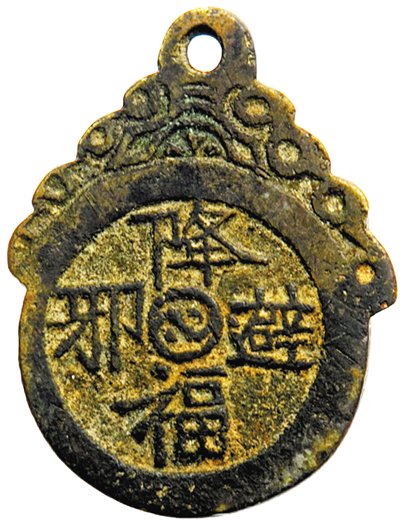
Core Viewpoint - The tradition of giving "lucky money" during the Spring Festival has evolved from its ancient origins as a tool for warding off evil spirits, known as "Yansheng money," which dates back over two thousand years to the Han Dynasty [2][3]. Group 1: Historical Background - "Yansheng money" was initially used as a talisman against evil spirits, with its name meaning to "suppress and conquer" [2]. - The earliest forms of Yansheng money appeared during the Han Dynasty, featuring auspicious phrases and symbols intended to convey blessings and drive away misfortune [2][3]. - The design of Yansheng money reflects early financial philosophy, symbolizing the connection between heaven and earth, and its annual circulation aligns with agricultural cycles [3]. Group 2: Evolution of the Tradition - The transformation from Yansheng money to "lucky money" for children is linked to folklore about a malevolent spirit called "Cui," which would harm sleeping children on New Year's Eve [4]. - A popular story describes how a family used copper coins wrapped in red paper to scare away the spirit, leading to the term "lucky money" evolving from "Cui money" due to phonetic similarities [4]. - The Tang Dynasty saw the emergence of "Xier money," which combined the functions of celebrating births and warding off evil, marking a significant transition towards the modern practice of giving lucky money [4][5]. Group 3: Cultural Significance - By the Song Dynasty, lucky money had become an established part of New Year customs, reflecting the growing importance of this tradition in Chinese culture [5]. - The practice evolved to include both monetary and symbolic value, with the Ming and Qing Dynasties seeing the use of red strings to tie coins, which later transitioned to red paper wrapping in the Republic era [5]. - Ultimately, lucky money transcended its original monetary purpose, becoming a symbol of love, heritage, and hope within Chinese culture [5].

雅高控股决定不再进一步投入德江矿采矿许可证续期
Zhi Tong Cai Jing· 2026-01-21 11:29
Core Viewpoint - The company has decided not to pursue the renewal of the mining license for the Dejiang mine due to financial constraints and regulatory uncertainties, focusing instead on the operations of the Yongfeng mine, which holds a valid mining license and has potential for capacity expansion [1][2][3] Group 1: Mining License Renewal - The renewal application for the mining license was accepted in 2019, but the authorities rejected it on December 29, 2024, leading the company to resubmit the application [1] - The company has not received any positive feedback regarding the renewed application, and the board has decided against investing additional resources into the renewal process due to financial and regulatory uncertainties [1][2] - The renewal process requires significant financial and management resources, which the board deems not in the best commercial interest of the company [1][2] Group 2: Financial Strategy - Given the current financial situation, the company has opted for a more prudent allocation of financial resources, prioritizing cash for operations and loan repayments [2] - The board believes that focusing on the Yongfeng mine, which has a valid mining license and room for capacity expansion, will yield better returns for the company [2] - The tightening industry standards and increasing regulatory enforcement create significant uncertainty regarding the acceptance of the renewal application and the associated costs [2] Group 3: Operational Impact - The Dejiang mine has not generated any revenue in recent years, and its mining rights have been fully impaired as of 2024 [3] - The decision not to pursue the renewal of the mining license is not expected to have a significant adverse impact on the overall business and financial condition of the company [3] - The marble products division will continue normal operations and remain a primary source of revenue, with the board committed to allocating resources to this segment and exploring new business opportunities [3]
雅高控股(03313)决定不再进一步投入德江矿采矿许可证续期
智通财经网· 2026-01-21 11:27
Core Viewpoint - The company has decided not to pursue the renewal of the mining license for the Dejiang mine due to financial constraints and regulatory uncertainties, focusing instead on the operations of the Yongfeng mine, which has a valid mining license and potential for capacity expansion [1][2]. Group 1: Mining License Renewal - The renewal application for the mining license was accepted in 2019, but the authorities rejected it on December 29, 2024, leading the company to resubmit the application [1]. - The company has not received any positive feedback regarding the renewed application, and the board has decided against investing additional resources into the renewal process due to financial and regulatory uncertainties [1][2]. - The renewal process requires significant financial and management resources, which the company deems not in its best commercial interest given the current market conditions [2]. Group 2: Financial Strategy - The company is prioritizing cash for current operations and loan repayments, opting for a more prudent use of financial resources [2]. - The board believes that focusing on the Yongfeng mine, which has an effective mining license and room for capacity expansion, will yield better returns for the company [2]. - The tightening industry standards and increasing regulatory enforcement create significant uncertainty regarding the approval of the renewal application and the associated costs [2]. Group 3: Market Conditions - The marble products industry in China has faced challenges due to a slowdown in the commercial and residential property markets, leading to reduced demand and pressure on sales prices and profit margins [2]. - The Dejiang mine has not generated any revenue in recent years, and its mining rights have been fully impaired as of 2024, indicating that the decision not to pursue the license renewal will not significantly impact the company's overall business and financial status [3]. - The marble products division will continue to operate normally and remain a primary source of revenue, with the board committed to allocating resources to this segment and exploring new business opportunities [3].
年轻人爱上“租经济”丨生活中的经济学
Xin Lang Cai Jing· 2026-01-11 05:54
Group 1 - The core viewpoint is that the "rent instead of buy" consumption model is gaining popularity among young consumers, reflecting a shift in their consumption values towards flexibility and experience [1][2][4] - The car rental market has seen a significant increase in bookings, with over 40% of users confirming their rental plans a month in advance, and a notable rise in orders for new energy vehicles, indicating a shift in consumer preferences [1][2] - The rental market for high-value items like cameras and drones is thriving, with daily rental prices ranging from tens to hundreds of yuan, allowing consumers to save on upfront costs and avoid depreciation risks [2][3] Group 2 - Young consumers are increasingly making rational purchasing decisions, focusing on the actual usage value of products rather than ownership, which is evident in their preference for renting high-cost, low-frequency-use items [2][3] - The development of a credit system is supporting the rental economy, with third-party credit agencies establishing new credit rules that allow for credit-based rentals instead of traditional deposits [2][3] - The rental economy faces challenges such as balancing credit risk and managing residual value, as well as the need for a standardized residual value assessment system [3]
印尼矿业部长:印尼出台规定助力中小型企业获得采矿特许权
Wen Hua Cai Jing· 2025-10-09 11:12
Core Viewpoint - Indonesia has introduced a regulation aimed at assisting small and medium-sized enterprises (SMEs) and cooperatives in obtaining mining licenses without undergoing a bidding process [1] Group 1: Regulatory Changes - The new regulation is based on a law passed in February that grants priority access to certain mining areas for smaller companies, including business units of religious organizations [1] - Previously, Indonesia prioritized state-owned enterprises in resource allocation [1] - Only SMEs and cooperatives that meet specific criteria will be eligible for priority access [1] Group 2: Industry Context - Indonesia is the world's largest producer of nickel and exporter of thermal coal, with abundant deposits of tin, copper, and bauxite [1] - The country is also working on extracting rare earth elements from by-products generated during nickel and tin processing [1]
节前老板突然安排了「高优先级」工作?接不接?怎么接?
3 6 Ke· 2025-09-30 10:36
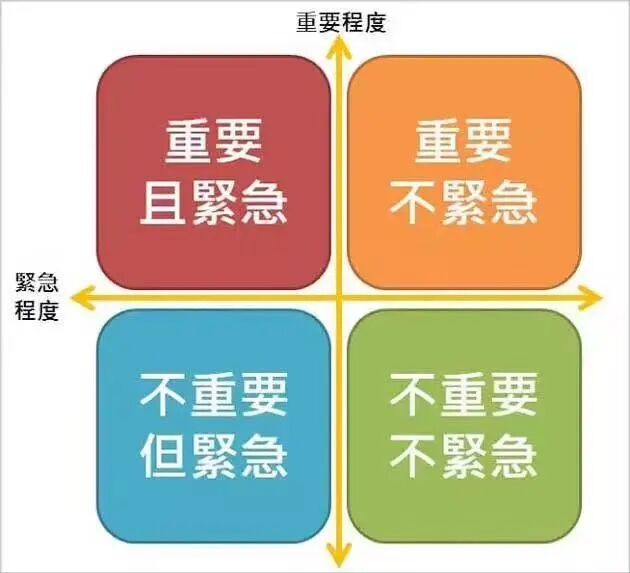
Core Insights - The article discusses the challenges employees face when assigned urgent tasks right before holidays, emphasizing the need for proper resource allocation and team support to manage such situations effectively [1][4][11]. Group 1: Urgency and Importance - Tasks that are both important and urgent require significant resource investment, including team collaboration and financial incentives for employees [4][5]. - Employees often find themselves overwhelmed by urgent but unimportant tasks, which detracts from their focus on truly significant projects [7][11]. Group 2: Resource Allocation - When a task is deemed important but lacks sufficient resources, it may not be as critical as presented, leading to potential mismanagement of efforts [9][10]. - Employees should assess their roles and the resources available before diving into high-stakes projects, ensuring that expectations align with the support provided [11][12]. Group 3: Project Planning - For important and challenging projects, thorough planning is essential before execution to avoid failure [13][16]. - Clear communication with leadership about resource needs and project expectations is crucial for successful outcomes [16].