中国传统书画纸

Search documents
科技再造,千年古纸迎来新生
Ke Ji Ri Bao· 2025-11-28 01:21
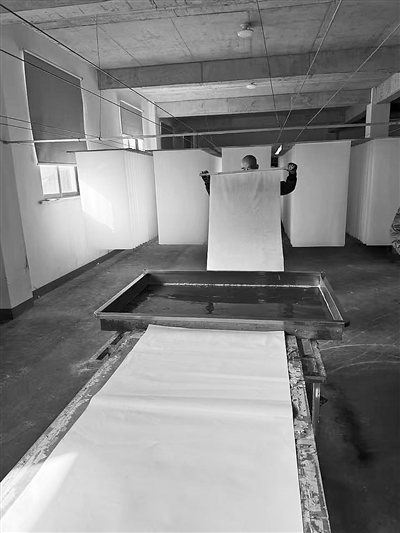
Core Viewpoint - The project "Key Technology Research for the Enhancement of Traditional Chinese Calligraphy and Painting Paper" aims to address the challenges faced by traditional paper-making techniques, including raw material scarcity and complex craftsmanship, by integrating modern technology into the ancient art of paper-making [2][3]. Group 1: Project Background and Objectives - The project was initiated to solve the urgent need for paper in cultural relic restoration, as traditional ancient papers are now considered cultural relics themselves and cannot be used [3]. - The project seeks to develop new types of paper that can replace or even surpass ancient paper, catering to the needs of contemporary artists and promoting the development of the domestic paper industry [3][9]. Group 2: Technological Innovations - The project team utilized advanced technologies such as hyperspectral imaging and infrared electron microscopy to analyze ancient paper materials, leading to the discovery that the raw material for the renowned "Chengxintang Paper" is not the traditionally believed Qingtan bark, but rather the bark of the one-year-old mulberry tree [4][5]. - The team developed a chlorine-free bleaching technology and employed physical methods for pulping to enhance the environmental sustainability of the paper-making process [6][7]. Group 3: Production Process Transformation - The introduction of automated paper-making equipment has significantly improved production efficiency and ensured the uniformity and stability of the paper products, moving away from traditional manual methods [7]. - The project team has also enhanced the durability of the paper by incorporating chemical agents to prevent mold and insects, thereby extending the lifespan of the paper [7][10]. Group 4: Collaboration and Feedback - The project fosters collaboration between scientists and artists, allowing for the translation of artistic needs into specific technical parameters and solutions [9][10]. - New types of paper, including the restored Chengxintang paper, have been sent to institutions like the Palace Museum for trial use, with feedback being used for continuous improvement [9][10]. Group 5: Cultural Heritage and Future Prospects - The project represents a significant step towards the sustainable development and modernization of traditional paper-making techniques, integrating various fields such as technology, engineering, cultural heritage protection, and artistic creation [10]. - The initiative aims to break down barriers between disciplines and encourage more scientists to contribute to the revitalization of traditional culture through technological innovation [10].

科技如何赋能中国传统纸工艺?
Xin Lang Cai Jing· 2025-09-28 01:36
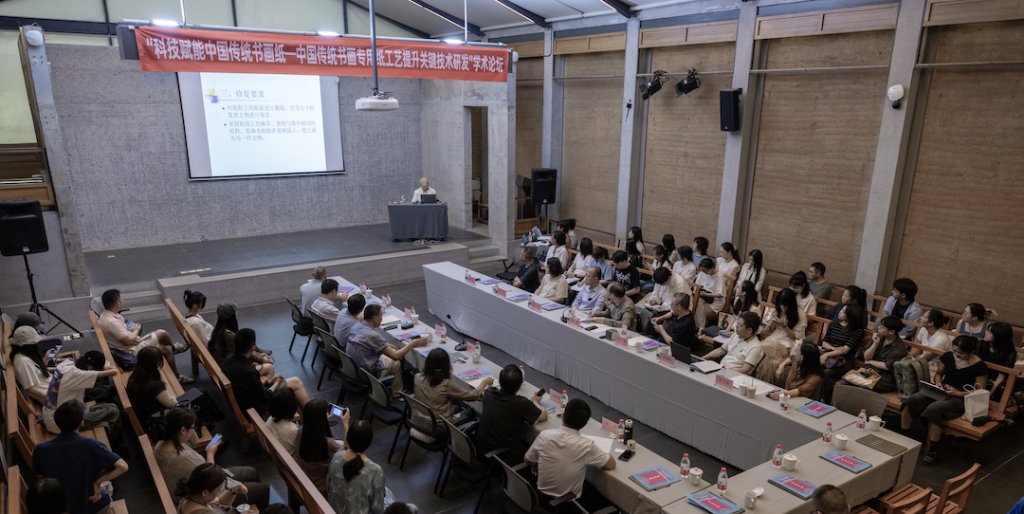
Core Viewpoint - The academic forum on "Empowering Traditional Chinese Calligraphy and Painting Paper with Technology" aims to explore the latest achievements in the research, production, and application of traditional Chinese calligraphy and painting paper, emphasizing the importance of revitalizing and inheriting this historical craft [1][5][15]. Group 1: Forum Overview - The forum gathered experts and scholars from various fields related to paper technology, cultural heritage protection, and artistic creation to discuss advancements in traditional Chinese calligraphy and painting paper [3][6]. - The event was organized by the China Academy of Art and included participation from notable institutions such as the Palace Museum and Fudan University, highlighting a collaborative effort across disciplines [3][5]. Group 2: Key Discussions and Presentations - Zhang Jie from the China Academy of Art presented on the historical significance and evolution of traditional calligraphy paper, discussing its cultural implications and future applications [9]. - Xu Wenjuan from the Shanghai Museum analyzed the composition of paper used in the rare Northern Song dynasty work "Song Tuo Wang Xianzhi Book Roll," demonstrating the diversity of paper types and the challenges in restoration [11]. - Gu An from the Palace Museum shared insights on the functional pursuits and processing techniques of paper used by Emperor Qianlong, providing a modern scientific analysis of historical paper artifacts [12]. Group 3: Objectives and Future Directions - The forum's primary goal is to leverage technology to enhance the traditional paper-making process, addressing challenges such as environmental sustainability, standardization, and intelligent manufacturing [6][15]. - The discussions emphasized the need for interdisciplinary collaboration to ensure the longevity and relevance of traditional paper crafts in contemporary society [6][12].