
中国空间站天和核心舱

Search documents
2天→6.5小时→3.5小时,跨越式发展!中国空间站永远值得期待
Yang Shi Wang· 2025-11-01 04:57
Core Points - The Shenzhou 21 manned spacecraft successfully docked with the Tianhe core module of the Chinese space station on November 1, marking the seventh "space meeting" in China's space history [1][7] - The docking process took approximately 3.5 hours, setting a new record for the fastest docking between a Shenzhou spacecraft and the space station [3][19] - The Shenzhou 21 crew will stay at the space station for about six months, conducting various scientific and application tasks [9] Group 1: Docking Process - The Shenzhou 21 spacecraft underwent four orbital maneuvers before successfully docking, with the entire process taking about 3.5 hours [3][5] - This docking time has been reduced from the previous 6.5 hours, showcasing advancements in docking technology [5][17] - The new docking mode requires higher precision in both the space station's attitude control and the rocket's launch accuracy [11][13] Group 2: Technological Advancements - The ability to achieve a 3.5-hour docking time represents a significant leap in China's manned spaceflight capabilities [19] - The improvements in docking efficiency enhance astronaut comfort and safety, as well as overall mission efficiency [19] - This advancement is crucial for future deep space missions, including manned lunar and Mars exploration [19] Group 3: Future Plans - The Shenzhou 21 crew will engage in tasks such as extravehicular activities, cargo operations, and installation of space debris protection devices [9] - The successful docking and subsequent operations will contribute to the comprehensive application benefits of the space station [9]

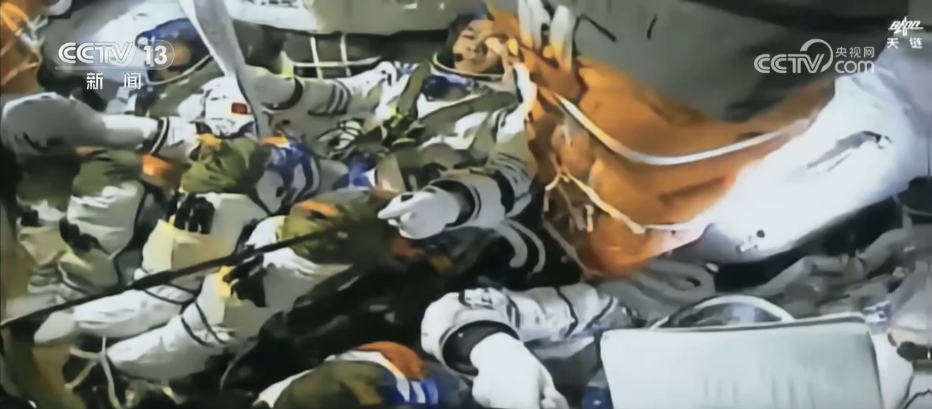
神舟载人飞船首次实现3.5小时交会对接
Zhong Guo Xin Wen Wang· 2025-10-31 21:30
Core Points - The Shenzhou 21 manned spacecraft achieved a significant milestone by completing a 3.5-hour rendezvous and docking with the Tianhe core module of the Chinese space station, marking a breakthrough in China's autonomous rapid rendezvous technology [1][2] - This achievement reflects a major evolution in China's docking technology, transitioning from the initial 44-hour docking with Tiangong-1 to a standard of 6.5 hours, and now to the current 3.5 hours [1][2] Summary by Sections Technological Advancements - The reduction in docking time was achieved by decreasing the number of orbits from 3 to 2 during the remote guidance phase and shortening the initial distance in the close-range guidance phase [2] - The GNC (Guidance, Navigation, and Control) system plays a crucial role in managing the entire docking process, from launch to docking and return, by processing vast amounts of data for precise decision-making [3] Energy Management - The rapid docking mode presents new challenges for the spacecraft's power distribution system, requiring quick maneuvers and adjustments that demand reliable energy supply [3] - Upgrades to the power distribution system allow the solar panels to quickly orient towards the sun, ensuring stable energy conditions and enhancing mission reliability [4] Mission Flexibility - The new docking mode eliminates previous constraints on launch windows related to solar panel angles, significantly improving mission planning flexibility and overall reliability [4]