
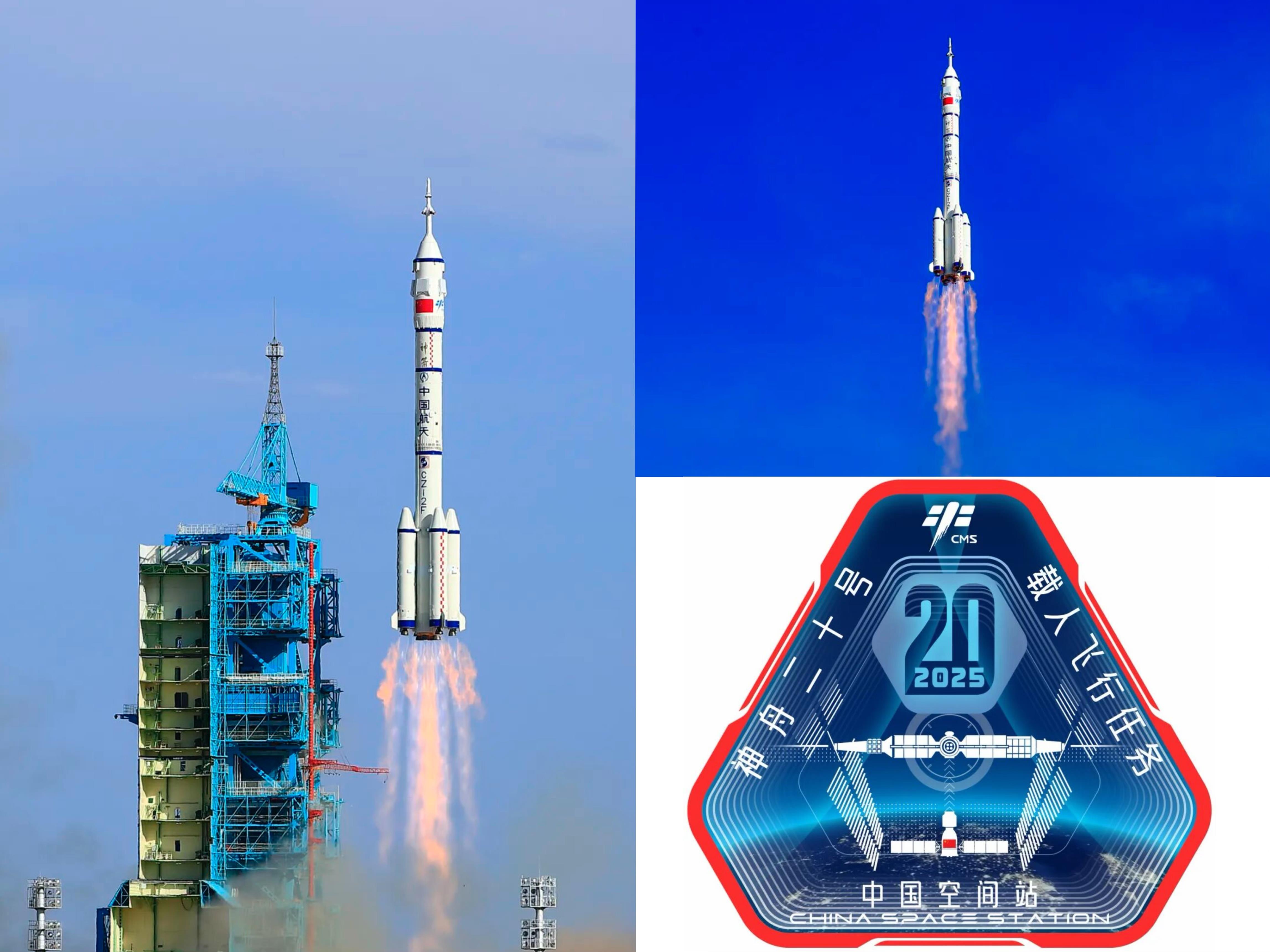
神舟二十一号载人飞船

Search documents
神二十乘组天外归来后首次公开亮相 分享“换船”返回经历与感悟
Xin Hua She· 2026-01-16 10:29
Core Insights - The Shenzhou-20 crew, led by commander Chen Dong, expressed gratitude for public support, emphasizing it as motivation to overcome challenges and complete their mission [1] - The crew shared their experience of dealing with a window crack caused by space debris during their mission, which led to a delayed return to Earth [1] - The successful return of the crew and the subsequent docking of Shenzhou-22 with the space station highlighted the safety and efficiency of China's manned space program [1] Group 1 - Chen Dong became the first Chinese astronaut to exceed 400 days in space, viewing the record as a valuable testament to progress, while also acknowledging that records are meant to be broken [2] - Chen Zhongrui, on his first flight, completed three extravehicular tasks, marking significant milestones in the construction of the space station [2] - Wang Jie, who transitioned from ground support to space operations, encouraged youth to understand that space exploration requires hard work and perseverance [2] Group 2 - Following their return, the Shenzhou-20 crew underwent a series of recovery phases, with their physical and mental health being closely monitored, showing good overall condition [2] - The crew is committed to continuing their tasks with enthusiasm, aiming to fulfill the expectations of the nation and its people [3]
创历史新高
Xin Lang Cai Jing· 2026-01-03 23:23
Group 1: Aerospace Industry - In 2025, China achieved a record high of 92 space launches across various fields including manned spaceflight, deep space exploration, and commercial aerospace [3] - The Shenzhou-20 mission set a record for the longest duration in orbit at 204 days, while Shenzhou-21 achieved a rapid docking record of 3.5 hours [3] - The Tianwen-2 mission marked China's first asteroid exploration and sample return mission, showcasing the country's expanding capabilities in deep space exploration [3] - The commercial space sector saw a surge in launches, contributing significantly to the momentum of China's aerospace industry [3] Group 2: Pharmaceutical Industry - In 2025, China's innovative drug licensing transactions exceeded $130 billion, with over 150 deals completed [3] - A total of 76 innovative drugs were approved for market entry in 2025, setting a new historical record for the country [3] - China currently ranks second globally in the number of new drug developments [3] Group 3: Consumer Market - The "Buy in China" campaign and Spring Consumption Season was launched in Shanghai, focusing on product consumption, service consumption, and consumption scenarios [4] - Various themed activities such as "Happy Shopping Spring" and "Boutique Consumption Month" will be organized across different regions [4]


逐梦“天宫”,步履不停!中国载人航天2025精彩回眸
Yang Shi Xin Wen Ke Hu Duan· 2025-12-26 13:21
Core Insights - China's manned space program continues to achieve significant milestones, with successful missions and advancements in space station operations, showcasing the nation's commitment to space exploration and technology development [1][5][44] Group 1: Manned Space Missions - The Shenzhou 20 manned spacecraft was successfully launched on April 24, marking the 20th mission in the Shenzhou program and the 35th launch since the program's inception [5] - The crew for this mission included Chen Dong, Chen Zhongrui, and Wang Jie, with Chen Dong serving as the commander [9] - The Shenzhou 19 mission concluded successfully on April 30, with astronauts returning safely after completing their tasks [13] Group 2: Space Station Operations - The Shenzhou 20 crew successfully docked with the Chinese space station, marking the 6th "space reunion" in China's space history [12] - During their stay, the crew conducted three extravehicular activities, setting a world record for the longest single extravehicular activity by astronauts at 9 hours [16] - The crew completed over 90 tasks related to space station construction and maintenance, and conducted more than 80 scientific experiments [16] Group 3: Scientific Research and Experiments - The Tianzhou 8 cargo spacecraft successfully re-entered the atmosphere on July 9, delivering supplies for 36 scientific experiments, including a groundbreaking study on fruit flies in microgravity [20] - The Tianzhou 9 mission launched on July 15, carrying approximately 6.5 tons of supplies, setting a new record for cargo weight delivered to the space station [23] - The Shenzhou 21 mission, launched on October 31, marked the first time rodents were sent to the Chinese space station for research [28] Group 4: Emergency Response and Future Outlook - The Shenzhou 22 mission, launched on November 25, was China's first emergency launch, responding to a potential threat from space debris [44] - The rapid response and coordination among various teams during the emergency launch provided a successful model for handling unexpected events in international space exploration [44] - The industry looks forward to continued advancements and achievements in 2026, building on the successes of the current missions [44]
独家视频丨中国载人航天工程首次应急发射任务纪实
Yang Shi Xin Wen Ke Hu Duan· 2025-11-26 06:04
Core Points - The Shenzhou-22 spacecraft was successfully launched on November 25, marking China's first emergency manned space mission [2] - The Shenzhou-21 spacecraft was launched on October 31, and subsequently docked with the space station, allowing the crews of Shenzhou-21 and Shenzhou-20 to meet in space [2] - The return of the Shenzhou-20 crew was delayed due to the discovery of fine cracks in the return capsule's window, suspected to be caused by micro-debris in space, pushing the return date to November 14 [2] Summary by Sections - **Launch Events** - Shenzhou-22 was launched successfully as an emergency mission [2] - Shenzhou-21 was launched on October 31 and docked with the space station [2] - **Crew Operations** - The crews of Shenzhou-21 and Shenzhou-20 met in space [2] - The return of Shenzhou-20 was delayed due to safety checks [2] - **Technical Issues** - Fine cracks were found in the Shenzhou-20 return capsule's window, leading to concerns about space debris [2]

我国载人飞船首次实施三圈自主快速返回
Ke Ji Ri Bao· 2025-11-17 06:42
Core Viewpoint - The successful landing of the Shenzhou-21 manned spacecraft marks a significant advancement in China's re-entry and return technology, achieving a new level of system reliability with a reduced return time of over 3 hours compared to previous missions [1] Group 1: Re-entry Control - The Shenzhou series spacecraft are developed by the China Aerospace Science and Technology Corporation, with the GNC system acting as the "intelligent driver" responsible for flight control from launch to re-entry [2] - Re-entry control involves two main aspects: orbital departure control and atmospheric re-entry control, with the latter focusing on lift control within the atmosphere [2] Group 2: Transition from 5 Orbits to 3 Orbits - The shift from a 5-orbit to a 3-orbit return strategy enhances the efficiency and emergency response capability of the Shenzhou spacecraft, with onboard computers now autonomously calculating departure control parameters [3] - Multiple verification processes were conducted to ensure the accuracy of the autonomous calculations, confirming the spacecraft's ability to return to Earth with high precision [3] Group 3: Significance of 3-Orbit Autonomous Quick Return - The implementation of the 3-orbit autonomous quick return significantly improves the spacecraft's ability to handle major faults during autonomous flight and docking phases [4] - The reduction in return time from the space station to Earth demonstrates the stability and reliability of China's re-entry technology, showcasing over 30 years of development in this field [4]
解谜、突破、首次,振奋人心!中国“硬核”科技成果不断“上新”
Yang Shi Wang· 2025-11-17 02:45
Group 1: Scientific Discoveries - China's research team discovered five micro-quasars in the Milky Way that emit ultra-high-energy particle streams, providing significant insights into black holes and cosmic rays [1][5][6] - The phenomenon known as the "knee" structure in the cosmic ray energy spectrum, which has puzzled scientists for nearly 70 years, has been linked to these micro-quasars [4][5] Group 2: Lunar Research - The Chinese National Space Administration announced a breakthrough in lunar research, identifying micro-sized hematite and magnetite crystals from samples collected by the Chang'e 6 mission, revealing new mechanisms of lunar oxidation [6][9] Group 3: Military Developments - The first sea trial of China's 076 amphibious assault ship, the Sichuan, was successfully completed, demonstrating its capabilities and innovative technologies such as electromagnetic catapults [9][11][13] Group 4: Space Missions - The Shenzhou 21 manned spacecraft successfully landed, with the crew having spent 204 days in orbit, setting a new record for the longest single crew duration in space for China [15][16][18] Group 5: Renewable Energy Innovations - China's first high-altitude wind energy project, featuring the world's largest 5000 square meter wind energy capturing parachute, successfully completed its test, marking significant progress in harnessing high-altitude wind energy [21][23][25] Group 6: 6G Technology Development - China has completed the first phase of 6G technology trials, developing over 300 key technology reserves and entering the international standard research phase, with commercial deployment expected around 2030 [25]
首次实施!我国这一技术取得新突破
Huan Qiu Wang Zi Xun· 2025-11-15 13:50
Core Viewpoint - The successful landing of the Shenzhou-21 manned spacecraft marks a significant advancement in China's re-entry and return technology, achieving a new level of system reliability with a reduced return time of over 3 hours compared to previous missions [1] Group 1: Re-entry Control - The re-entry control of the spacecraft is managed by the Guidance, Navigation, and Control (GNC) system, which acts as the "intelligent driver" for the spacecraft, overseeing the entire flight control process from launch to return [2] - The re-entry control involves two main aspects: orbital departure control and atmospheric re-entry control, with the latter focusing on lift control within the atmosphere [2] Group 2: Transition from 5 Orbits to 3 Orbits - The transition from a 5-orbit to a 3-orbit return strategy was designed to enhance the efficiency and emergency response capabilities of the Shenzhou spacecraft, with the key change being the shift from ground-based to onboard computer calculations for departure control parameters [3] - Multiple rounds of verification and recalculation were conducted to ensure the accuracy of the onboard calculations, confirming the feasibility of the new return strategy [3] Group 3: Significance of 3-Orbit Autonomous Quick Return - The implementation of the 3-orbit autonomous quick return significantly improves the spacecraft's ability to handle major faults during autonomous flight and docking phases, demonstrating the stability and reliability of China's re-entry technology [4] - The evolution of re-entry technology from the standard ballistic adaptive guidance of Shenzhou-1 to the adaptive predictive guidance of Shenzhou-12, culminating in the 3-orbit quick return of Shenzhou-21, showcases over 30 years of unique development in this field [4]
神舟二十二号飞船发射任务已启动
Xin Jing Bao· 2025-11-15 11:08
Core Viewpoint - China has initiated the launch mission for the Shenzhou-22 spacecraft, which will carry supplies including food for astronauts and equipment for the space station [1] Group 1: Mission Updates - The Shenzhou-20 return mission was delayed due to a suspected impact from small space debris, originally scheduled for November 5 [1] - On November 14, the Shenzhou-21 manned spacecraft successfully separated from the space station, and its return capsule landed safely at the Dongfeng landing site [1] - All three astronauts from the Shenzhou-20 mission, Chen Dong, Chen Zhongrui, and Wang Jie, have safely exited the capsule and returned to Beijing, where they are undergoing a quarantine recovery period and comprehensive medical checks [1] Group 2: Emergency Response Measures - To address the risk of a docked spacecraft being unable to return, China has established an emergency rescue task model during the space station mission phase [1] - A "rolling standby" strategy is employed, where the subsequent manned spacecraft remains on standby at the launch site while the previous one is in orbit, ensuring the safety of astronauts in space [1]
神舟二十号航天员乘组平安凯旋 创在轨驻留时长新纪录
Yang Guang Wang· 2025-11-15 01:49
Core Points - The Shenzhou 21 manned spacecraft successfully landed at the Dongfeng landing site on November 14, 2023, with all three astronauts, Chen Dong, Chen Zhongrui, and Wang Jie, safely exiting the capsule and in good health [1][2] - The mission lasted 204 days, setting a new record for the longest single crew stay in space for Chinese astronauts, during which they conducted four extravehicular activities and numerous cargo operations [2] Summary by Sections Mission Overview - The Shenzhou 21 spacecraft's return command was issued at 14:49 on November 14, leading to the successful separation of the orbital and return modules [1] - The return capsule was successfully landed, and the search and rescue team promptly reached the landing site [1] Astronaut Statements - Astronaut Chen Dong expressed pride in completing the mission and highlighted the success of China's space program [1] - Astronaut Chen Zhongrui noted the close cooperation within the crew to accomplish all assigned tasks [1] - Astronaut Wang Jie emphasized the ongoing nature of space exploration and his commitment to contributing to this field [2] Scientific Contributions - The crew completed a variety of scientific experiments in areas such as microgravity fundamental physics, space materials science, space life science, aerospace medicine, and aerospace technology [2]
中国航天员首次“换乘”天外平安归来
Ren Min Ri Bao Hai Wai Ban· 2025-11-14 22:22
Core Points - The Shenzhou 20 astronaut crew successfully returned to Earth aboard the Shenzhou 21 spacecraft, setting a new record for the duration of stay in orbit for Chinese astronauts [1][2] - This marks the first time Chinese astronauts have returned safely from space using a "transfer" method between spacecraft [2] - The Shenzhou 20 crew spent a total of 204 days in space, completing four extravehicular activities and numerous scientific experiments across various fields [3] Summary by Sections - **Return Mission**: The Shenzhou 20 crew was initially scheduled to return on November 5 but faced a delay due to a minor crack in the spacecraft's window. The mission was resumed with the crew transferring to the Shenzhou 21 for their return [2] - **Safety Measures**: The Chinese manned space program prioritized safety, activating emergency protocols and ensuring a coordinated response to the situation [2] - **Crew Achievements**: Commander Chen Dong became the first Chinese astronaut to exceed 400 days in total spaceflight duration and holds the record for the most extravehicular activities [2][3] - **Scientific Contributions**: During their 204 days in orbit, the crew conducted extensive scientific experiments in microgravity, materials science, life sciences, and aerospace medicine, in collaboration with ground researchers [3]