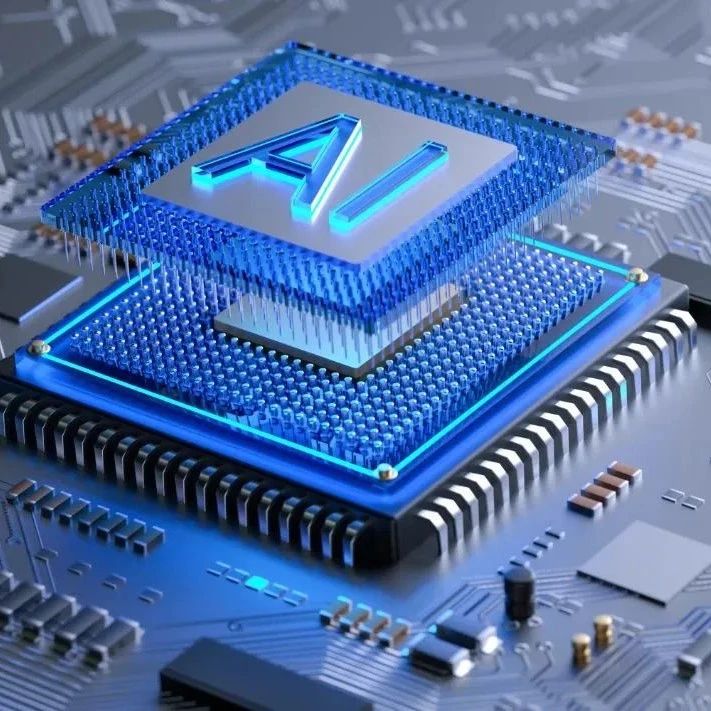
中央处理器 (CPU)

Search documents
芯片年出货量超300亿颗,Arm求变
半导体行业观察· 2026-02-13 01:09
Core Viewpoint - Arm, a company deeply embedded in the semiconductor industry, faces challenges despite its widespread design usage in smartphones and connected devices. The company is optimistic about future growth driven by artificial intelligence, even as its stock price has declined due to weak demand in consumer electronics [2][3]. Group 1: Company Overview - Arm does not sell chips but licenses its designs, allowing clients to modify and produce chips themselves, generating revenue through upfront licensing fees and royalties [2]. - The company has shipped over 300 billion chips, with more than 30 billion shipped in the last year alone [2]. Group 2: Market Dynamics - Despite the growth in the Philadelphia Semiconductor Index by 65% since early 2025, Arm's stock has decreased by 2% due to sluggish demand in smartphones and consumer electronics [2]. - The rise of artificial intelligence is expected to stimulate demand for Arm's chips, particularly in data centers, which are increasingly reliant on both GPUs and CPUs [4]. Group 3: Strategic Choices - Arm may need to evolve from merely selling design blueprints to developing its own chips to capture more value from the AI boom, which could alienate existing clients [3][6]. - The company is exploring new revenue streams through pre-assembled processor modules, which could triple income per chip compared to traditional designs [5]. Group 4: Financial Performance - Analysts project Arm's revenue for the current fiscal year to be around $5 billion, with half coming from patent royalties and the other half from licensing fees, marking a 20% growth from 2025 [4][5]. - The patent royalty per mobile chip was approximately $0.86, representing 2.5% to 5% of the chip's price [5]. Group 5: Competitive Landscape - Arm's revenue is significantly lower compared to major chip manufacturers like Nvidia and Intel, highlighting the need for strategic shifts to enhance profitability [5]. - The company faces competition from China's push for RISC-V architecture, which is seen as a domestic alternative to Arm and Intel designs [7]. Group 6: Future Outlook - Arm's CEO expresses concern over the company's ability to keep pace with the rapid evolution of AI technologies, as chip design and manufacturing can take years, while AI models can evolve in months [7]. - The company's ownership structure, with SoftBank holding over 85% of shares, may influence its strategic direction, particularly as SoftBank seeks to build a competitive chip portfolio [6].


芯片巨头,角逐小市场
半导体行业观察· 2025-12-08 03:04
Core Viewpoint - The article discusses the challenges and developments in the virtual or cloud Radio Access Network (RAN) sector, particularly focusing on the dominance of Intel and the emerging competition from NVIDIA and Google’s TPU technology [1][2][3]. Group 1: Intel's Dominance and Challenges - Intel has been the sole supplier of general-purpose chips for RAN, contradicting the open RAN movement's goal of supplier diversification [1] - Transitioning from Intel to competitors like AMD has proven difficult, and the emergence of AI-RAN further complicates the landscape [1] - NVIDIA's AI-RAN aims to replace traditional RAN custom chips and CPUs with GPUs, claiming significant improvements in spectrum efficiency [1] Group 2: Google's TPU Developments - Google’s TPU has gained attention as a low-cost alternative to NVIDIA's GPUs, with costs estimated to be between 50% to 10% of equivalent NVIDIA GPU capabilities [2] - The latest TPU version, Gemini 3, reportedly outperforms competitors like OpenAI in various benchmarks, despite the common belief that LLM development requires GPUs [2] Group 3: Market Dynamics and Competition - The global RAN product market was valued at approximately $35 billion last year, a fraction of Alphabet's total sales, indicating that RAN may not be a priority for Google [3] - NVIDIA has invested $1 billion to enter the RAN market, while Google has focused on easier-to-deploy parts of the 5G core network [4] - The complexity of adapting existing software to TPU platforms poses challenges for major RAN software developers like Ericsson, Nokia, and Samsung [4][5] Group 4: Developer Ecosystem and Future Prospects - NVIDIA's CUDA platform is seen as a universal alternative for AI workloads, while Google’s TPU lacks a similar developer ecosystem [5] - Future RAN strategies from Google may still involve using CPUs from Intel, AMD, or Arm, as they differ from the x86 architecture [5] - Despite the challenges, Nokia remains optimistic that RAN software developed for NVIDIA's CUDA can be deployed on other GPUs with minimal modifications [6] Group 5: Industry Perspectives on AI-RAN - Telecom operators, including Vodafone and Telus, do not view GPUs as essential for AI-RAN, and major companies like Ericsson and Samsung continue to emphasize AI within their existing Intel-based virtual RAN strategies [6] - NVIDIA faces the challenge of convincing telecom operators of the cost-effectiveness of GPUs compared to other chip platforms, highlighting the potential weakness of its market dominance [6]



AI芯片的双刃剑
半导体行业观察· 2025-02-28 03:08
Core Viewpoint - The article discusses the transformative shift from traditional software programming to AI software modeling, highlighting the implications for processing hardware and the development of dedicated AI accelerators. Group 1: Traditional Software Programming - Traditional software programming is based on writing explicit instructions to complete specific tasks, making it suitable for predictable and reliable scenarios [2] - As tasks become more complex, the size and complexity of codebases increase, requiring manual updates by programmers, which limits dynamic adaptability [2] Group 2: AI Software Modeling - AI software modeling represents a fundamental shift in problem-solving approaches, allowing systems to learn patterns from data through iterative training [3] - AI utilizes probabilistic reasoning to make predictions and decisions, enabling it to handle uncertainty and adapt to changes [3] - The complexity of AI systems lies in the architecture and scale of the models rather than the amount of code written, with advanced models containing hundreds of billions to trillions of parameters [3] Group 3: Impact on Processing Hardware - The primary architecture for executing software programs has been the CPU, which processes instructions sequentially, limiting its ability to handle the parallelism required for AI models [4] - Modern CPUs have adopted multi-core and multi-threaded architectures to improve performance, but still lack the massive parallelism needed for AI workloads [4][5] Group 4: AI Accelerators - GPUs have become the backbone of AI workloads due to their unparalleled parallel computing capabilities, offering performance levels in the range of petaflops [6] - However, GPUs face efficiency bottlenecks during inference, particularly with large language models (LLMs), where theoretical peak performance may not be achieved [6][7] - The energy demands of AI data centers pose sustainability challenges, prompting the industry to seek more efficient alternatives, such as dedicated AI accelerators [7] Group 5: Key Attributes of AI Accelerators - AI processors require unique attributes not found in traditional CPUs, with batch size and token throughput being critical for performance [8] - Larger batch sizes can improve throughput but may lead to increased latency, posing challenges for real-time applications [12] Group 6: Overcoming Hardware Challenges - The main bottleneck for AI accelerators is memory bandwidth, often referred to as the memory wall, which affects performance when processing large batches [19] - Innovations in memory architecture, such as high bandwidth memory (HBM), can help alleviate memory access delays and improve overall efficiency [21] - Dedicated hardware accelerators designed for LLM workloads can significantly enhance performance by optimizing data flow and minimizing unnecessary data movement [22] Group 7: Software Optimization - Software optimization plays a crucial role in leveraging hardware capabilities, with highly optimized kernels for LLM operations improving performance [23] - Techniques like gradient checkpointing and pipeline parallelism can reduce memory usage and enhance throughput [23][24]