中式奶茶

Search documents
老茶馆如何焕发新活力?
Zheng Quan Ri Bao· 2026-02-24 15:44
Core Viewpoint - The article highlights the evolution and cultural significance of Lao She Teahouse, emphasizing its role in promoting traditional Chinese culture while innovating to attract younger consumers [1][4]. Group 1: Cultural Heritage and Innovation - Lao She Teahouse has transformed from a street tea stall established in 1979 to a cultural landmark in Beijing, reflecting the vitality of private enterprises since the reform and opening-up [1]. - The teahouse integrates various traditional cultural performances, such as Peking opera and shadow puppetry, creating a comprehensive cultural experience that includes tea, drama, food, and etiquette [2]. - The teahouse's management emphasizes the importance of preserving and promoting traditional Chinese culture, aiming to keep the essence of Beijing's tea culture alive [2]. Group 2: Engagement with Modern Trends - During the Spring Festival, the teahouse hosted a "head goose" non-heritage market, linking traditional culture with rural revitalization, featuring local products and hands-on experiences for visitors [3]. - To appeal to younger audiences, the teahouse has introduced innovative tea products, such as the "7-day mood tea," which aligns with the fast-paced lifestyle of younger consumers [4]. Group 3: Financial Support and Growth - The growth and innovation of Lao She Teahouse are supported by favorable financial policies aimed at empowering private enterprises, including a recent initiative to provide 1 trillion yuan in loans to support small and medium-sized private businesses [6]. - Financial support enhances cash flow and encourages investment and research, which is crucial for the innovative development of private enterprises like Lao She Teahouse [6]. Group 4: Consumer Experience and Product Offering - The teahouse offers a wide range of products, including tea sets, gift boxes, and cultural merchandise, catering to diverse consumer needs [5]. - Collaborations with established brands like Ruifuxiang and Buyingzhai have created unique consumption scenarios, stimulating new consumer engagement [5].
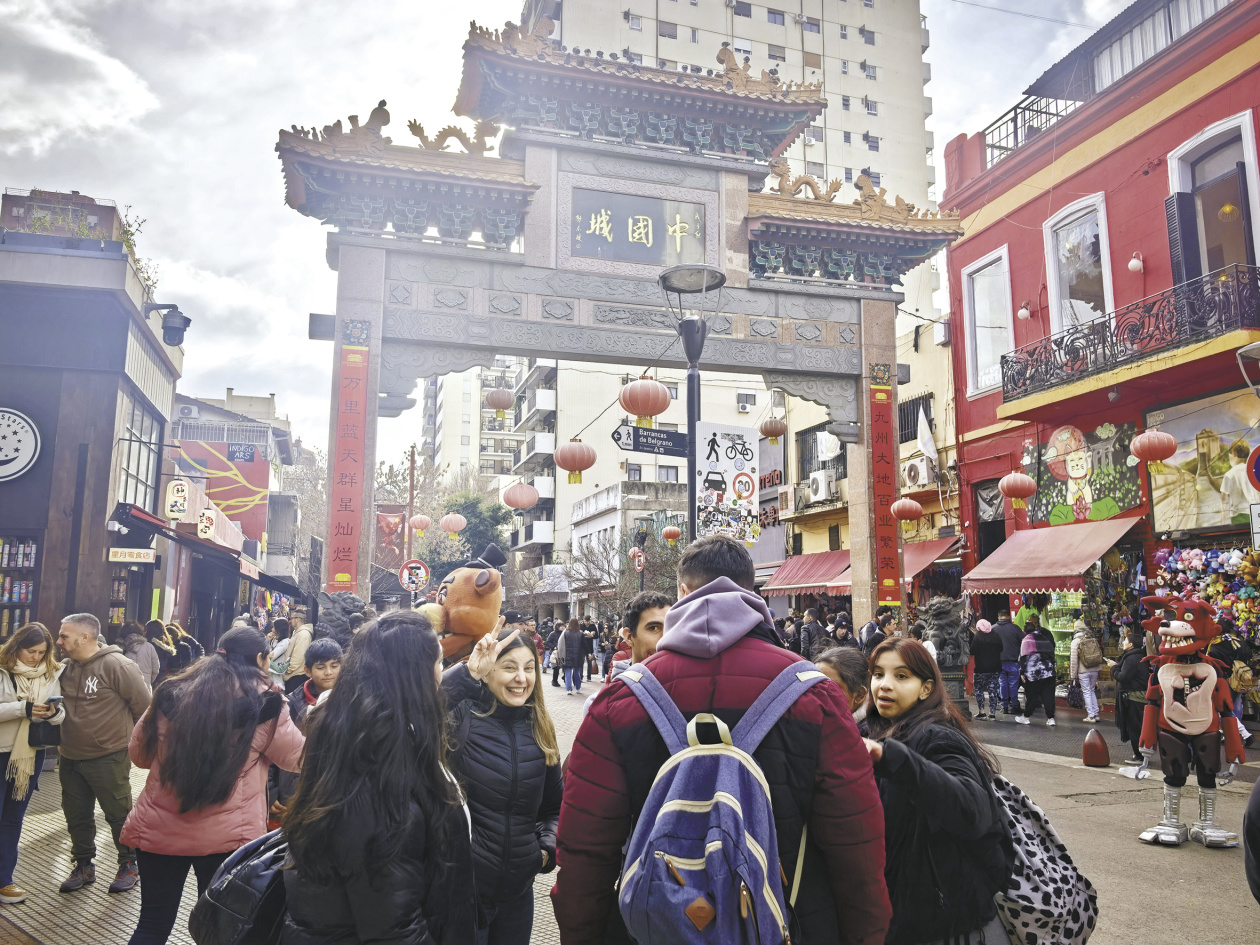
《环球时报》记者走进布宜诺斯艾利斯“中国城”
Huan Qiu Shi Bao· 2025-07-03 23:00
Core Viewpoint - The article highlights the vibrant and unique characteristics of the Chinese community in Buenos Aires, Argentina, emphasizing its popularity among locals and the cultural exchange between China and Argentina [1][6]. Group 1: Chinese Community in Buenos Aires - The Chinese community in Buenos Aires is distinct from other Chinatowns globally, with a significant presence of local Argentinians, referred to as "老外," who outnumber Chinese visitors [3][6]. - The area is a popular social spot, especially on weekends, attracting many visitors who enjoy Chinese cuisine and products, indicating a strong interest in Chinese culture [6][7]. - Local perceptions suggest that the popularity of the Chinese community is linked to China's growing influence and development, sparking curiosity among Argentinians [7][8]. Group 2: Cultural Exchange and Local Interest - The Chinese cultural elements are prevalent in the area, with various Chinese and East Asian influences visible in food, art, and community activities [4][6]. - Local residents express a keen interest in understanding China's rapid development and are eager to learn from its experiences, reflecting a broader trend of curiosity towards China [8][9]. - Despite the interest, there remains a gap in understanding China among many Argentinians, primarily due to reliance on Western media for information [9].