二氧化碳跨临界直冷制冰技术

Search documents
北京的风“吹起”米兰的雪
Xin Lang Cai Jing· 2026-02-04 21:34
Group 1 - The Milan Winter Olympics is heavily influenced by the Beijing Winter Olympics, with organizers emphasizing the importance of Beijing's experience in areas such as sustainable development and venue transformation [3][4] - The majority of venues for the Milan Winter Olympics are either existing or temporarily modified, with 95% following a reversible transformation model similar to that of Beijing [3] - The introduction of carbon dioxide cross-critical direct cooling technology for ice rinks in Milan is expected to reduce energy consumption by 40%, showcasing the adoption of innovative techniques from Beijing [3] Group 2 - The Chinese delegation for the Milan Winter Olympics is the largest ever, with 126 athletes participating in 7 major events, reflecting China's efforts to expand and improve its winter sports program over the past four years [4] - The presence of Beijing Winter Olympic champions and a significant number of newcomers indicates a strategic shift from focusing on a few events to a broader participation across multiple disciplines [4] - The anticipation for stronger representation of Chinese athletes at the Milan Winter Olympics highlights the ongoing development and investment in winter sports in China [4]

国际奥委会主席考文垂:可持续办赛借鉴了北京冬奥经验
Xin Lang Cai Jing· 2026-02-03 06:23
Core Viewpoint - The Milan-Cortina d'Ampezzo Winter Olympics in 2026 emphasizes sustainability as a core principle, addressing climate challenges and learning from the successful experiences of the 2022 Beijing Winter Olympics [1][5]. Technological Empowerment - The event will utilize advanced technologies for venue construction and post-event utilization, inspired by the "green legacy" of the Beijing Winter Olympics [1]. - The adoption of carbon dioxide transcritical direct cooling ice-making technology from Beijing aims to reduce carbon emissions to nearly zero, with further optimizations for low-carbon construction [2]. Legacy Rebirth - The Milan Winter Olympics aims to tackle the issue of post-event venue idleness by reusing existing facilities, reducing new construction by 60% [3]. - The main torch design will transform into a public art installation post-event, and the athletes' village will be designed for direct conversion into community housing [3]. Institutional Innovation - Milan has integrated green standards into its operational framework, including a carbon emission tracking system in the hosting contract, which quantifies the environmental costs of each venue throughout its lifecycle [4]. - The concept of "frugal hosting" from China has been localized in Milan, incorporating furniture rental and modular designs to promote resource recycling [4]. Addressing Challenges - The venue layout for the Milan Winter Olympics is more dispersed, with 15 venues located in distant areas, aimed at protecting the original landscape while adhering to new hosting norms related to climate change [4]. - Despite concerns about preparation progress, all core facilities are reported to be ready, with only final cleaning and finishing tasks remaining [4].
万亿冰雪,南方“尔滨”怎么掘金?
3 6 Ke· 2025-10-20 00:29
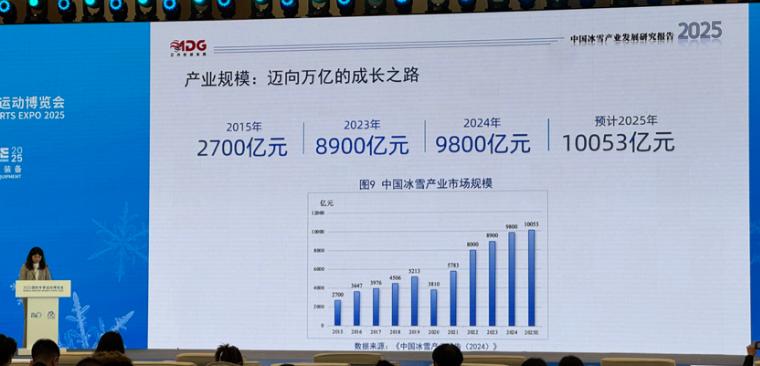
Core Insights - The report "China Ice and Snow Industry Development Research Report (2025)" indicates that the scale of China's ice and snow industry will exceed 1 trillion yuan by 2025, reaching 1,005.3 billion yuan [1] - The compound annual growth rate of the ice and snow industry over the past decade has exceeded 15%, with the industry scale rising from 270 billion yuan in 2015 to 980 billion yuan in 2024 [1] - The participation of Chinese residents in ice and snow sports and related consumption is expected to exceed 187.5 billion yuan in the 2024-2025 season, with a year-on-year growth of over 25% [1] Industry Growth - The Chinese ice and snow industry is entering a phase of sustained high growth, driven by major events like the 15th National Winter Games [2] - Northern regions dominate the ice and snow market due to natural resources, with the Northeast, Inner Mongolia, and Xinjiang accounting for nearly 40% of national ski resort traffic [2] - Southern cities are increasingly eager to tap into the ice and snow economy, with the Yangtze River Delta region leading in the number of indoor ski resorts [2] Infrastructure Challenges - Southern cities face high costs and planning challenges in developing ice and snow facilities due to a lack of natural resources [3] - The energy cost of artificial snowmaking can account for nearly 50% of operational costs, with some indoor ski resorts spending tens of millions on electricity annually [3] - Effective planning is crucial, with successful examples from the Yangtze River Delta demonstrating the importance of location and accessibility for attracting visitors [3] Technological Innovations - Technological advancements are key to controlling operational costs, with energy-saving technologies significantly reducing expenses [5] - The exploration of year-round operational models allows facilities to diversify revenue streams beyond the winter season [5] - Policy support, such as tax incentives and government services, can help reduce operational burdens for southern ice and snow venues [5] Equipment Manufacturing Opportunities - The domestic production rate of ice and snow equipment has room for improvement, presenting opportunities for southern cities to lead in this sector [6] - Innovations in equipment, such as smart snow machines and advanced clothing, are being developed to enhance efficiency and reduce costs [6] - The potential for southern cities to become global manufacturing hubs for ice and snow equipment is significant, leveraging existing industrial strengths [7] Consumer Engagement Strategies - Ice and snow sports in southern cities should be positioned as novel experiences rather than necessities, requiring innovative project designs to attract broader audiences [8] - The integration of local culture and leisure needs into ice and snow offerings can create unique competitive advantages [8] - Engaging families and youth through educational and recreational programs can cultivate future consumer bases for ice and snow activities [10] Tourism and Economic Integration - The combination of ice and snow activities with local tourism resources can enhance visitor experiences and extend their stay [10] - Multi-faceted tourism packages that incorporate local attractions can significantly increase overall tourism revenue [10] - The development of a cohesive strategy that combines ice and snow experiences with regional characteristics is essential for sustainable growth [11]