二苯基甲烷二异氰酸酯(MDI)

Search documents
ICIS发布报告称:美国今年拟投产化工新项目屈指可数
Xin Lang Cai Jing· 2026-01-19 05:47
Group 1 - The core viewpoint of the article highlights that the global chemical market is experiencing an oversupply, leading to a significant slowdown in major chemical projects planned for the U.S. by 2026 [1] - ICIS analysis suggests that the global supply-demand imbalance may take at least two years to gradually alleviate, fundamentally altering the investment rhythm and strategic layout of the industry [1] - The only major project expected to be operational in the U.S. by 2026 is the Golden Triangle Polymers polyethylene (PE) project, a joint venture between Chevron Phillips and QatarEnergy, anticipated to start in late 2026 or early 2027 in Texas [1] Group 2 - Other projects are either limited in scale or delayed, with BASF expected to complete its third-phase expansion of methylene diphenyl diisocyanate (MDI) at the Geismar site in Louisiana by mid-2026 [1] - A startup company, Again, plans to build a small demonstration facility in Texas City to produce acetic acid using carbon dioxide and hydrogen [1] - As the industry enters its fourth year of decline, more production facilities may be permanently closed due to global capacity contradictions, weak demand, and a high-interest-rate environment, putting pressure on profit margins for many products [1] Group 3 - Industry forecasts indicate that the global ethylene and PE market cycle may not hit bottom until at least 2028 [1]
巴斯夫:百年铸金石 共赴新征程
Zhong Guo Hua Gong Bao· 2025-12-22 03:16
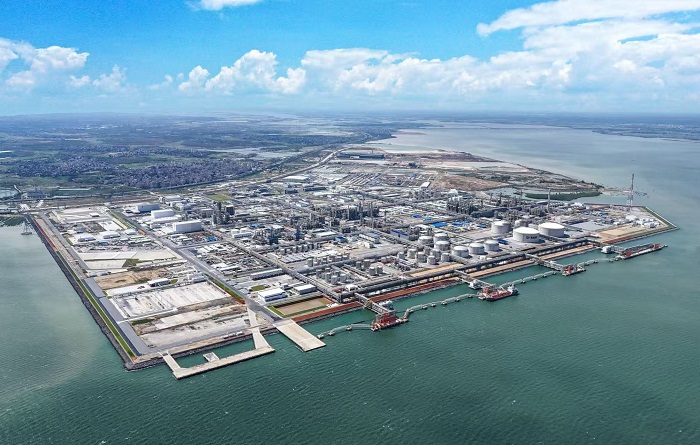
Core Insights - BASF has been a significant player in the Chinese market for 140 years, marking its deep-rooted presence and commitment to the region [1][4] - The successful launch of the first products from the Zhanjiang integrated production base represents a milestone in BASF's largest single investment project to date in China, further solidifying its strategic focus on the Chinese chemical industry [1][12] - The "Winning with Purpose" global strategy aims to drive sustainable development and innovation, aligning with China's economic transformation and growth potential [15][16] Historical Context - BASF's entry into China began in 1885 with the introduction of synthetic dyes, marking the start of its long-standing relationship with the country [4][7] - By 1904, BASF's sales in Asia accounted for 5.6% of total sales, which increased to approximately 14% by 1913, indicating rapid growth in the region [4] - The company's significant investments in China began in the 1980s, coinciding with the country's economic reforms, leading to a robust expansion of its operations [7][8] Investment and Development - The establishment of the first joint venture in Shanghai in the 1980s marked the beginning of BASF's local production capabilities, which have since expanded to 30 production bases across China [8][14] - The Zhanjiang integrated production base, with an investment of €8.7 billion, is set to provide a comprehensive value chain from basic chemicals to consumer products, supporting various industries [13][14] - BASF's commitment to local production is evident, with over 80% of its sales in China coming from locally produced products by 2024 [14] Strategic Initiatives - The "Winning with Purpose" strategy focuses on value creation and performance culture, aiming to become the preferred chemical company while supporting clients' green transitions [15][16] - BASF has set ambitious climate goals, including achieving net-zero emissions by 2050 and transitioning its product lines to renewable energy sources [19][20] - The company actively engages in social responsibility initiatives, fostering community relations and promoting sustainable development through various programs [20][21]