
一体化生产

Search documents
纸浆专家交流
2026-03-22 14:35
Summary of Pulp Industry Conference Call Industry Overview - The global pulp market is influenced by several factors, including supply and demand dynamics, pricing strategies, and production capacity uncertainties [3][4][6]. Key Points Supply and Demand Situation - Major hardwood pulp suppliers, such as Brazil's Suzano and Chile's Arauco, implemented a price increase of $20 per month for three consecutive months in Q1, despite limited acceptance from customers in March [3][4]. - Domestic customers in China have ample inventory, leading to a cautious approach towards new orders, especially with spot prices dropping from 5,000 RMB to 4,600 RMB, which pressures paper mill profits [4][6]. - The softwood pulp market shows a mixed performance, with Canada facing high costs and U.S. tariff threats, while Finland maintains stable pricing, and Chile sees a $10 increase due to quality stability [4][5]. Pricing Dynamics - There is a significant price disparity between domestic and international pulp markets, with international hardwood pulp prices around $610, while domestic prices are lower due to recent declines [6][8]. - The U.S. has seen a price increase for softwood pulp due to a 25% tariff on Canadian imports, which has not been mirrored in the Chinese market where customers are less willing to accept price hikes [11]. Future Market Changes - The pulp market is expected to experience changes in the coming months, particularly in hardwood pulp where supply pressure is anticipated to remain low due to production adjustments [7][8]. - The domestic pulp market is not operating smoothly, with limited release of self-produced pulp capacity and a forecasted increase in hardwood pulp production capacity by 2025 [8][9]. Investment and Cost Control Trends - Despite declining investment returns in the Zhejiang region, the industry continues to expand, with new projects focusing on integrating pulp and paper production capabilities [12]. - The cost of integrated production in China remains higher than in Brazil, impacting international competitiveness [10]. Inventory Levels - Current inventory levels among traders are moderate, with a strong willingness to sell due to falling spot prices, leading to a lack of upward momentum in the market [13]. Price Stability and Market Sentiment - The willingness of companies to maintain pricing may be tested within 1 to 3 months, depending on market conditions and customer demand [14]. - Tyson Foods' announcement of a price increase may reflect a strategy to stimulate transactions rather than a definitive market trend [15]. Additional Insights - The global demand for pulp is primarily driven by China, which has seen a decrease in import volumes from 35 million tons in 2020 to below 30 million tons by 2024 [8]. - The overall economic growth in China is expected to stabilize, which may lead to reduced consumption of paper and pulp, mirroring trends observed in developed markets [8].
巴斯夫:百年铸金石 共赴新征程
Zhong Guo Hua Gong Bao· 2025-12-22 03:16
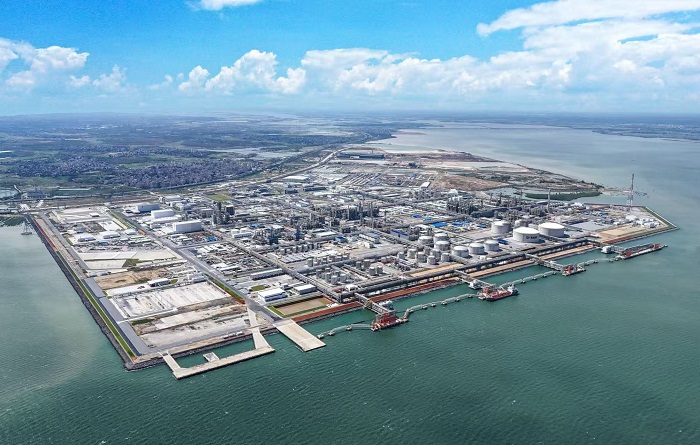
Core Insights - BASF has been a significant player in the Chinese market for 140 years, marking its deep-rooted presence and commitment to the region [1][4] - The successful launch of the first products from the Zhanjiang integrated production base represents a milestone in BASF's largest single investment project to date in China, further solidifying its strategic focus on the Chinese chemical industry [1][12] - The "Winning with Purpose" global strategy aims to drive sustainable development and innovation, aligning with China's economic transformation and growth potential [15][16] Historical Context - BASF's entry into China began in 1885 with the introduction of synthetic dyes, marking the start of its long-standing relationship with the country [4][7] - By 1904, BASF's sales in Asia accounted for 5.6% of total sales, which increased to approximately 14% by 1913, indicating rapid growth in the region [4] - The company's significant investments in China began in the 1980s, coinciding with the country's economic reforms, leading to a robust expansion of its operations [7][8] Investment and Development - The establishment of the first joint venture in Shanghai in the 1980s marked the beginning of BASF's local production capabilities, which have since expanded to 30 production bases across China [8][14] - The Zhanjiang integrated production base, with an investment of €8.7 billion, is set to provide a comprehensive value chain from basic chemicals to consumer products, supporting various industries [13][14] - BASF's commitment to local production is evident, with over 80% of its sales in China coming from locally produced products by 2024 [14] Strategic Initiatives - The "Winning with Purpose" strategy focuses on value creation and performance culture, aiming to become the preferred chemical company while supporting clients' green transitions [15][16] - BASF has set ambitious climate goals, including achieving net-zero emissions by 2050 and transitioning its product lines to renewable energy sources [19][20] - The company actively engages in social responsibility initiatives, fostering community relations and promoting sustainable development through various programs [20][21]


尚太科技(001301):2025年半年报业绩点评&首次覆盖报告:负极销量逆行业高速增长,成本优势显著
Yin He Zheng Quan· 2025-08-27 01:26
Investment Rating - The report assigns a "Buy" rating for the company [5]. Core Views - The company has achieved significant growth in negative electrode sales, outpacing industry growth rates, and has a notable cost advantage due to its advanced graphitization technology and integrated production model [4][66]. - The company is positioned as a key supplier of artificial graphite negative materials in China, with a market share of 12.7%, ranking fourth in the industry [66]. Financial Performance - In the first half of 2025, the company reported revenue of 3.388 billion yuan, a year-on-year increase of 61.8%, driven by increased production capacity and a 65% rise in sales volume of negative materials [7][10]. - The net profit attributable to shareholders for the same period was 479 million yuan, up 34.4% year-on-year, with a net profit margin of 14.1% [32][34]. - The company forecasts revenues of 7.319 billion yuan, 9.747 billion yuan, and 11.705 billion yuan for 2025, 2026, and 2027 respectively, with corresponding net profits of 1.035 billion yuan, 1.329 billion yuan, and 1.681 billion yuan [5][76]. Operational Efficiency - The company maintains a healthy capital structure with a debt-to-asset ratio of 37.3%, indicating a conservative financial structure [47]. - The cash flow situation shows a significant increase in operating cash flow in Q2 2025, reaching 591 million yuan, a year-on-year increase of 309.8% [52]. Technological Advantages - The company has a strong focus on R&D, with a 65.7% increase in R&D investment in the first half of 2025, aimed at developing next-generation artificial graphite negative materials [20][74]. - The integrated production model allows the company to control costs effectively and enhance production efficiency [66][74]. Market Position - The company has established itself as a significant player in the artificial graphite negative material market, with a production capacity expected to reach 500,000 tons by 2025 [66]. - The report highlights the company's competitive edge in the market due to its advanced graphitization technology and ongoing product innovation [69][72].
鲁西化工:年报点评:24年净利高增,25Q1煤化工降本较好-20250427
HTSC· 2025-04-27 10:20
Investment Rating - The report maintains a "Buy" rating for the company with a target price of 14.98 RMB [7][8]. Core Views - The company achieved a significant increase in net profit for 2024, with a year-on-year growth of 148%, reaching 2.03 billion RMB. The revenue for the same period was 29.76 billion RMB, up 17% year-on-year [1]. - The first quarter of 2025 saw a revenue of 7.29 billion RMB, an 8% increase year-on-year, although net profit decreased by 27% to 410 million RMB due to substantial inventory impairment losses [1][4]. - The company is expected to benefit from integrated production and scale advantages, with new capacity gradually coming online, which is anticipated to drive performance growth [1][4]. Summary by Sections Financial Performance - In 2024, the company reported a revenue of 29.76 billion RMB and a net profit of 2.03 billion RMB, with the fourth quarter revenue at 8.18 billion RMB, reflecting a 10% year-on-year increase [1]. - The first quarter of 2025 showed a revenue of 7.29 billion RMB, an 8% increase year-on-year, but a 27% decline in net profit compared to the previous year [1][3]. Price Trends and Market Conditions - Average prices for various products, including butanol and DMF, declined in 2024 due to increased supply, with most products experiencing price drops [2][3]. - The company’s new projects, particularly in nylon production, are expected to contribute positively to revenue growth [2]. Cost Management and Future Prospects - The cost side of coal chemical production showed improvement in the first quarter of 2025, with significant price drops in raw materials like coal [3]. - New projects, including a 400,000-ton organic silicon project, are expected to come online and contribute to future growth [3]. Profit Forecast and Valuation - The report maintains profit forecasts for 2025-2027, estimating net profits of 2.0 billion RMB, 2.3 billion RMB, and 2.6 billion RMB respectively, with corresponding EPS of 1.07 RMB, 1.22 RMB, and 1.39 RMB [4][6]. - The target price of 14.98 RMB is based on a 14x PE ratio for 2025, reflecting the company's integrated advantages and potential from new projects [4].

鲁西化工(000830):年报点评:24年净利高增,25Q1煤化工降本较好
HTSC· 2025-04-27 09:58
Investment Rating - The report maintains a "Buy" rating for the company with a target price of 14.98 RMB [7][8]. Core Views - The company achieved a significant increase in net profit for 2024, with a year-on-year growth of 148%, reaching 2.03 billion RMB. The revenue for the same period was 29.76 billion RMB, up 17% year-on-year [1]. - The first quarter of 2025 saw a revenue of 7.29 billion RMB, an 8% increase year-on-year, although net profit decreased by 27% to 410 million RMB due to substantial inventory impairment losses [1][4]. - The company is expected to benefit from integrated production and scale advantages, with new capacity gradually coming online, which is anticipated to drive performance growth [1][4]. Summary by Sections Financial Performance - For 2024, the company reported a revenue of 29.76 billion RMB and a net profit of 2.03 billion RMB, with a proposed dividend of 0.35 RMB per share [1]. - The fourth quarter of 2024 showed a revenue of 8.18 billion RMB, a 10% increase year-on-year, and a net profit of 450 million RMB, up 46% year-on-year [1]. - The first quarter of 2025 reported a revenue of 7.29 billion RMB, an 8% increase year-on-year, but a net profit decline of 27% [1][3]. Market Conditions - The average prices for various chemical products, including butanol and DMF, declined in 2024 due to oversupply, impacting revenue from the new materials and basic chemicals segments [2][3]. - The company’s new nylon 6 project and improved capacity utilization contributed to a 27% revenue increase in the new materials segment [2]. Cost Management - The cost side of the coal chemical sector showed improvement in the first quarter of 2025, with significant price drops in raw materials like power coal and lanthanum [3]. - The company has initiated new projects, including a 400,000-ton organic silicon project, which is expected to contribute to future revenue growth [3]. Profit Forecast and Valuation - The profit forecast for 2025-2027 estimates net profits of 2.0 billion, 2.3 billion, and 2.6 billion RMB respectively, with corresponding EPS of 1.07, 1.22, and 1.39 RMB [4][6]. - The report assigns a 14x PE ratio for 2025, reflecting the company's integrated advantages and potential from new projects, leading to a target price of 14.98 RMB [4].