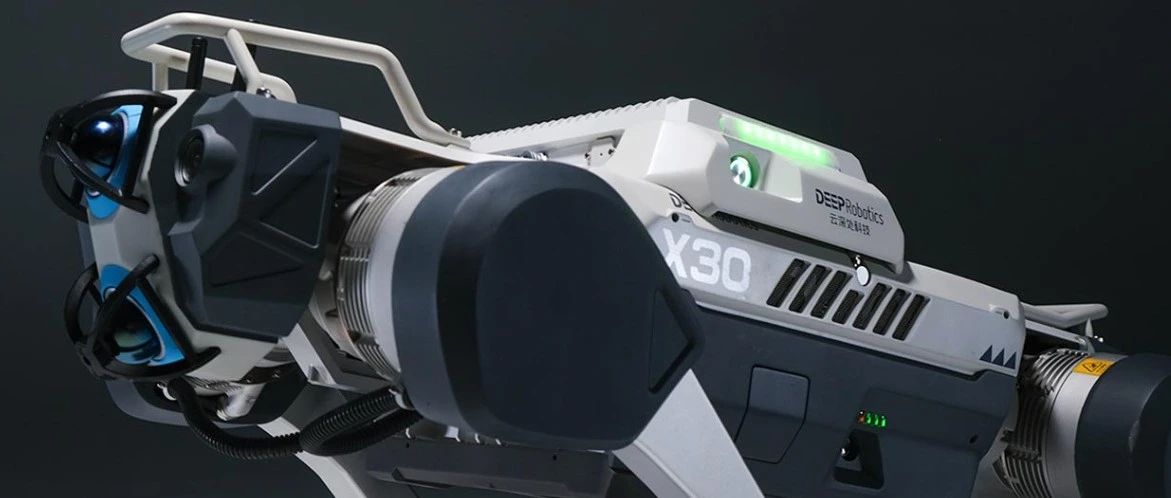
云深处科技四足机器人

Search documents
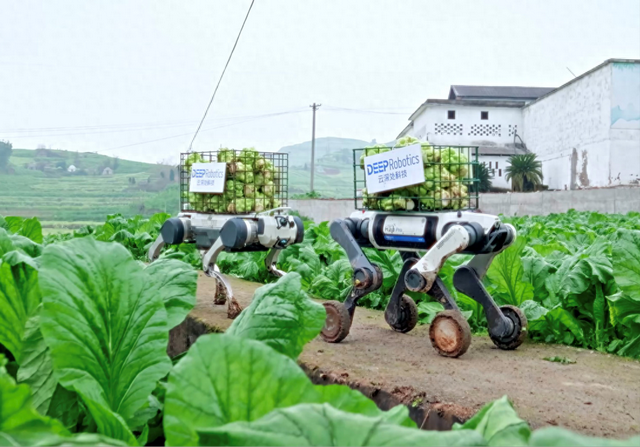
打通田垄运输“最后一公里” 云深处机器狗公益助收涪陵榨菜
Huan Qiu Wang· 2026-02-26 04:26
Core Insights - The article discusses the challenges faced by farmers in Fuling during the peak harvesting season of the core ingredient for Fuling pickles, the green vegetable head, and highlights the introduction of robotic technology to alleviate these challenges [1][3]. Group 1: Agricultural Challenges - The harvesting of green vegetable heads occurs in hilly areas with narrow and slippery paths, making transportation to the roadside labor-intensive for farmers [1]. - Farmers typically carry the heavy vegetable heads manually, which is time-consuming and physically demanding, taking up to half an hour for a round trip [1]. Group 2: Technological Solutions - Cloud Deep Technology has deployed quadruped robots to assist in the harvesting process, significantly improving the efficiency of transporting green vegetable heads from the fields to collection points [3][5]. - The robots can navigate complex terrains and carry heavier loads than human workers, reducing the number of trips required for transportation [3][5]. - The use of sensors allows the robots to identify obstacles and adjust their routes automatically, enhancing the efficiency of the transportation process [3][5]. Group 3: Impact on Farmers - Farmers have reported a noticeable increase in transportation capacity and a reduction in physical labor due to the introduction of robotic assistance [5]. - The technology has been recognized as a significant advancement in agricultural practices, facilitating easier and more efficient operations in challenging environments [5][7]. - Cloud Deep Technology's initiatives demonstrate a commitment to applying robotics in various demanding agricultural scenarios, contributing to rural revitalization and modernizing agricultural practices in China [7].


打破室外全域工作「盲区」!广和通双目视觉算法将成就云深处科技机器狗「慧眼」
雷峰网· 2025-05-15 10:13
Core Viewpoint - Guanghe Tong's self-developed binocular vision algorithm significantly enhances positioning accuracy in outdoor scenarios, paving new paths for the intelligent application of domestic quadruped robots [1][2]. Group 1: Technological Innovations - The collaboration between Guanghe Tong and Yundenshu Technology integrates Guanghe Tong's self-developed binocular vision module RV-BOT into Yundenshu's quadruped robot, improving outdoor operational capabilities [2]. - The binocular vision algorithm utilizes multi-modal data fusion, combining visual feature point matching with real-time calibration of satellite positioning data, ensuring centimeter-level continuous positioning even in satellite signal-limited areas [2]. - A deep learning-optimized stereo matching model identifies typical multipath interference patterns, dynamically correcting RTK positioning deviations to enhance robustness in complex environments [3]. Group 2: Edge Computing and Real-time Processing - The algorithm leverages Guanghe Tong's edge AI deployment capabilities, enabling real-time image processing locally, which significantly reduces latency and ensures the efficiency and safety of the robot's responses [5]. Group 3: Application Areas - The quadruped robot equipped with Guanghe Tong's binocular vision algorithm is expected to demonstrate adaptive advantages in various fields, including: - Industrial Inspection: The robot autonomously navigates unstructured terrains, accurately identifying equipment status and enhancing the reliability and coverage of inspection tasks [8]. - Disaster Rescue: The depth perception capabilities of the binocular vision will assist rescue personnel in conducting reconnaissance in post-disaster ruins and hazardous environments [8]. - Urban Services: The algorithm predicts the trajectories of moving obstacles in high-dynamic pedestrian environments, enabling safe autonomous transportation of goods and other operations [8]. Group 4: Future Prospects - The application of Guanghe Tong's binocular vision algorithm provides new insights for outdoor positioning of quadruped robots, with an edge-cloud collaborative architecture supporting computational optimization for running complex visual algorithms under limited power consumption [9]. - The deep coupling of binocular vision and motion control transforms the robot from a single execution tool into an intelligent agent for environmental interaction, with further exploration of visual algorithm integration expected to promote broader applications in various scenarios [9].