五项抗癫痫药物浓度测定试剂盒(液相色谱串联质谱法)

Search documents
打破医院成果转化率8%“魔咒”,上海给体制机制动手术
第一财经· 2025-12-31 14:29
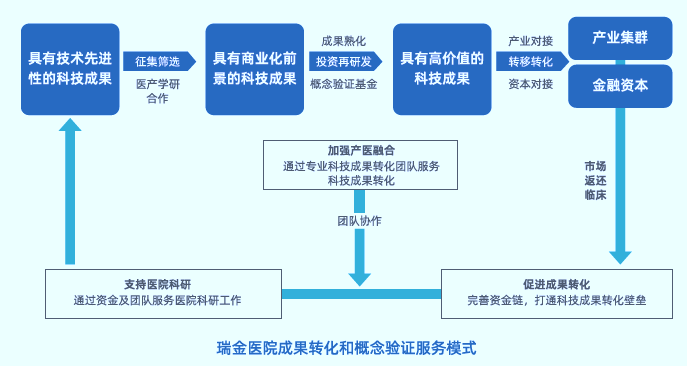
Core Viewpoint - The article discusses the challenges and reforms in the transformation of scientific research results in public hospitals in Shanghai, aiming to improve the low conversion rate of medical technology achievements, which is currently below 8% in China compared to developed countries [5][6]. Group 1: Challenges in Technology Transfer - Public hospitals face significant barriers in technology transfer due to the classification of patents as state-owned assets, leading to complex evaluation and pricing processes [6]. - The fear of being labeled as "state asset loss" discourages hospitals from transferring patents, resulting in lengthy processes that can take up to 18 months [6]. - The key to breaking this deadlock lies in "confirmation of rights" and "due diligence exemption" [6]. Group 2: Shanghai's Reform Initiatives - Shanghai has initiated reforms to decentralize the rights to use, dispose of, and benefit from scientific achievements, aiming to create a "Shanghai model" for medical technology transformation [6][7]. - In 2022, Shanghai introduced operational guidelines to promote the transformation of scientific achievements in medical institutions, with 17 hospitals participating in pilot programs [6][7]. - The Shanghai Jiao Tong University Affiliated Renji Hospital reported a 575% increase in project numbers and a 210% increase in contract amounts since participating in the pilot [7]. Group 3: Innovative Models and Ecosystems - The Ruijin Hospital has developed a comprehensive service ecosystem for technology transfer, implementing internal management methods that reward 80% of net transfer income to research teams [9]. - The "Guangci-Ruijin" model emphasizes a reverse approach, focusing on clinical practice to drive laboratory research, thus ensuring practical applicability of innovations [10]. - The Guangci-Sinan National Translational Medicine Innovation Industrial Park has attracted 283 companies with a registered capital of approximately 2.9 billion yuan, facilitating cross-disciplinary collaboration [11]. Group 4: Case Studies of Successful Transformations - The Zhongshan Hospital has adopted a "contract pricing + public announcement" approach, allowing inventors to negotiate prices directly with companies, significantly reducing the time from rights confirmation to contract signing [12]. - The Shanghai Children's Medical Center is set to launch a nationwide project for a self-developed diagnostic reagent, with expected contracts to be signed in early 2026 [15][16]. - Despite some hospitals establishing effective models, challenges remain for public hospitals, including tax policy limitations and a lack of valuation systems for early-stage technologies [16]. Group 5: Policy Support and Future Directions - Shanghai has introduced 37 policy measures to support the entire innovation chain in the biopharmaceutical industry, focusing on research, clinical application, and commercialization [17]. - The city aims to enhance its role as a global hub for biopharmaceutical innovation and industry clusters, accelerating the entire process from basic research to market application [17].


打破医院成果转化率8%“魔咒”,上海给体制机制动手术
Di Yi Cai Jing· 2025-12-31 12:05
Core Viewpoint - The article discusses the challenges and reforms in transforming the vast untapped intangible assets of public hospitals in China, particularly focusing on Shanghai's initiatives to enhance the conversion rate of medical research outcomes, which currently stands at a mere 8% compared to developed countries. Group 1: Challenges in Technology Transfer - China's medical technology conversion rate is below 8%, indicating a structural dilemma of "rich in research but poor in conversion" [2] - Public hospital patents are classified as state-owned assets, complicating the evaluation, pricing, and transfer processes, leading to inefficiencies and fears of asset loss [2][10] - The traditional process involves extensive bureaucratic hurdles, often taking over a year for a single patent transfer due to the need for multiple departmental approvals [2][3] Group 2: Shanghai's Reform Initiatives - Shanghai is implementing reforms to decentralize the rights to use, dispose of, and benefit from scientific achievements, aiming to break the conversion rate "curse" [1][2] - In 2022, Shanghai introduced operational guidelines to promote the conversion of scientific achievements in medical institutions, with 17 hospitals participating in pilot programs [2][12] - The introduction of "rights confirmation" and "due diligence exemption" is seen as key to overcoming existing barriers [2] Group 3: Successful Case Studies - Renji Hospital has seen a 575% increase in project numbers and a 210% increase in contract amounts since implementing a pilot program for managing scientific achievements [3] - Ruijin Hospital has developed a comprehensive service ecosystem for technology transfer, including a policy that allocates 80% of net conversion profits to research teams, addressing motivation issues among doctors [5][10] - Zhongshan Hospital has adopted a flexible pricing model that allows direct negotiations between inventors and companies, significantly reducing the time from rights confirmation to contract signing to just two months [8][9] Group 4: Future Prospects and Industry Support - The Shanghai government is actively supporting the biopharmaceutical industry with policies aimed at enhancing the entire innovation chain, from research to commercialization [12][13] - The establishment of the Guangci-Sinan National Translational Medicine Innovation Industrial Park is attracting numerous companies, with 283 companies and a registered capital of approximately 2.9 billion yuan by 2025 [7] - The Shanghai Children's Medical Center is set to launch a nationwide conversion project for a self-developed diagnostic kit, marking a significant step towards industrialization [10][11]