交通大脑

Search documents
【行业深度】洞察2025:中国智慧交通行业竞争格局及排名情况(附项目竞争情况、企业排名、细分赛道、战略集群、波特五力模型)
Qian Zhan Wang· 2025-09-03 10:41
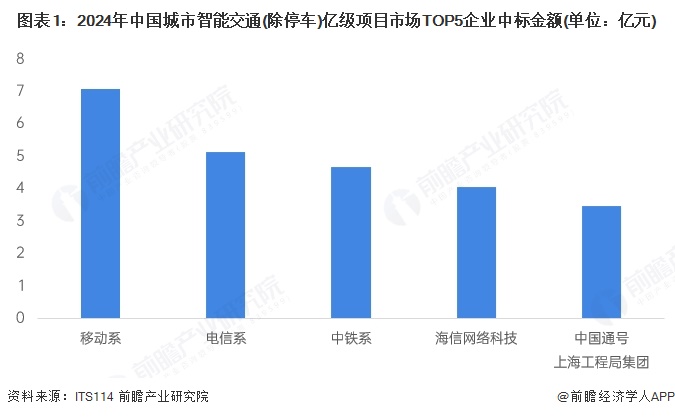
Core Viewpoint - The Chinese smart transportation industry is experiencing moderate market concentration, with leading companies like China Mobile and China Telecom dominating the market due to their advanced communication technologies and infrastructure resources [2][6]. Market Competition Analysis - In 2024, the top five companies in the urban smart transportation project bidding are China Mobile, China Telecom, China Railway, Hisense Network Technology, and China Communications Shanghai Engineering Bureau Group, collectively holding over 45% of the market share [1][2]. - The market is characterized by a layered competition where telecom operators lead infrastructure, state-owned enterprises focus on vertical markets, and tech companies emphasize technological breakthroughs [6][15]. - The CR3 (concentration ratio of the top three companies) stands at 31%, while the CR5 (concentration ratio of the top five companies) is 44%, indicating a significant presence of leading firms [6]. Innovation and Technology Ranking - The top five companies in the Chinese smart transportation technology innovation ranking for 2025 are Baidu Apollo, Huawei, Mogu Car Union, Zhongke Chuangda, and Jinzhi Technology, recognized for their comprehensive technology solutions and successful pilot projects [8][9]. - Companies like Baidu Apollo and Huawei leverage their full-stack technology and integrated solutions to maintain their leading positions in the market [8][10]. Segment Analysis - Smart transportation solution providers include Baidu Apollo and Huawei, which offer comprehensive solutions from perception to control, focusing on technology integration and scene implementation capabilities [10]. - Hardware product solution providers consist of component manufacturers like Bosch and Dahua Technology, which meet the demand for sensors and vehicle-mounted terminals [10]. - The competitive landscape also includes technology integrators such as Baidu Maps and Gaode Maps, which provide foundational data and technical support for smart transportation [10]. Strategic Cluster Analysis - Market leaders like Dahua Technology excel in revenue and profit margins by offering a range of smart transportation products and solutions [13]. - Companies such as Junsen Electronics and Yutong Bus are recognized as market drivers due to their scale advantages in automotive manufacturing and components [13]. Competitive Forces Summary - The competitive landscape of the smart transportation industry is characterized by high technical barriers for existing competitors, with significant pressure from potential entrants, particularly tech giants [15]. - The bargaining power of suppliers is moderate, while buyers, including government and automotive companies, exert strong pressure for cost-effectiveness and customization [15]. - The threat of substitutes is low, as smart transportation is a necessary upgrade area, making it difficult for existing technologies to be disrupted in the short term [15].

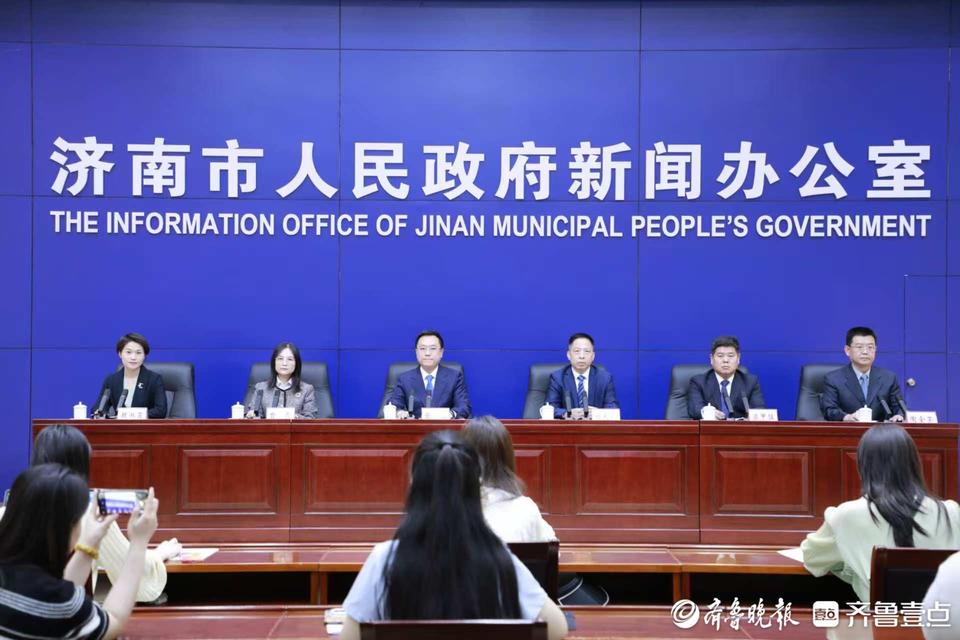
去年济南大数据与新一代信息技术产业规模居四大主导支柱产业首位
Qi Lu Wan Bao Wang· 2025-04-23 08:30
Core Viewpoint - The Jinan Municipal Government emphasizes the importance of digital development as a key driver for high-quality growth in the province, with significant advancements in big data and new information technology industries [1][3]. Group 1: Digital Development Achievements - In 2024, digital Jinan is positioned as a crucial engine for the province's high-quality development, with big data and new information technology industries leading among the four main pillar industries in Jinan [1]. - Jinan's digital ecological index and open data index rank 8th and 2nd nationally, respectively, achieving historical best levels [1]. - The digital government assessment has consistently ranked first in the province [1]. Group 2: Data Openings and Applications - Jinan has opened 3,545 data directories and released a total of 2.47 billion public data entries, empowering economic and social development [3]. - The "泉城商业选址" application helps entrepreneurs assess potential store locations based on population and industry distribution [3]. - The first batch of 36 public data authorized operation institutions has been selected, with 174 public data resource lists compiled and over 270 data products developed [3]. Group 3: Digital Governance Enhancements - Digital applications in public welfare have become more widespread, significantly improving governance service levels [4]. - The use of health insurance big data has enabled precise service delivery, such as automatic identification for retirement benefits and maternity allowances [4]. - A new smart public fund system has been established, allowing for online processing of personal public fund loans with instant approvals [4]. - The "交通大脑" system optimizes traffic signal management, reducing average red light waiting time by 9.5 hours daily and decreasing delay indices by over 10% during peak hours [4]. Group 4: Digital Infrastructure Development - Jinan has established the province's first E-level high-performance computing cluster, with a total computing power of 4,568 PFlops, including 3,877 PFlops of intelligent computing power [5]. - The city has built a "large model factory," with seven models registered with the National Internet Information Office, leading the province in this area [5].