
智慧交通

Search documents
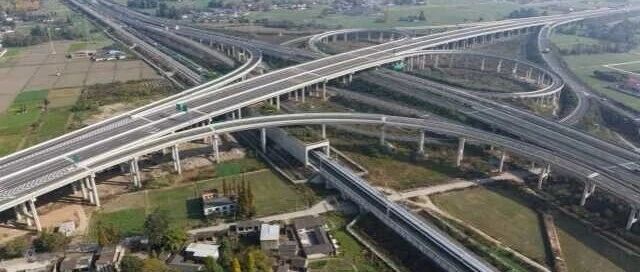
交通部:未来五年大力发展智慧交通,全面推进典型场景规模化应用
第一财经· 2026-03-09 08:53
Core Viewpoint - The article emphasizes the significant development of smart transportation during the "14th Five-Year Plan" and outlines the ambitious goals for the "15th Five-Year Plan," particularly focusing on the integration of artificial intelligence in transportation systems [3][4]. Group 1: Development Goals - During the "15th Five-Year Plan," the Ministry of Transport aims to implement the "Artificial Intelligence+" initiative, promoting the large-scale application of AI in road detection and the development of smart highways, ports, and shipping [3][4]. - The construction of the national comprehensive three-dimensional transportation network has achieved over 90% completion, with plans to increase this to over 95% [3]. Group 2: AI Integration - The integration of AI into the transportation sector is seen as a key driver of technological revolution and industrial transformation, with a focus on enhancing service models across various sectors, including transportation and logistics [4][5]. - By 2027, AI is expected to be widely applied in typical scenarios within the transportation industry, with the establishment of a comprehensive transportation model and the deployment of intelligent systems [5]. - By 2030, AI is projected to be deeply embedded in the transportation sector, leading to advancements in smart transportation and logistics, with a focus on achieving self-sufficiency in key technologies and establishing a robust governance system for AI in transportation [5]. Group 3: Recommendations and Suggestions - During the recent Two Sessions, representatives suggested leveraging AI to enhance the quality of transportation development, focusing on the development of comprehensive transportation models and improving operational efficiency through data integration and technology supply [6].

专家学者聚焦广州高质量发展促科创力量蓬勃成长
Zhong Guo Xin Wen Wang· 2026-02-25 14:35
Group 1 - The 2026 Guangzhou High-Quality Development Conference focuses on the theme of "promoting deep integration and collaborative development of manufacturing and service industries" [1] - Experts emphasize that Guangzhou is at a critical juncture for growth, with continuous optimization of the business environment and increased investment in technological innovation and global talent [3][4] - The integration of manufacturing and services is seen as a profound "chemical reaction," enhancing the capabilities of both sectors to achieve synergistic effects [4] Group 2 - The π-HuB project, a major scientific initiative, has received strong support from the Guangzhou government, highlighting the city's commitment to fostering scientific research and innovation [4] - The conference showcased successful case studies of collaborative development between manufacturing and services, with local tech company Jiadu Technology presenting its innovative solutions [4][5] - The concept of "handmade economy," which involves small teams leveraging creativity and AI technology, is identified as a significant driver for economic resilience and growth [5]
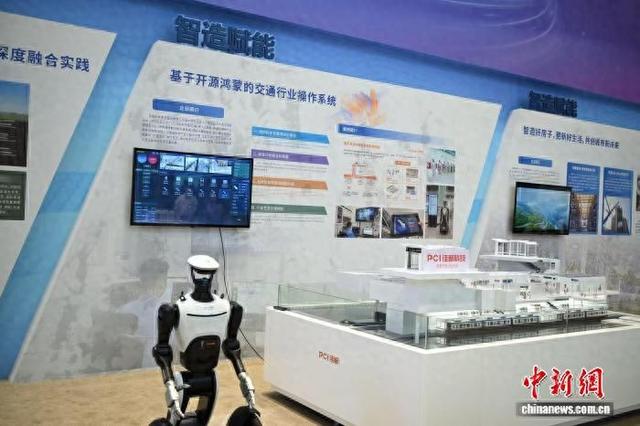
金溢科技:公司将继续深耕智慧交通行业,聚焦数字交通与交能融合的创新发展路径
Zheng Quan Ri Bao· 2026-02-25 13:35
Core Viewpoint - The company, Jin Yi Technology, is committed to deepening its focus on the smart transportation industry, emphasizing innovation in digital transportation and energy integration [2]. Group 1: Industry Focus - The company aims to seize opportunities in various fields, including intelligent roadside systems, smart terminals, automotive electronics, digital energy, low-altitude intelligent connectivity, and robotics applications [2]. - The strategic evolution path outlined by the company includes "ETC → V2X vehicle-road collaboration → large vehicle-road cloud → vehicle-energy road cloud → iACT connected traffic intelligence and CCTE connected energy composite" [2]. Group 2: Business Development - The company is accelerating the release of value in smart transportation by steadily advancing its business upgrades along the defined evolution path [2].
开局就是奋斗 起步就要奋进丨河南民营企业家开年话信心
He Nan Ri Bao· 2026-02-22 23:09
Core Viewpoint - The meeting between provincial leaders and private entrepreneurs in Henan emphasizes the government's commitment to supporting the private economy and fostering a favorable business environment for sustainable development [1][6]. Group 1: Government Support and Business Environment - Henan has hosted high-profile gatherings for two consecutive years, signaling a strong commitment to respect, support, and enrich private enterprises [1]. - The provincial government has introduced a series of high-quality, targeted policies to create a market-oriented, law-based, and international business environment, which has boosted entrepreneurs' confidence [4][6]. Group 2: Entrepreneurial Perspectives - Entrepreneurs expressed that the face-to-face communication with provincial leaders has strengthened their confidence and provided a clearer direction for their businesses [3][9]. - The interaction is seen as a dual commitment, enhancing the relationship between the government and private enterprises, which is crucial for overcoming challenges and seizing opportunities [3][9]. Group 3: Sector-Specific Insights - Companies from various sectors, including traditional manufacturing, renewable energy, biomedicine, and artificial intelligence, participated in the discussions, showcasing the diverse strengths of Henan's private economy [1]. - Specific companies, such as Mingyang Group and Hualan Bioengineering, highlighted their commitment to high-quality development and innovation in their respective fields, aiming to contribute to Henan's economic transformation [4][5]. Group 4: Future Development Goals - Entrepreneurs outlined their strategic goals, focusing on high-quality development, technological innovation, and integration into national markets, which aligns with the provincial government's vision for economic modernization [4][10]. - Companies like Longbai Group and Sibo Electronics emphasized the importance of aligning their business objectives with national and local strategic frameworks to achieve sustainable growth [13][14].
财经聚焦·地方两会经济“拼”图|拼合力!2026年三大国际科技创新中心建设启新篇
Xin Hua She· 2026-02-08 16:23
Core Viewpoint - The construction of three international technology innovation centers in Beijing (Jing-Jin-Ji), Shanghai (Yangtze River Delta), and the Guangdong-Hong Kong-Macao Greater Bay Area is set to enhance collaborative innovation and release innovation momentum across these regions [1][2][4]. Group 1: Jing-Jin-Ji Region - The three regions (Beijing, Tianjin, and Hebei) are focusing on their unique roles in the international technology innovation center, with Beijing as the source of original innovation, Tianjin as a manufacturing hub, and Hebei as a space for technology transfer [2][3]. - Specific initiatives for 2026 include enhancing the development of the Xiong'an New Area and establishing a talent innovation corridor between Beijing and Xiong'an [2]. - Tianjin plans to improve its innovation service ecosystem and establish 20 joint laboratories with universities [2]. Group 2: Yangtze River Delta - The Yangtze River Delta is emphasizing cross-regional collaboration in technology and industry innovation, with Shanghai facing challenges such as limited development space and high costs [4][5]. - Shanghai's government report highlights the need for a collaborative mechanism to facilitate the flow of talent, capital, and technology across regions [4]. - Anhui province aims to align with the Shanghai international technology innovation center, focusing on sectors like new energy vehicles and artificial intelligence [5]. Group 3: Guangdong-Hong Kong-Macao Greater Bay Area - The Greater Bay Area is recognized for its high level of openness and innovation, with plans to create a globally influential industrial technology innovation center by 2026 [6][7]. - The region has established numerous key laboratories and research institutions, enhancing its collaborative innovation capabilities [6]. - Guangdong aims to leverage its manufacturing base and international resources to support technological upgrades and transformation of traditional industries [7].
拼合力!2026年三大国际科技创新中心建设启新篇
Bei Jing Ri Bao Ke Hu Duan· 2026-02-08 12:06
Group 1: Beijing-Tianjin-Hebei Region - The Beijing-Tianjin-Hebei region aims to establish an international technology innovation center, focusing on collaborative innovation and enhancing the efficiency of technology transfer [2][3] - Beijing will strengthen industrial linkages and improve the conversion efficiency of technological achievements, while Tianjin will leverage its high-end manufacturing capabilities [3] - Hebei will participate actively in the construction of the innovation center, focusing on becoming a preferred location for technology achievement trials [3] Group 2: Yangtze River Delta - The Yangtze River Delta, particularly Shanghai, faces challenges such as limited development space and high factor costs, necessitating cross-regional collaboration in technology and industry innovation [6][8] - Shanghai's government emphasizes the need for a collaborative mechanism to facilitate the flow of talent, capital, and technology across regions [6] - Anhui province plans to implement a construction scheme for the Shanghai international technology innovation center, focusing on sectors like new energy vehicles and artificial intelligence [8][9] Group 3: Guangdong-Hong Kong-Macau Greater Bay Area - The Greater Bay Area is recognized as one of the most open and economically vibrant regions in China, with a strong focus on building a globally influential industrial technology innovation center [9][10] - The region has attracted numerous key laboratories and research institutions, enhancing its innovation capabilities [10] - Guangdong province aims to leverage its manufacturing base and international resources to empower small and medium-sized enterprises through technological innovation [10][12]
财经聚焦·地方两会经济“拼”图丨拼合力!2026年三大国际科技创新中心建设启新篇
Xin Hua Wang· 2026-02-08 07:36
Group 1 - The central economic work conference in December 2025 proposed the establishment of international technology innovation centers in Beijing (Jing-Jin-Ji), Shanghai (Yangtze River Delta), and the Guangdong-Hong Kong-Macao Greater Bay Area [2] - The three regions aim to enhance collaborative innovation and policy synergy to release innovation momentum [2][3] - Beijing focuses on original innovation and technology research, while Tianjin emphasizes high-end manufacturing capabilities, and Hebei aims to be a hub for technology transfer [3] Group 2 - The 2026 government work reports from the Jing-Jin-Ji region highlight the importance of the Beijing international technology innovation center [3] - Specific initiatives include enhancing the development of the Xiong'an New Area and establishing talent corridors between Beijing and Xiong'an [3] - The region aims to break down barriers to resource flow and improve technology transfer efficiency as a key breakthrough for building the international innovation center [5] Group 3 - In the Yangtze River Delta, the focus is on strengthening cross-regional collaboration in technology and industry innovation [6] - Shanghai's government report emphasizes the need for integrated mechanisms to facilitate talent, capital, and technology flow across regions [6] - Anhui province plans to implement a scheme to co-build the Shanghai international technology innovation center, focusing on sectors like new energy vehicles and artificial intelligence [8] Group 4 - The Guangdong-Hong Kong-Macao Greater Bay Area is recognized as one of the most open and innovative regions in China [9] - The Guangdong government aims to create a globally influential industrial technology innovation center by 2026 [9][11] - The region has already gathered significant research resources, including 45 national key laboratories and 35 joint laboratories [9]
秒级预警护航春运回家路
Xin Hua Ri Bao· 2026-02-06 21:21
Core Insights - The first highway "warning-rescue" closed-loop system in China has been implemented in Jiangsu, addressing traditional traffic emergency response issues such as slow response times and scattered coverage [1][2] - The "Eagle Eye Guardian" warning system, developed by the China Academy of Safety Science and Technology in collaboration with Gaode, features second-level risk warnings and a collaborative approach involving over 1 billion users [1] - The system has achieved full coverage of highways, national roads, and rural roads, adapting to various travel modes, with an average of over 88 million warnings issued daily [1] Group 1 - Jiangsu was chosen as a pilot due to its advanced smart traffic infrastructure and collaborative mechanisms, which provide a conducive environment for the system's implementation [2] - The system has been upgraded to include warnings for adverse weather conditions such as ice and fog, and it dynamically adjusts warning thresholds for high-risk areas [2] - The innovative "Eagle Eye Alarm" feature can detect and alert authorities within 6 seconds of a vehicle stopping abnormally, creating a closed-loop rescue response [2] Group 2 - The implementation of the "Eagle Eye Guardian" system has led to a reported 10% decrease in daily vehicle accidents during the 2025 National Day holiday compared to the previous year on the G2 Jinghu Expressway [1]
通行宝1月30日获融资买入357.56万元,融资余额1.23亿元
Xin Lang Zheng Quan· 2026-02-02 01:32
Core Viewpoint - Tongxingbao's stock price decreased by 0.41% on January 30, with a trading volume of 59.95 million yuan, indicating a decline in investor interest and activity [1]. Financing and Margin Trading - On January 30, Tongxingbao had a financing buy-in amount of 3.58 million yuan and a financing repayment of 7.77 million yuan, resulting in a net financing outflow of 4.20 million yuan [1]. - The total margin trading balance for Tongxingbao as of January 30 is 123 million yuan, which accounts for 4.97% of its market capitalization, indicating a low financing balance compared to the past year [1]. - In terms of securities lending, there were no shares repaid on January 30, with 100 shares sold short, amounting to 1,469 yuan at the closing price [1]. - The securities lending balance is 503,900 yuan, which is above the 70th percentile of the past year, indicating a relatively high level of short selling activity [1]. Company Overview - Jiangsu Tongxingbao Smart Transportation Technology Co., Ltd. was established on November 2, 2016, and went public on September 9, 2022 [1]. - The company's main business includes smart transportation electronic toll collection (ETC) services, smart transportation operation management systems based on cloud technology, and related smart transportation services [1]. - The revenue composition of the main business is as follows: smart transportation electronic toll collection accounts for 50.59%, smart transportation operation management systems for 46.36%, and smart transportation ecological services for 3.05% [1]. Financial Performance - For the period from January to September 2025, Tongxingbao achieved an operating income of 612 million yuan, representing a year-on-year growth of 14.65% [2]. - The net profit attributable to the parent company for the same period was 168 million yuan, with a slight year-on-year increase of 0.60% [2]. Shareholder Information - As of September 30, 2025, the number of shareholders for Tongxingbao is 19,200, a decrease of 5.97% from the previous period [2]. - The average number of circulating shares per shareholder is 8,765, an increase of 6.35% from the previous period [2]. - The total cash dividends distributed by Tongxingbao since its A-share listing amount to 411 million yuan [3]. - Among the top ten circulating shareholders, Hong Kong Central Clearing Limited holds 1.94 million shares, a decrease of 728,200 shares from the previous period [3]. - New entrants among the top ten shareholders include Southern CSI 1000 ETF and Taikang Quality Life Mixed A, holding 1.60 million shares and 1.35 million shares, respectively [3].
数字经济“北京经验”向17国学员分享
Xin Lang Cai Jing· 2026-01-31 20:31
Group 1 - The "International Digital Economy Governance and Leading Talent Capacity Building Project" has officially launched at Beijing University of Science and Technology, aimed at sharing Beijing's digital economy practices with representatives from 17 countries to enhance digital transformation capabilities in developing nations [1][2] - The project is co-hosted by the United Nations Institute for Training and Research, the Global Digital Economy Cities Alliance, and local government bodies, lasting for 9 days [1] - Participants will focus on cutting-edge topics such as digital governance, AI ethics, smart transportation, and digital healthcare, with immersive learning experiences through workshops and visits to notable Beijing companies [1] Group 2 - The program includes 8 sessions of country-specific storytelling on digital economy governance and industry needs, fostering deep dialogue among participants to promote cross-border collaboration [2] - Beijing aims to accelerate its development as a global digital economy benchmark city, with plans to issue the "Global Digital Friendly Initiative" by 2025, showcasing a unique "Beijing Solution" and "Beijing Experience" [2] - The project is expected to serve as a catalyst for building an international digital cooperation network, contributing to the sustainable development of the global digital economy [2]