人参系列产品

Search documents
美妆行业:周度市场观察-20250927
Ai Rui Zi Xun· 2025-09-27 09:16
Investment Rating - The report does not explicitly provide an investment rating for the beauty industry Core Insights - The beauty industry is experiencing a significant transformation driven by consumer preferences for high-quality, effective products and the integration of technology in skincare and cosmetics [4][6][10] Industry Trends - The high-end fragrance segment is witnessing robust growth, with the Chinese perfume market projected to reach 24.9 billion yuan by 2025 and exceed 33.9 billion yuan by 2028, reflecting a compound annual growth rate of 8% [4] - Domestic beauty brands are focusing on scientific innovation, market segmentation, and globalization to enhance competitiveness [6][7] - The integration of medical aesthetics and beauty is becoming a trend, with a projected annual growth rate of 10%-15% for the medical aesthetics market from 2024 to 2027 [10] - The beauty market is seeing a shift towards multi-brand strategies, with companies like Proya and Shiseido leading the way [6][11] Market Environment - Douyin e-commerce is revitalizing the perception of "Chinese good ingredients," enhancing consumer trust in domestic skincare products through educational campaigns [4] - The domestic beauty market grew by 3.1% in the first half of 2025, with significant performance disparities among companies [6] - The trend of "reverse export" to South Korea is emerging, as domestic brands seek to penetrate the Korean market through differentiated product offerings [6] Top Brand Dynamics - Proya leads the domestic beauty market with a revenue of 5.36 billion yuan, followed closely by other major players [11] - The report highlights the rise of makeup artist brands, with Unilever investing in Hung Vanngo Beauty, indicating a growing interest in professional makeup lines [13] - L'Oréal is accelerating its presence in the fragrance market with the launch of high-end perfumes, reflecting a strategic shift towards premium products [14] - The beauty industry is witnessing a surge in e-commerce, with platforms like JD.com reporting double-digit growth in beauty sales [18]




紫鑫药业签订表决权委托协议 国药兆祥成控股股东
Bei Jing Shang Bao· 2025-08-08 06:59
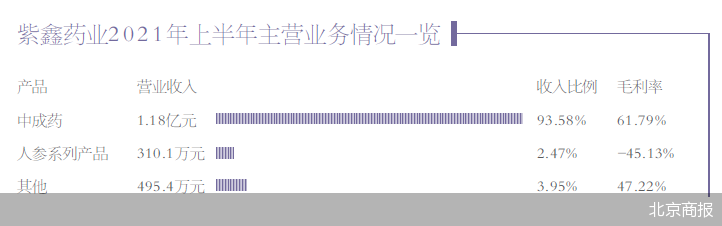
Core Viewpoint - Zixin Pharmaceutical, known as the "King of Ginseng," is undergoing a change in control as its major shareholder, Kangping Investment, transfers voting rights to Guoyao Zhaoxiang, marking a significant shift in the company's management amid ongoing financial losses [1][3]. Company Overview - Zixin Pharmaceutical's main business includes traditional Chinese medicine and ginseng products, with traditional Chinese medicine accounting for 93.58% of its revenue in the first half of 2021 [2][4]. - The company reported a total revenue of 1.26 billion yuan in the first half of 2021, with ginseng products contributing only 310.1 million yuan, representing 2.47% of total revenue [2][4]. Financial Performance - The company has faced continuous financial decline, with projected net losses for the first three quarters of 2021 estimated between 305 million and 350 million yuan, worsening from a loss of 277 million yuan in the same period last year [5][6]. - Zixin Pharmaceutical's net profit has been declining since 2017, with reported revenues of 13.27 billion yuan in 2017 dropping to 2.86 billion yuan in 2020, and corresponding net profits turning from 3.72 billion yuan in 2017 to a loss of 706 million yuan in 2020 [6]. Debt Situation - As of September 15, the total overdue debt of Zixin Pharmaceutical and its subsidiaries amounted to approximately 2.623 billion yuan, which is 70.16% of the latest audited net assets and 24.96% of total assets [6]. Strategic Changes - The introduction of Guoyao Zhaoxiang as the new controlling shareholder is expected to provide financial and resource support, optimize the shareholder structure, and reduce the company's debt levels [3][4].