
人参膏

Search documents
2025年中国即食人参行业发展历程、市场政策、产业链图谱、市场规模、竞争格局及发展趋势分析:市场格局较为分散[图]
Chan Ye Xin Xi Wang· 2025-12-21 01:18
Core Insights - The core viewpoint of the article highlights the growing market for ready-to-eat ginseng products in China, driven by increasing health awareness among consumers, including not only the elderly but also young professionals and health-conscious individuals [1][10]. Industry Overview - Ready-to-eat ginseng is produced from ginseng through processes such as washing, steaming, slicing, drying, and flavoring, making it convenient for direct consumption while retaining essential nutrients [2]. - The market for ready-to-eat ginseng is projected to reach 28 billion yuan in 2024, with a year-on-year growth of 14.3% [1][10]. Development History - Historically, ginseng was consumed in its whole form, requiring complex preparation methods. The demand for convenient health supplements has led to the industrial development of ready-to-eat ginseng since 2011, driven by technological innovations and consumer upgrades [2][10]. - New technologies such as freeze-drying and bio-fermentation have been widely adopted, enhancing product quality and extending shelf life [2]. Regulatory Environment - Recent policies emphasize food safety and quality control across all stages of production, processing, and distribution of ready-to-eat ginseng, promoting a shift towards standardized and high-quality industry practices [4][5]. Industry Chain - The upstream of the ready-to-eat ginseng industry includes suppliers of raw materials like ginseng, honey, and packaging materials, while the midstream involves research, production, and processing [6]. - The downstream consists of various sales channels, including pharmacies, health product stores, and e-commerce platforms [6]. Market Competition - The ready-to-eat ginseng market is characterized by a fragmented competitive landscape, with the top five companies holding less than 40% market share in 2024 [12]. - Key players include Tongrentang, China Resources Sanjiu, and Yisheng Pharmaceutical, among others, each with distinct product offerings and market strategies [12][13]. Future Trends - The future of the ready-to-eat ginseng market will focus on standardized cultivation and innovative product forms to cater to diverse consumer needs, including portable packaging for convenience [16]. - There will be an increase in customized products targeting specific demographics, such as beauty products for women and fatigue-relief options for young professionals [16].


长白山下“参”情巨变:产业转型迎来丰收季
Zhong Guo Xin Wen Wang· 2025-10-09 00:03
Core Insights - The ginseng industry in Dunhua City, Jilin Province, is experiencing a transformation towards high-quality development, with a focus on extending planting cycles and enhancing product management to increase market competitiveness [1][3][4] Industry Overview - Dunhua City is the largest ginseng planting area in Jilin Province, with a cultivated area of 120,000 acres for garden ginseng and 28,000 acres for forest ginseng, both ranking first in the province [1] - The local climate and terrain provide an ideal environment for ginseng cultivation, contributing to the region's prominence in the industry [1] Economic Impact - High-quality ginseng can sell for 200 yuan per pound, while ordinary ginseng can fetch 50-60 yuan, leading to net profits of 600,000 to 700,000 yuan per 15 acres [1][3] - The local ginseng farmers are shifting from being raw material suppliers to actively participating in the entire industry chain, enhancing their bargaining power [3][4] Market Dynamics - The lack of a local ginseng trading market has historically forced farmers to sell their products in distant markets, leading to reduced profits and loss of control over the supply chain [3] - Recent government initiatives aim to reshape the industry from planting to processing and sales, encouraging farmers to adopt longer planting cycles and improve product standards [3][4] Company Developments - Local companies, such as Aodong, are engaged in deep processing of ginseng, developing high-value products like medicines, health supplements, and cosmetics, which are gaining popularity both domestically and internationally [4] - New enterprises, like Dunhua Runlv Agricultural Technology Company, are emerging, injecting vitality into the ginseng industry [4] Future Prospects - Farmers are increasingly becoming proactive players in the industry, moving from raw material production to brand establishment and diversified processing [4] - The establishment of local processing facilities is expected to stabilize sales and profits, with significant interest from e-commerce platforms [3][4]

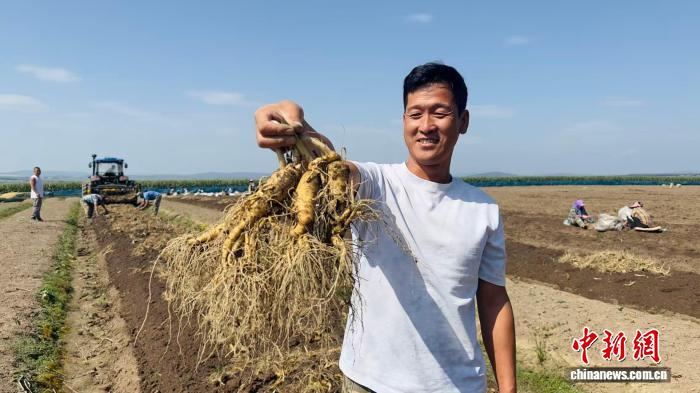
(乡村行·看振兴)长白山下“参”情巨变:产业转型迎来金色丰收季
Zhong Guo Xin Wen Wang· 2025-10-08 08:41
Core Insights - The ginseng industry in Dunhua, Jilin Province, is experiencing a transformation towards high-quality development, with a focus on extending planting cycles and enhancing product management to improve pricing power [2][4] - Local farmers, like Wen Mingquan, are shifting from being raw material suppliers to active participants in the industry chain, aiming for brand independence and diversified processing [2][4] - The government is supporting the ginseng industry by providing financial and insurance services to mitigate planting risks and helping small and medium enterprises expand their market channels [4] Industry Overview - Dunhua is the largest ginseng planting county in Jilin Province, with a cultivated area of 120,000 acres for garden ginseng and 28,000 acres for forest ginseng, both ranking first in the province [1] - The local ginseng market is characterized by high prices, with premium ginseng selling for 200 yuan per pound and ordinary ginseng for 50-60 yuan per pound, leading to significant profit margins for farmers [1][2] - The region has faced challenges such as a lack of local ginseng trading markets, forcing farmers to sell their products at prices set by external markets, which has squeezed their profits [2] Company Developments - Wen Mingquan is establishing his own ginseng processing factory, which is expected to stabilize sales and profits, with significant interest from e-commerce platforms [2] - Local companies, including Aodong and emerging firms like Dunhua Runlv Agricultural Technology Company, are focusing on deep processing of ginseng to create high-value products such as medicines, health supplements, and cosmetics [4] - The development of ginseng products is expanding into various sectors, including food, beverages, and beauty, catering to both older and younger demographics [4]
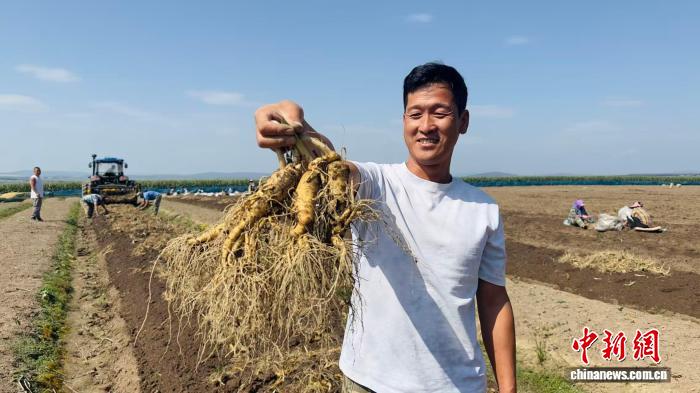
(乡村行·看振兴)长白山下“参”情巨变:产业转型迎来金色丰收季
Zhong Guo Xin Wen Wang· 2025-10-08 04:00
Core Viewpoint - The ginseng industry in Dunhua, Jilin Province, is undergoing a significant transformation, leading to increased profitability and market competitiveness for local farmers. Group 1: Industry Overview - Dunhua City is the largest ginseng planting area in Jilin Province, with a cultivated area of 120,000 acres for garden ginseng and 28,000 acres for forest ginseng, both ranking first in the province [1]. - The region benefits from a favorable growing environment due to its hilly terrain and temperate climate, which are ideal for ginseng cultivation [1]. Group 2: Economic Impact - High-quality ginseng can sell for 200 yuan per pound, while ordinary ginseng can fetch 50 to 60 yuan per pound, with net profits from one mu (approximately 15 acres) reaching 600,000 to 700,000 yuan [1][3]. - Farmers are shifting towards planting ginseng for over five years to enhance product value and marketability, as this trend is gaining traction among local producers [3]. Group 3: Challenges and Solutions - Historically, local farmers faced challenges such as high production but low efficiency, with many selling raw ginseng to external markets, leading to reduced profit margins and loss of control over the supply chain [3]. - The local government is actively promoting high-quality development in the ginseng industry, focusing on restructuring the entire supply chain from planting to processing and sales [3][4]. Group 4: Innovations and Future Prospects - New companies, such as Dunhua Runlv Agricultural Technology Co., are emerging, developing high-value products like ginseng paste and honey slices, which are gaining popularity both domestically and internationally [4]. - The local government is facilitating financial and insurance services to mitigate planting risks and support small and medium-sized enterprises in expanding market channels [4].