人工智能创新应用

Search documents
前沿科技走近大众,全球智造燃动金陵
Nan Jing Ri Bao· 2025-12-01 02:29
Core Insights - The 2025 World Intelligent Manufacturing Expo showcased cutting-edge achievements in intelligent manufacturing, featuring humanoid robots, advanced manufacturing equipment, digital solutions, and AI applications [1][2] - The expo attracted 456 companies from 21 countries and regions, presenting over 2000 innovative results in the field of intelligent manufacturing [1][2] Group 1: Exhibition Highlights - The expo covered an area of 55,000 square meters with four main exhibition halls focusing on robots, smart factories, industrial software, and intelligent equipment [1] - Notable exhibitors included KUKA, Hyundai, and Tesla, showcasing the integration of robotics technology in intelligent manufacturing [2] - The event featured an international exhibition area with leading global companies like Phoenix and Honeywell presenting advanced technologies and solutions [2] Group 2: Educational Engagement - Over 2000 university students and nearly 3000 middle and primary school students participated, experiencing various intelligent manufacturing technologies [3] - Interactive zones featured innovative products such as a fully steerable flying car and various autonomous devices, attracting significant visitor interest [3] Group 3: Business Opportunities - The expo facilitated direct negotiations between 59 companies from 35 countries, resulting in preliminary purchase orders worth 60 million yuan [4] - A total of 41 events were held during the expo, addressing key topics like digital transformation and industrial intelligence ecosystems [4] - The expo aimed to enhance international cooperation and market expansion for participating companies, contributing to the modernization of the industrial system in China [4]
破发股格灵深瞳跌7.21% 2022年上市募18.3亿元
Zhong Guo Jing Ji Wang· 2025-09-26 08:56
Group 1 - The stock of Geling Deep Vision (688207.SH) closed at 16.61 yuan, with a decline of 7.21%, currently in a state of breaking issue [1] - Geling Deep Vision was listed on the Shanghai Stock Exchange's Sci-Tech Innovation Board on March 17, 2022, with an issuance of 46.2452 million shares at a price of 39.49 yuan per share [1] - The total amount raised from the initial public offering (IPO) was 1.826 billion yuan, with a net amount of 1.670 billion yuan after deducting issuance costs, exceeding the original plan by 670 million yuan [1] Group 2 - The company planned to raise 1 billion yuan for projects including AI algorithm platform upgrades, AI innovation application R&D, marketing service system upgrades, and to supplement working capital [1] - The total issuance costs for the IPO amounted to 156 million yuan, with the lead underwriter, Haitong Securities Co., Ltd., receiving 128 million yuan in underwriting fees [1] - On June 9, 2023, Geling Deep Vision announced a capital increase plan, distributing 0.40 shares for every share held, resulting in an increase of 7,399,232 shares, bringing the total share capital to 258,973,147 shares [2]

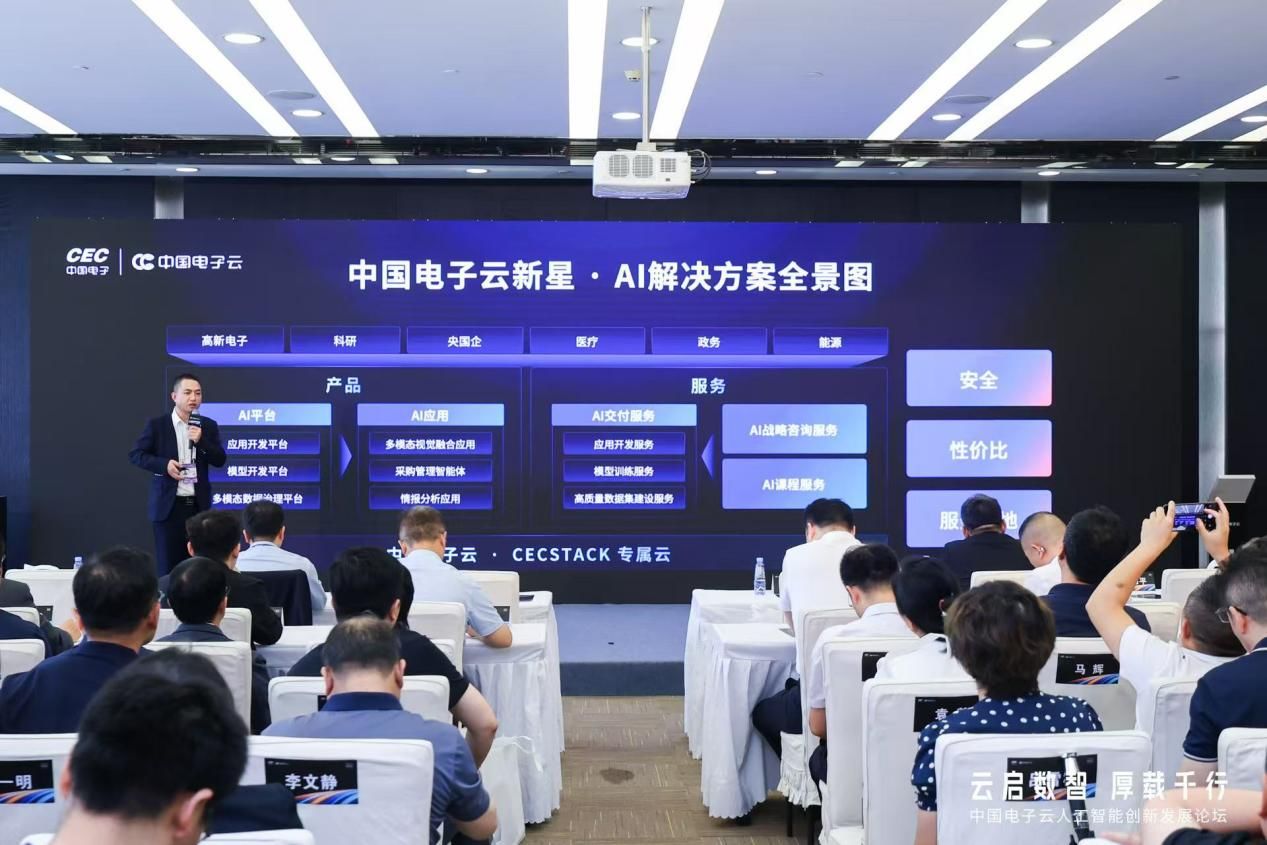
直击WAIC 2025 | 当“如何落地”成AI高频问题 中国电子云:“懂业务”比单纯技术优势更重要
Mei Ri Jing Ji Xin Wen· 2025-07-27 13:03
Core Insights - The core issue for enterprises in AI adoption is the confusion around implementation and application, as highlighted by Huang Feng, Senior Vice President of China Electronics Cloud, during the WAIC 2025 [1][2] Company Strategy - In 2025, China Electronics Cloud officially integrated AI into its strategic core, focusing on high-security computing infrastructure and data innovation services [2][4] - The company aims to transition from "experimental investment" to "strategic layout" in AI, having established a dedicated product line after two years of exploration [4][5] Market Positioning - China Electronics Cloud's primary clientele includes central state-owned enterprises and key industries, which are seeking intelligent breakthroughs after initial digitalization [4][5] - The company emphasizes that understanding business needs is more critical than mere technical advantages in the competitive landscape [5][6] Data Governance and Challenges - High-quality datasets are essential for AI development, but the domestic data governance sector faces significant challenges, including a lack of standardized processes [6][7] - The company is actively participating in national data standard formulation to address the issue of inconsistent industry standards [6][7] Security Considerations - Data security is a major concern for central state-owned enterprises, prompting China Electronics Cloud to develop comprehensive security solutions in collaboration with partners [7][8] Competitive Advantages - The company's core competitive edge lies in its long-term data and business accumulation, with a focus on domestic GPU adaptation and industry-specific knowledge [8][9] - China Electronics Cloud has established partnerships with over five national laboratories and more than ten central enterprises to build high-quality datasets [9][10] Future Trends - The company recognizes the trend of "small models with large data" as a mainstream approach in AI, advocating for flexible model sizes tailored to specific scenarios [10][11] - The concept of Agent as the ultimate form of AI is acknowledged, though practical implementation remains a challenge due to the complexity of tasks involved [11]