
人工湿地

Search documents
2000平方米人工湿地落成 助力流溪河珍稀鱼类保护
Xin Lang Cai Jing· 2026-01-22 13:00
Core Viewpoint - The construction of a 2000 square meter artificial wetland in Guangzhou's Conghua District has been completed and accepted, aimed at enhancing the ecological environment and supporting the conservation of the rare fish species, the Guangdaoshu Bream [1][4]. Group 1: Wetland Construction and Design - The artificial wetland was built efficiently within a week during the dry season, which allowed for better soil leveling and plant establishment, thus increasing the survival rate of aquatic plants [1][3]. - A scientific plant configuration plan was developed based on water depth differences, with 1000 square meters of submerged plants like black algae and bitter grass in deeper areas, and 1000 square meters of emergent plants like water caltrop and two-flowered millet in shallower areas [3]. Group 2: Ecological Impact and Monitoring - The new wetland aligns with the ecological goals of the Guangdaoshu Bream National Aquatic Germplasm Resource Protection Area, providing essential habitats for adult and juvenile fish [3][4]. - Monitoring data indicates a significant recovery trend in the Guangdaoshu Bream population, with annual sightings increasing from about 20 individuals before 2016 to between 50 and 80 in recent years, and the largest individuals weighing over 2 kilograms [3][4]. Group 3: Future Plans and Sustainability - The management team plans to continuously monitor the long-term effects of the artificial wetland on fish resource protection and water quality improvement, with intentions to replicate this ecological restoration model in suitable areas [5].

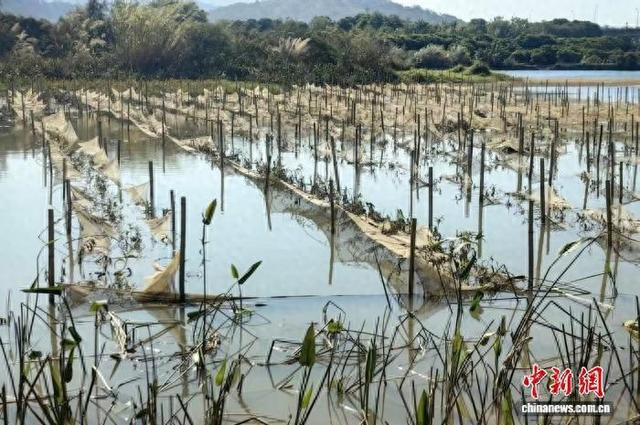
流溪河畔添“生态滤池” ,2000平米人工湿地守护珍稀鱼类家园
Nan Fang Nong Cun Bao· 2026-01-14 08:35
Core Viewpoint - The construction of a 2000 square meter artificial wetland in Guangzhou's Conghua District aims to protect the rare fish species, particularly the Guangdao Cichlid, and enhance the ecological environment of the Liuxi River [2][4][5]. Group 1: Project Overview - The artificial wetland was designed and implemented by the Pearl River Fisheries Research Institute of the Chinese Academy of Fishery Sciences and has successfully passed inspection [3][28]. - This wetland serves as an ecological compensation project for the reinforcement and renovation of the Dacao Dam, playing a crucial role as an "ecological filter" in the Guangdao Cichlid National Aquatic Germplasm Resource Protection Area [4][5]. Group 2: Construction and Planting Strategy - The construction team took advantage of the dry season in late December 2025 to efficiently complete the wetland within a week, which significantly improved the survival rate of aquatic plants [6][9]. - A scientific planting scheme was developed based on water depth variations, with 1000 square meters of submerged plants like black algae and potamogeton planted in deeper areas, and 1000 square meters of emergent plants like water caltrop and bulrush in shallower areas [12][13][14]. Group 3: Ecological Impact - The newly constructed wetland aligns with the protection goals of the Guangdao Cichlid National Aquatic Germplasm Resource Protection Area, providing essential habitats for rare fish species [16][17]. - Monitoring data indicates a significant recovery trend in the Guangdao Cichlid population, with annual surveys showing an increase from over 20 individuals before 2016 to 50-80 individuals in recent years, with the largest individuals weighing over 2 kg [21][25]. Group 4: Water Quality Improvement - The wetland functions as a "natural kidney" for the Liuxi River, utilizing aquatic plants to purify water by absorbing excess nutrients and reducing the risk of eutrophication [30][32][36]. - The root systems and foliage of submerged and emergent plants help improve water clarity and enhance the growth environment for aquatic organisms [33][35]. Group 5: Future Plans and Community Engagement - The Dacao Dam reinforcement project incorporates ecological compensation measures, embodying the principles of "ecological priority and green development," and aims to provide replicable experiences for ecological protection [40][41]. - Continuous monitoring of the wetland's long-term effects on fish resource protection and water quality improvement is planned, with intentions to promote this ecological restoration model in suitable areas [42][43].
