
优质绿色农产品

Search documents
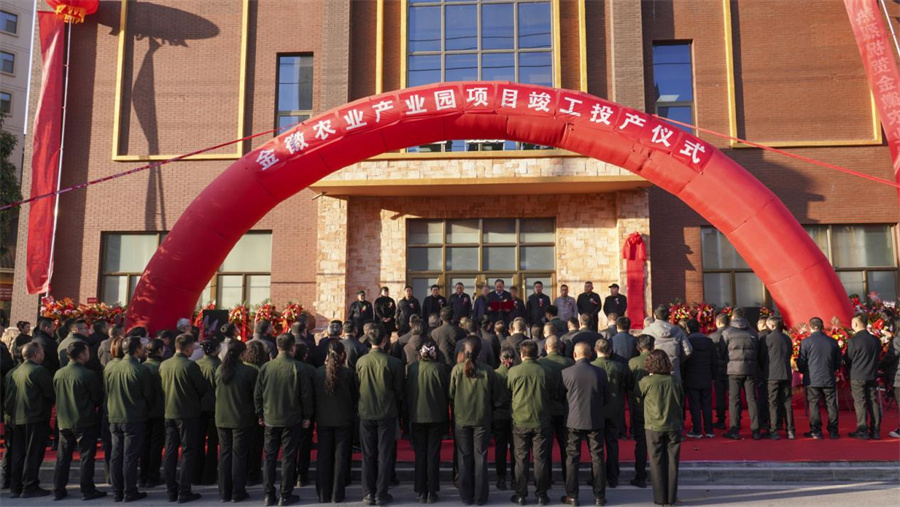
总投资近10亿元,金徽农业产业园项目竣工投产
Jing Ji Wang· 2025-12-30 10:50
Core Insights - The completion and launch of the Jinwei Agricultural Industrial Park project, with an investment of nearly 1 billion yuan, represents a significant step in the implementation of the rural revitalization strategy in Longnan, providing strong momentum for agricultural modernization in the Qinba Mountain area [1][3]. Group 1: Project Overview - The Jinwei Agricultural Industrial Park has been developed by Jinwei Modern Agricultural Development Co., Ltd., covering nearly 110,000 acres across 52 villages in 9 towns in Huixian, focusing on modern agricultural industrialization [3]. - The industrial park features a comprehensive layout with five major planting and breeding bases and two core supporting facilities, including specialized grain bases, beef cattle breeding bases, and smart vegetable planting demonstration bases [3]. Group 2: Economic Impact - Once fully operational, the agricultural output value is expected to reach 650 million yuan annually, benefiting over 4,000 households and creating 3,500 jobs, along with providing training for 10,000 farmers [3]. Group 3: Strategic Vision - The project is seen as a model for the integration of industry and agriculture, with a focus on enhancing technological investment, digitalization, and brand development to provide high-quality green agricultural products [6][8]. - The local government has expressed strong support for the project, highlighting its role in making agriculture profitable and reducing rural outmigration through various initiatives [6].

新华访谈|十部门力促农产品消费 这些亮点了解一下
Sou Hu Cai Jing· 2025-08-01 00:47
Core Viewpoint - The newly released "Implementation Plan for Promoting Agricultural Product Consumption" aims to enhance domestic demand and support rural revitalization through a series of measures involving multiple departments [1][2]. Group 1: Background and Importance - Agricultural products are a crucial part of consumption, and increasing their consumption can stimulate domestic circulation and economic development [2]. - The plan is seen as a significant pathway to promote rural revitalization, develop rural industries, and increase farmers' income [2]. Group 2: Beneficiaries and Impact - The primary beneficiaries of the plan will be the agricultural producers, as increased consumption will lead to higher incomes for farmers and a better overall consumption cycle [3]. - The initiative is expected to create value across the entire agricultural supply chain, allowing various stakeholders to share in the benefits [3]. Group 3: Key Highlights of the Plan - A notable highlight of the plan is the multi-departmental collaboration, which includes not only the Ministry of Agriculture and Rural Affairs but also the sports and education sectors, integrating agricultural consumption with sports activities and school nutrition programs [4]. - This cross-departmental approach is anticipated to elevate agricultural product consumption to a new level [4]. Group 4: Challenges and Solutions - The plan faces challenges such as ensuring the quality of agricultural products and preventing market issues like counterfeit organic products [5][6]. - Establishing a traceability system and enhancing regulatory oversight are suggested methods to combat these market anomalies, although they may involve high execution costs [6]. Group 5: Consumer Trends and Market Dynamics - Current consumer trends emphasize health and nutrition, leading to a mismatch where consumers want high-quality products but struggle to find them, while producers may have quality products that do not sell well [7]. - Addressing these pain points requires improvements in the cost-performance ratio and personalization of agricultural products to cater to different consumer segments [7]. Group 6: E-commerce and Consumer Protection - Issues with traditional agricultural e-commerce platforms have been noted, where consumers may face exploitation; thus, consumers are encouraged to assert their rights [8]. - Ensuring agricultural product quality is essential for maintaining consumer trust, and adjustments should be made promptly if quality declines [9].
