
低碳管理系统

Search documents
心更近、情更浓 大湾区书写融合发展新篇章
Yang Shi Wang· 2025-11-23 01:01
Core Insights - The 15th National Games concluded in Shenzhen, showcasing both emotional farewells from veteran athletes and the emergence of new talent, highlighting the event's unique characteristic of mass participation [1] - The Guangdong-Hong Kong-Macao Greater Bay Area effectively utilized the National Games to demonstrate regional coordination under "One Country, Two Systems" while opening new development opportunities [1] Group 1: Event Management and Technology - The event featured a seamless experience for marathon and cycling athletes crossing borders, facilitated by an innovative "pre-check + closed-loop management" model [3] - Athletes underwent facial recognition checks at the starting point, allowing for uninterrupted competition, supported by location-tracking wristbands [3][6] - The implementation of facial recognition technology at border checkpoints has been expanded to other locations, enhancing future cross-border event management [6] Group 2: Infrastructure and Sustainability - Hosting large-scale sports events typically enhances the sports infrastructure of the host city; for the already well-equipped Greater Bay Area, the focus is on updating venues to be more environmentally friendly and accessible [5] - The Tianhe Sports Center underwent a low-carbon renovation, becoming China's first "near-zero carbon" large sports venue, achieving over 25% energy savings through energy-efficient upgrades [7][9] - The renovation included the installation of distributed photovoltaic systems and a low-carbon management system for precise energy supply [11] Group 3: Community Engagement and Economic Impact - The National Games have increased public interest in various sports, notably skateboarding, which has gained popularity among youth, particularly in Huizhou [15] - Huizhou aims to leverage the event to enhance its outdoor sports infrastructure and attract more high-level competitions, linking sports, industry, and tourism [15] - The event spurred a surge in local tourism, with many visitors coming specifically for the games, contributing to a cultural and tourism boom in the region [20] Group 4: Regional Integration and Volunteerism - The event fostered deeper connections among the Guangdong-Hong Kong-Macao regions, with joint teams and volunteer efforts enhancing community bonds [21][23] - Over 30,000 volunteers from Guangdong, 16,000 from Hong Kong, and 3,500 from Macau participated, serving as a bridge between athletes, spectators, and tourists [23][25] - The successful hosting of the National Games is expected to accelerate the integration of the Greater Bay Area, leading to a more beautiful environment, diverse industries, and increased happiness for its residents [25]

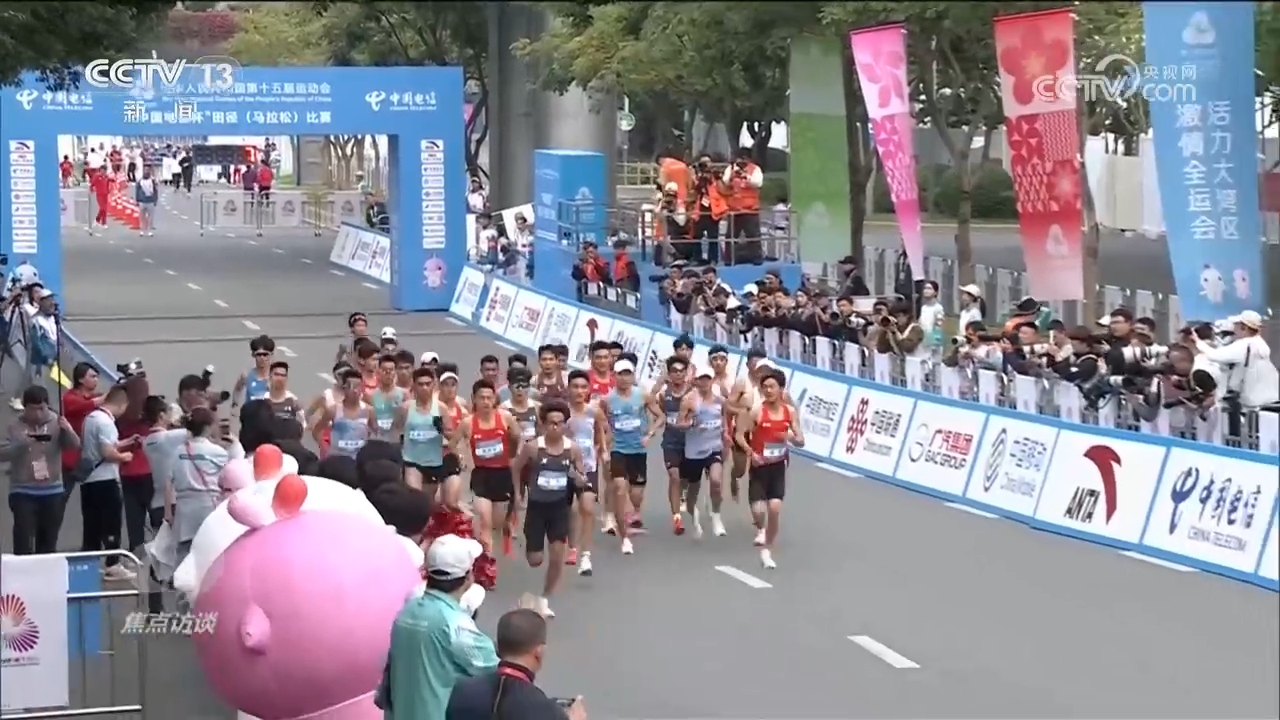
焦点访谈|心更近、情更浓 大湾区书写融合发展新篇章
Yang Shi Wang· 2025-11-22 13:20
Core Insights - The 15th National Games showcased a blend of elite competition and community participation, highlighting the unique characteristics of the event [1] - The Guangdong-Hong Kong-Macao Greater Bay Area effectively utilized the Games to demonstrate regional development and create new opportunities [1] Event Management and Technology - The event featured a seamless cross-border experience for marathon and cycling athletes, utilizing an innovative "pre-check + closed-loop management" model for efficient identity verification [3][6] - The implementation of facial recognition technology and location tracking wristbands enhanced the management of cross-border events, providing valuable insights for future applications [3][6] Infrastructure and Sustainability - Hosting large-scale sports events typically leads to significant improvements in sports infrastructure; the Greater Bay Area focused on upgrading venues to be more environmentally friendly and accessible [5] - The Tianhe Sports Center underwent a low-carbon transformation, becoming the first large-scale sports venue in China to achieve "near-zero carbon" status through energy-efficient upgrades and the installation of distributed solar systems [7][9][11] Community Engagement and Economic Impact - The Games fostered increased interest in sports like skateboarding, particularly in Huizhou, which is positioning itself as a "skateboarding city" [15][16] - The event spurred local tourism and cultural activities, with a surge in visitors from various regions, contributing to the local economy [20] Regional Cooperation and Integration - The Games were co-hosted by 19 cities across the Greater Bay Area, promoting regional coordination and integration among Guangdong, Hong Kong, and Macau [18] - Volunteer participation from various regions enhanced community bonds and facilitated a deeper understanding among the people of the Greater Bay Area [23][25] Future Prospects - The successful hosting of the Games is expected to lead to a more beautiful environment, diversified industries, and increased happiness for residents in the Greater Bay Area, setting the stage for future development [25]