
信用

Search documents
校招 | 国泰海通证券 (总部) 2027届校园招聘
国泰海通证券研究· 2026-03-20 11:42
Core Viewpoint - The article discusses the merger of Guotai Junan and Haitong Securities to form Guotai Haitong, highlighting its position as a leading comprehensive financial service provider in China's capital market [2]. Group 1: Company Overview - Guotai Haitong was established through the merger of Guotai Junan and Haitong Securities, with the latter founded in 1988 and the former in 1992, leading to the merger in 1999 [2]. - The company will officially change its name to Guotai Haitong in April 2025, marking a new chapter in its development [2]. - The company has total assets exceeding 20,000 billion yuan [5]. Group 2: Business Scope - Guotai Haitong operates across 31 provinces and regions in China and serves 17 countries and regions [3]. - Its business encompasses securities and futures brokerage, investment banking, proprietary trading, equity and FICC trading, credit, asset management, public fund management, private equity investment, alternative investments, financial leasing, and international business [3]. Group 3: Strategic Goals - The company aims to become a first-class investment bank with international competitiveness and market leadership [4]. - The parent company's net capital and net assets attributable to the parent remain the highest in the industry [6].


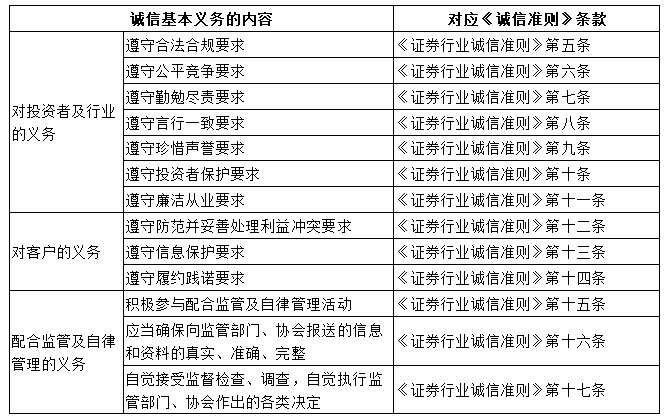
红塔证券:以《证券行业诚信准则》为指引,推动证券公司诚信建设
Zheng Quan Shi Bao Wang· 2025-08-29 14:31
Core Viewpoint - The "Integrity Guidelines" issued by the China Securities Association on May 20, 2022, provide a solid institutional guarantee for the construction of a compliance, integrity, professionalism, and stability culture in the securities industry, emphasizing the importance of integrity in maintaining market order and promoting high-quality development in the industry [1]. Group 1: Positive Effects of the Integrity Guidelines on Industry Integrity Construction - The integrity principle is fundamental in the securities market, serving as a crucial supplement to legal interpretations and judicial applications, especially in the absence of explicit regulations [2]. - The integrity guidelines enhance the effectiveness of industry integrity management by incorporating the integrity status of institutions and their staff into a reputation incentive and constraint mechanism, promoting a culture of honesty and integrity within the industry [3]. - The guidelines act as a bridge between national laws and the cultivation of integrity behaviors among micro-participants, establishing clear responsibilities for institutions in integrity culture construction and risk prevention [4]. Group 2: Main Manifestations of Securities Companies Failing to Fulfill Basic Integrity Obligations - The integrity guidelines outline the basic obligations of securities companies, including compliance with legal requirements, fair competition, due diligence, and investor protection [5][6]. - From January 2023 to July 2024, regulatory measures against securities companies revealed a total of 240 cases of non-compliance with integrity obligations, with the most frequent violations being failure to adhere to due diligence requirements (130 cases) and legal compliance (60 cases) [8][10]. - Specific violations include inadequate diligence in investment banking, non-compliance with legal requirements, and failure to protect investors, highlighting significant shortcomings in fulfilling basic integrity obligations [10][11][12]. Group 3: Recommendations for Integrity Construction under the Integrity Guidelines - Companies should strengthen the cultivation of integrity culture and establish a clear integrity value system, ensuring that integrity education is integrated into daily operations [15]. - It is essential to refine basic integrity systems and translate the integrity obligations into actionable internal controls and business processes, ensuring that these obligations are not merely theoretical [16]. - Establishing incentive and constraint measures for integrity construction is crucial for creating a trustworthy environment, including performance assessments and clear accountability for dishonest behavior [17].

工行北海分行创新“安居+创业+风控”三链服务 个贷投放提速惠及千企万家
Zhong Guo Jin Rong Xin Xi Wang· 2025-05-14 11:47
Core Viewpoint - The Industrial and Commercial Bank of China (ICBC) Beihai Branch has developed a collaborative service system focusing on "Housing + Entrepreneurship + Risk Control" to accelerate personal loan growth and support housing and entrepreneurship needs since 2025 [1][2]. Group 1: Housing Chain - ICBC Beihai Branch has implemented a dual-track strategy of "improving mortgage services + expanding the second-hand housing market" to meet the housing needs of new citizens, achieving over 320 million yuan in personal loan disbursements by the end of March 2025 [1]. - The branch established a "3-day fast review" mechanism for housing enterprises, completing approvals for five new housing projects in the first quarter [1]. - The collaboration with key second-hand housing intermediaries led to a significant increase in second-hand housing loans, with disbursements exceeding 160 million yuan in the first quarter, marking an 11-fold year-on-year increase [1]. Group 2: Entrepreneurship Chain - ICBC Beihai Branch has created a service matrix focusing on "supporting key groups + revitalizing small and micro businesses" to stimulate domestic demand, promote consumption, and stabilize employment [2]. - The branch launched the first "Veterans Employment Loan" in Guangxi to support veterans in entrepreneurship, contributing to a comprehensive ecosystem of "entrepreneurship training - financial support - income increase" [2]. - By the end of April, the branch had issued 700,000 yuan in loans to four small and micro enterprises and individual businesses through the innovative "Merchant Combination Loan" product [2]. Group 3: Risk Control Chain - ICBC Beihai Branch has established a "full-cycle + intelligent" risk control management system to enhance risk management and improve the quality of personal loan assets [2]. - A "white list + dynamic rating" mechanism for intermediary institutions has been implemented to ensure the quality and compliance of cooperative institutions [2]. - The branch has adopted AI models for post-loan risk warnings and strengthened mechanisms for overdue loan recovery, utilizing litigation collection and asset securitization to enhance risk resolution efficiency [2].

