光纤定位闭环检测系统

Search documents
【中国新闻网】郭守敬望远镜发布数据量世界第一 多项关键技术实现中国自主研发
Zhong Guo Xin Wen Wang· 2025-11-04 02:30
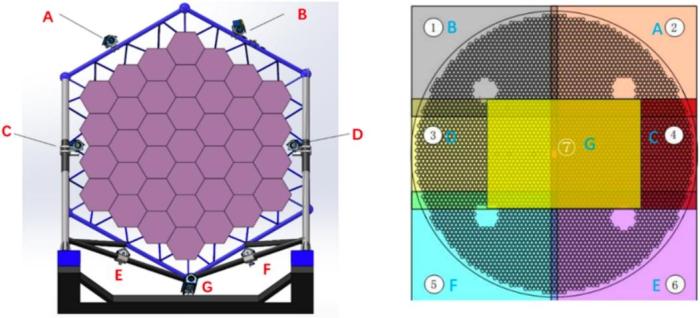
Core Insights - LAMOST, China's first large-scale astronomical facility, has achieved significant advancements in data production and technology development, with a total of 28.07 million spectra and 11.59 million stellar parameters expected to be released by October 2025, maintaining the world's largest data volume in this field [4] - The LAMOST data has facilitated groundbreaking research in areas such as the formation and evolution of the Milky Way, compact celestial bodies, and exoplanets, with 417 papers published in the past year, marking a historical high [4] - The LAMOST team has successfully transitioned several key technologies from reliance on imports to domestic production, including the development of domestically produced astronomical specialty wide-spectrum optical fibers and improvements in fiber positioning accuracy [4][5] Data Production and Sharing - As of November 3, 2023, LAMOST has shared data with over 1,800 users from 300 institutions globally, resulting in approximately 170 terabytes of data downloaded and 3.73 million queries on the data release website [4] - The ongoing scientific output from LAMOST is at a peak, contributing significantly to humanity's exploration of the universe [4] Technological Advancements - LAMOST has developed a new closed-loop detection system for fiber positioning, achieving over 97.7% accuracy within 0.4 arc seconds, significantly enhancing operational stability and efficiency [6] - The innovative active optical technology developed by LAMOST, which combines both splicing and deformation, is crucial for the telescope's optical performance and successful survey operations [6][7] - The domestically produced displacement actuators meet LAMOST's technical requirements and are at the forefront of international standards, contributing to the overall advancement of China's optical and precision manufacturing industries [7]

郭守敬望远镜发布数据量世界第一 多项关键技术实现中国自主研发
Zhong Guo Xin Wen Wang· 2025-11-03 11:20
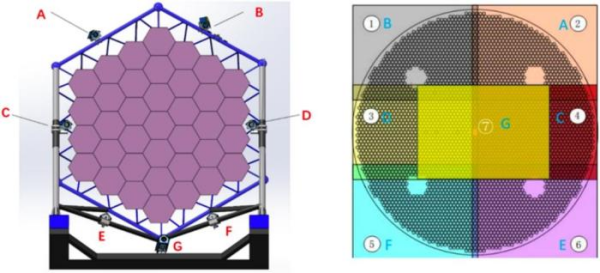
Core Insights - The Guo Shoujing Telescope (LAMOST) has achieved the highest volume of astronomical data globally, with a total of 28.07 million spectra and 11.59 million stellar parameters published by October 2025 [2][4] - LAMOST's data sharing has been effective, with over 1,800 users from 300 institutions globally utilizing the data, resulting in approximately 170,000 GB of data downloads and 3.73 million queries on the data release website [2][4] - The telescope has contributed to significant breakthroughs in fields such as galaxy formation, compact objects, and exoplanets, with 417 papers published in the past year, marking a historical high [4] Technological Advancements - LAMOST has transitioned several key technologies from reliance on imports to independent Chinese development, including the domestication of astronomical special wide-spectrum fibers and improvements in fiber positioning accuracy [4][6] - The development of a new closed-loop detection system for fiber positioning has enhanced stability and efficiency, achieving over 97.7% positioning accuracy within 0.4 arc seconds, significantly improving operational precision [7][9] - The innovative active optics technology, which combines both splicing and deformation, is crucial for the telescope's optical performance and scientific output, with domestically developed displacement actuators meeting international standards [7][9] Industry Impact - The advancements in LAMOST's technology not only demonstrate China's capabilities in autonomous research and development but also stimulate the growth of related industries, including high-precision optical components and precision machinery manufacturing [9] - The successful implementation of domestically produced components is expected to enhance the competitiveness of China's astronomical research and potentially expand into international markets [6][9]