
郭守敬望远镜(LAMOST)

Search documents
JUST光谱望远镜向未知发问
Xin Lang Cai Jing· 2026-02-07 07:21
Core Insights - The article discusses the advancements in astronomical observation and the significance of dark matter and dark energy in understanding the universe, highlighting the need for innovative observational tools to explore these mysteries [2][3]. Group 1: Dark Matter and Dark Energy - Less than 5% of the universe is composed of visible matter, while over 95% consists of dark matter and dark energy, which are crucial for shaping galaxy structures and driving cosmic expansion [2]. - Understanding dark matter and dark energy could lead to a revolution in physics, comparable to the impacts of relativity and quantum mechanics [2]. Group 2: Global Scientific Efforts - Global scientific efforts have been ongoing for decades, with various international observational projects like the DESI project in the U.S., the Euclid space telescope in Europe, and Japan's Subaru-PFS aiming to uncover the secrets of the universe [2][3]. Group 3: China's Astronomical Advancements - China is making significant strides in astronomy, although it still lags behind in ground-based optical spectral observation capabilities compared to international standards [3]. - The Guo Shoujing Telescope (LAMOST) and the upcoming Chinese Space Station Telescope (CSST) are notable projects, with CSST expected to achieve breakthroughs in galaxy imaging by 2027 [3][4]. Group 4: JUST Telescope Project - The JUST telescope, a 4.4-meter spectroscopic telescope located in Qinghai, aims to capture the "fingerprints" of the universe by obtaining spectra from tens of millions of galaxies [4]. - JUST is designed to have the highest fiber positioning density globally, allowing it to capture spectra from dense regions of the sky, significantly improving coverage compared to existing telescopes [4][5]. Group 5: Scientific Goals and Future Plans - JUST plans to observe over ten million galaxies within the next five years, creating a detailed three-dimensional map of the universe and accurately measuring the history of cosmic expansion [5]. - The telescope will utilize advanced technology and a prime observational site to transition China's astronomy from data consumption to active interpretation of cosmic phenomena [5].


仰望星空:循着恒星读懂万物本源
Xin Lang Cai Jing· 2026-02-06 00:21
Core Insights - The article emphasizes the significance of stars in the universe, highlighting their role in the evolution of life and the cosmos, as well as their connection to human existence [2] - It discusses the historical development of stellar science, showcasing key milestones in human understanding of stars and their properties [3] - The book "Stars: A Very Short Introduction" serves as an accessible entry point into stellar science, combining foundational theories with cutting-edge research [3][4] Group 1: Stellar Evolution - Stellar evolution is a complex process involving gravity, thermodynamics, and nuclear physics, crucial for understanding the material cycles in the universe [2] - The lifecycle of stars includes stages from molecular cloud collapse to the formation of white dwarfs, neutron stars, or black holes, illustrating the intricate balance of nuclear fusion and gravity [4][5] - The death of stars, particularly through supernova explosions, disperses heavy elements into space, contributing to the formation of planets and life [2][4] Group 2: Advances in Stellar Research - Recent advancements in gravitational wave astronomy and large survey projects have enhanced our understanding of stars, including the detection of exoplanet atmospheres [5] - Chinese contributions to stellar research, such as the Guo Shoujing Telescope (LAMOST) and the FAST radio telescope, have made significant impacts in the field [5] - The publication of the bilingual edition of "Stars" is timely, providing a conceptual foundation for domestic readers to grasp these advancements in stellar science [5][6]

视频丨追星、探月、深空探测……向极宏观拓展中国不断突破
Yang Shi Xin Wen Ke Hu Duan· 2026-01-02 13:13
Core Insights - The article discusses China's advancements in scientific research and technology as it aims for breakthroughs in macro-scale exploration by 2025, highlighting significant achievements in space and astronomical research. Group 1: Major Scientific Infrastructure Developments - The "Meridian Project" Phase II was accepted by the state in March 2025, featuring 31 stations and nearly 300 devices for comprehensive detection of space weather, enhancing China's forecasting capabilities [3] - The Ali Gravitational Wave Detection Experiment, located at an altitude of 5250 meters, achieved its first light observation in July 2025, capturing clear images of radiation from the Moon and Jupiter at 150GHz [6] Group 2: Astronomical Discoveries - The Guo Shoujing Telescope (LAMOST) has released a total of 28.07 million spectra and 11.59 million stellar parameters by October 2025, maintaining the largest data volume globally [9] - The FAST telescope discovered over 1,170 pulsars by the end of 2025, surpassing the total number found by other telescopes during the same period, significantly enhancing China's research capabilities in cosmic navigation and gravitational wave detection [12] Group 3: Lunar and Deep Space Exploration - The Tianwen-2 probe was launched in May 2025 to study the asteroid 2016HO3, equipped with 11 scientific payloads for comprehensive data collection [18] - Research on samples from the Chang'e 6 mission revealed significant findings regarding lunar volcanic activity, ancient magnetic fields, and water content in the lunar mantle, marking a breakthrough in understanding the Moon's evolution [24] Group 4: Future Exploration Plans - The Chang'e 7 mission is planned for 2026, targeting the Moon's south pole for scientific exploration, with a new 50-meter antenna under construction to support data reception [29] - The "14th Five-Year Plan" includes ambitious projects like the "Hongmeng Plan" and "Kuafu II," focusing on cosmic origins and space weather, aiming for breakthroughs in various fields of space exploration [31]
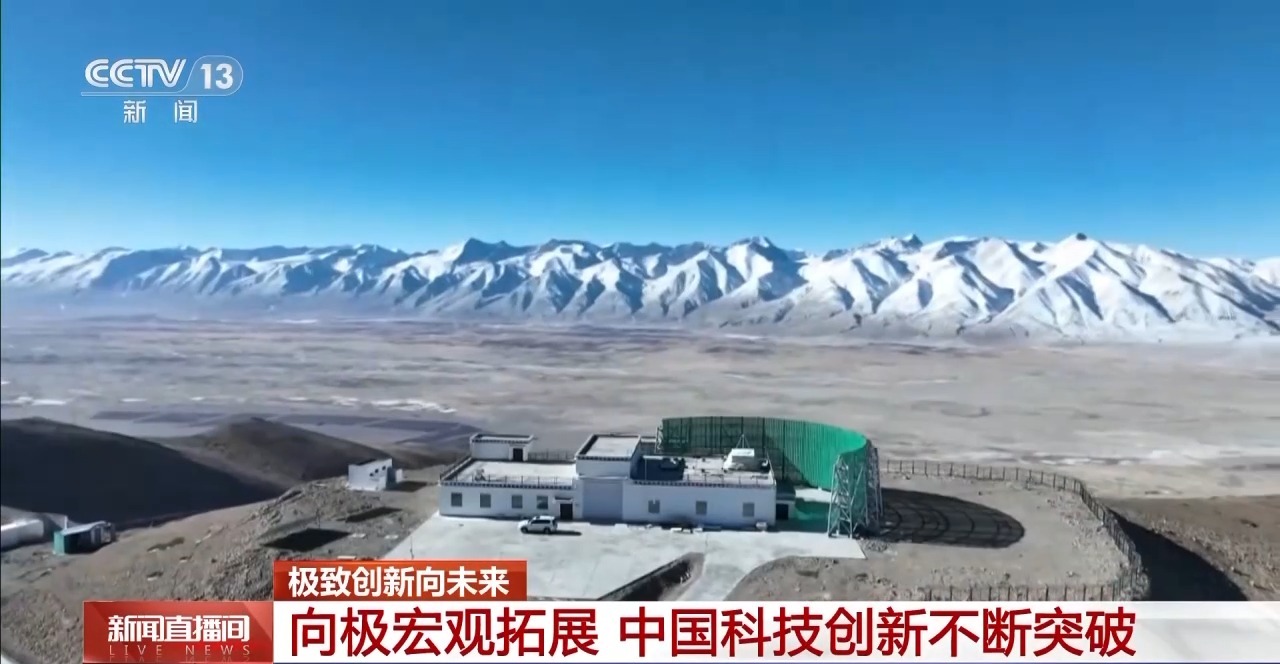
追星、探月、深空探测……向极宏观拓展中国不断突破
Huan Qiu Wang Zi Xun· 2026-01-01 10:17
Core Viewpoint - The article discusses China's advancements in scientific research and technology innovation, particularly focusing on the macro-scale exploration of the universe, highlighting significant achievements by 2025 in various scientific projects and infrastructure. Group 1: Major Scientific Infrastructure Developments - The Zhiwu Project Phase II was accepted by the state in March 2025, featuring 31 stations and nearly 300 devices, enhancing China's space weather forecasting capabilities [2] - The Ali Gravitational Wave Detection Experiment, located at an altitude of 5250 meters, achieved its first light observation in July 2025, capturing clear images of radiation from the Moon and Jupiter at the 150GHz frequency [5] Group 2: Astronomical Discoveries - By October 2025, the Guoshoujing Telescope (LAMOST) had released 28.07 million spectral data and 11.59 million stellar parameters, maintaining the world's largest data volume [6] - The FAST telescope discovered over 1170 pulsars by the end of 2025, surpassing the total number found by other telescopes during the same period, significantly enhancing China's research capabilities in cosmic navigation and gravitational wave detection [8] Group 3: Lunar and Deep Space Exploration - The China National Astronomical Observatory's Moon and Deep Space Exploration Scientific Application Center is involved in ongoing research, including the analysis of lunar samples from the Chang'e 5 and Chang'e 6 missions [9][12] - The Chang'e 6 mission returned a 9-gram lunar sample from the Moon's far side, marking the largest basalt sample collected from that region [14] - Research on the Chang'e 6 samples revealed insights into lunar volcanic activity, ancient magnetic fields, and water content in the lunar mantle, providing a clearer understanding of the Moon's evolution [16] Group 4: Future Exploration Plans - The Chang'e 7 mission is planned for 2026, aiming to explore the Moon's south pole, with a new 50-meter antenna under construction to support data reception for this mission [20] - The "15th Five-Year Plan" includes ambitious extraterrestrial exploration initiatives, focusing on cosmic origins, space weather, and life origins, with projects like the "Hongmeng Plan" and "Kuafu II" set to achieve breakthroughs in various fields [23]
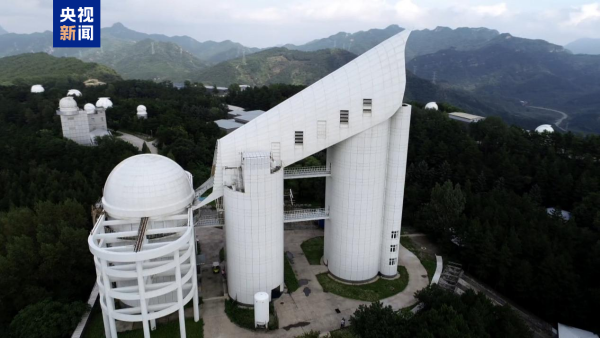
【央视新闻】郭守敬望远镜已发布光谱数2807万条 恒星参数1159万组
Yang Shi Xin Wen· 2025-11-04 03:23
Core Insights - The Guo Shoujing Telescope (LAMOST) has released a total of 28.07 million spectra and 11.59 million sets of stellar parameters by the end of October 2025, maintaining the largest data volume globally [1] - LAMOST data sharing has been effective, with over 1,800 users from 300 institutions utilizing the data for scientific research, resulting in approximately 170 terabytes of data downloaded and 3.73 million queries on the data release website [1] - The LAMOST team is continuously exploring the telescope's potential for large-scale surveys and has achieved several key technological breakthroughs, including the domestication of critical components such as special wide-spectrum optical fibers and core actuators for active optics [1] Group 1 - LAMOST has accumulated 28.07 million spectra and 11.59 million stellar parameters, leading in global data volume [1] - Over 1,800 users from 300 institutions have accessed LAMOST data, downloading around 170 terabytes [1] - The LAMOST team has made significant technological advancements, including the domestication of essential components for telescope operations [1]
【中国新闻网】郭守敬望远镜发布数据量世界第一 多项关键技术实现中国自主研发
Zhong Guo Xin Wen Wang· 2025-11-04 02:30
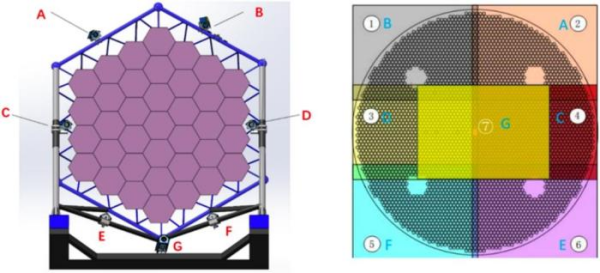
Core Insights - LAMOST, China's first large-scale astronomical facility, has achieved significant advancements in data production and technology development, with a total of 28.07 million spectra and 11.59 million stellar parameters expected to be released by October 2025, maintaining the world's largest data volume in this field [4] - The LAMOST data has facilitated groundbreaking research in areas such as the formation and evolution of the Milky Way, compact celestial bodies, and exoplanets, with 417 papers published in the past year, marking a historical high [4] - The LAMOST team has successfully transitioned several key technologies from reliance on imports to domestic production, including the development of domestically produced astronomical specialty wide-spectrum optical fibers and improvements in fiber positioning accuracy [4][5] Data Production and Sharing - As of November 3, 2023, LAMOST has shared data with over 1,800 users from 300 institutions globally, resulting in approximately 170 terabytes of data downloaded and 3.73 million queries on the data release website [4] - The ongoing scientific output from LAMOST is at a peak, contributing significantly to humanity's exploration of the universe [4] Technological Advancements - LAMOST has developed a new closed-loop detection system for fiber positioning, achieving over 97.7% accuracy within 0.4 arc seconds, significantly enhancing operational stability and efficiency [6] - The innovative active optical technology developed by LAMOST, which combines both splicing and deformation, is crucial for the telescope's optical performance and successful survey operations [6][7] - The domestically produced displacement actuators meet LAMOST's technical requirements and are at the forefront of international standards, contributing to the overall advancement of China's optical and precision manufacturing industries [7]
郭守敬望远镜发布数据量世界第一 多项关键技术实现中国自主研发
Zhong Guo Xin Wen Wang· 2025-11-03 11:20
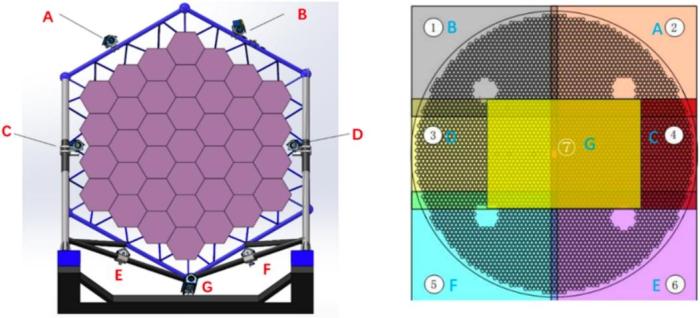
Core Insights - The Guo Shoujing Telescope (LAMOST) has achieved the highest volume of astronomical data globally, with a total of 28.07 million spectra and 11.59 million stellar parameters published by October 2025 [2][4] - LAMOST's data sharing has been effective, with over 1,800 users from 300 institutions globally utilizing the data, resulting in approximately 170,000 GB of data downloads and 3.73 million queries on the data release website [2][4] - The telescope has contributed to significant breakthroughs in fields such as galaxy formation, compact objects, and exoplanets, with 417 papers published in the past year, marking a historical high [4] Technological Advancements - LAMOST has transitioned several key technologies from reliance on imports to independent Chinese development, including the domestication of astronomical special wide-spectrum fibers and improvements in fiber positioning accuracy [4][6] - The development of a new closed-loop detection system for fiber positioning has enhanced stability and efficiency, achieving over 97.7% positioning accuracy within 0.4 arc seconds, significantly improving operational precision [7][9] - The innovative active optics technology, which combines both splicing and deformation, is crucial for the telescope's optical performance and scientific output, with domestically developed displacement actuators meeting international standards [7][9] Industry Impact - The advancements in LAMOST's technology not only demonstrate China's capabilities in autonomous research and development but also stimulate the growth of related industries, including high-precision optical components and precision machinery manufacturing [9] - The successful implementation of domestically produced components is expected to enhance the competitiveness of China's astronomical research and potentially expand into international markets [6][9]
让更多“仰望星空”的眼睛成为探索宇宙的力量
Ke Ji Ri Bao· 2025-08-01 01:09
Core Viewpoint - China's astronomy is transitioning from "catching up" to "keeping pace" and even "leading" in the field of astronomical observation, as evidenced by the successful operation of major scientific instruments like the FAST and LAMOST telescopes, and participation in international scientific projects like SKA and GOTTA [1] Group 1: Current Developments in Astronomy - The FAST telescope has achieved world-leading status in low-frequency radio astronomy, while space telescopes like Tianwen, Wukong, and Weiyan form a detection matrix in high-energy astrophysics [1] - The upcoming China Space Station Engineering Survey Telescope (CSST) is expected to generate unprecedented amounts of data, discovering thousands of gravitational lens systems crucial for dark matter and dark energy research [2] Group 2: Public Engagement and Education - The CSST's data will serve as a significant scientific resource and a vehicle for public science education, encouraging societal participation in cosmic research and enhancing scientific literacy [2] - The National Astronomical Data Center has established a leading advantage in public astronomy science, utilizing AI models to create intelligent astronomy learning communities that allow public participation in scientific exploration [2] Group 3: Citizen Science Initiatives - The public's involvement in astronomy has accelerated data mining and made scientific exploration a shared endeavor, exemplified by projects like the China-VO supernova search, which has engaged thousands of participants [3] - Experts emphasize the importance of a robust reward mechanism to sustain public contributions to scientific research, advocating for a system that transforms contributions into growth resources [3][4] Group 4: Technological Advancements - The rise of big data, artificial intelligence, and global observation networks is profoundly changing the research methods in astronomy, injecting unprecedented vitality into the field through public science initiatives [4]