光纤无人机

Search documents
光线无人机专题报告:无人机驱动光纤需求、价格激增
GUOTAI HAITONG SECURITIES· 2026-03-08 00:20
Investment Rating - The report assigns an "Overweight" rating to the industry, indicating a projected performance that exceeds the Shanghai and Shenzhen 300 Index by more than 15% [4]. Core Insights - The demand for optical fibers is surging due to the increasing use of fiber-optic drones, which are replacing traditional FPV drones in military applications, particularly in the Russia-Ukraine conflict. This shift has led to a significant price increase for optical fibers supplied from China to Russian cable manufacturers [2][29]. - The unique technology of fiber-optic drones allows for high-capacity, secure, and interference-resistant communication, fundamentally transforming the operational capabilities of drones in complex environments [7][14][25]. Summary by Sections 1. Rise of Fiber-Optic Drones - Fiber-optic drones are emerging as a new solution to traditional communication challenges faced by drones, offering superior bandwidth, interference resistance, and data security [7][14]. - The technology enables two-way information exchange between drones and ground control, significantly enhancing operational efficiency [8]. 2. Innovation on the Russia-Ukraine Battlefield - Traditional FPV drones are becoming less effective due to advancements in electronic warfare, prompting the deployment of fiber-optic drones by Russian forces to maintain operational advantages [19][23]. - The fiber-optic drones are designed to operate effectively in high-electromagnetic-interference environments, preserving their operational capabilities [25]. 3. Surge in Fiber Demand and Benefits for Domestic Manufacturers - The reliance of Russian cable manufacturers on Chinese optical fiber supplies is increasing, with prices rising sharply due to heightened demand driven by military applications [29][30]. - The market for optical fibers is experiencing a significant upward trend, with prices for G.652.D single-mode fibers reaching historical highs, reflecting the robust demand from both military and civilian sectors [30][34].
乌克兰无人系统部队揭秘:AI机器人配备重机枪和榴弹发射器、装载炸药的机器人冲入敌阵逼降俄军!普京也宣布组建,称俄方并不落后
Mei Ri Jing Ji Xin Wen· 2025-07-29 11:20
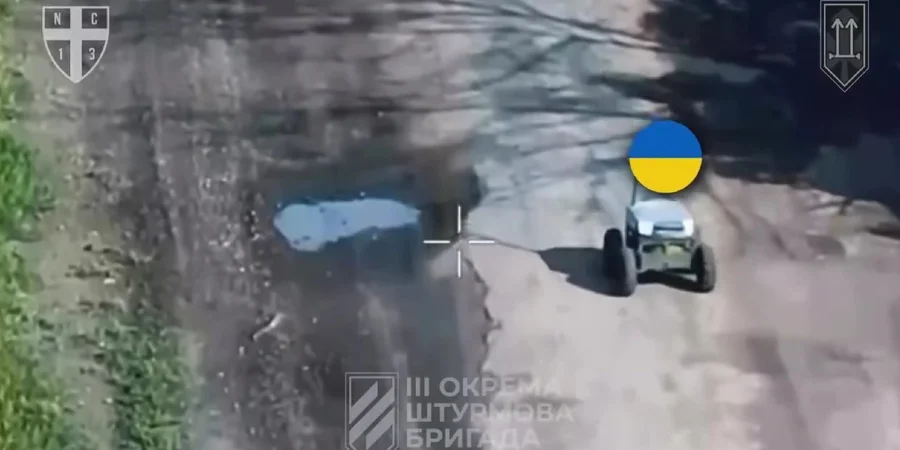
Group 1 - The ongoing Russia-Ukraine conflict has seen a significant increase in the use of ground robots and drones, marking a transformation in warfare dynamics [1][4][6] - Ukraine's military is utilizing various robotic systems, including the "Themis" and D-21 series, for reconnaissance, casualty evacuation, and combat, showcasing their versatility on the battlefield [1][2][4] - The D-21 robot can operate in harsh conditions and is capable of safely evacuating casualties, reducing the risk to human soldiers [2][4] Group 2 - The use of robotic systems has led to unprecedented scenarios, such as Russian soldiers surrendering to a fully robotic assault, indicating a shift in combat strategies [2][4] - Ukraine's defense strategy emphasizes the development and production of domestic drones, achieving a self-sufficiency rate of 96.2% in military drones [4][6] - Russia is also advancing its robotic capabilities, planning to establish a dedicated unmanned systems force and increasing its production of drones significantly [6][7][8] Group 3 - The conflict has highlighted the effectiveness of unmanned systems, with reports indicating that drone operations have caused more casualties than traditional artillery [6][7] - Both Ukraine and Russia are investing in advanced robotic technologies, with Ukraine focusing on integrating AI and weaponry into their systems [4][6] - The evolution of warfare is evident as both sides adapt to the increasing role of unmanned systems in military operations [1][6][7]


乌释放停火信号 俄希望接着谈 第三轮谈判不到一小时谈了什么
Yang Shi Xin Wen· 2025-07-23 22:49
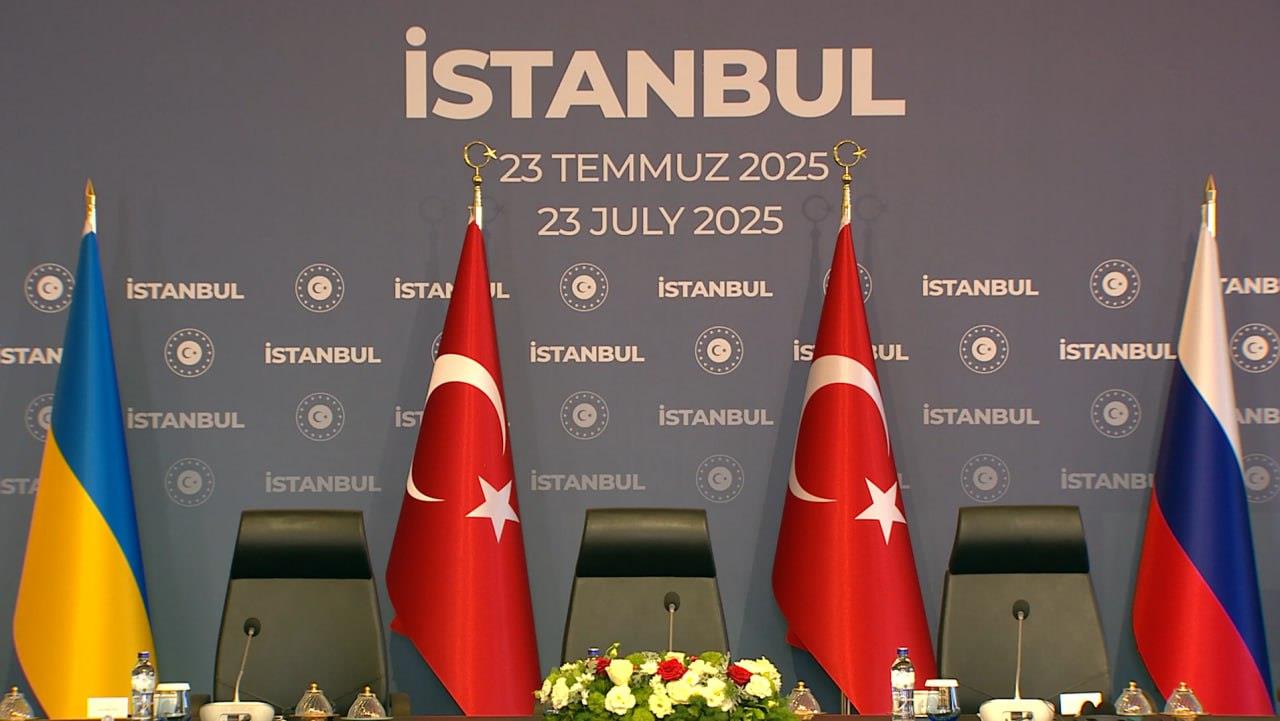
Group 1: Negotiation Outcomes - Russia and Ukraine reached a consensus on a prisoner exchange agreement, with plans for over 1200 individuals to be exchanged soon [4][10] - Ukraine proposed a leaders' meeting by the end of August, inviting Turkish President Erdogan and former US President Trump [9][11] - Russia stated that the timing for a leaders' meeting is not yet mature, emphasizing the need for further discussions on the ceasefire agreement [5][10] Group 2: Military Developments - The drone warfare between Russia and Ukraine has intensified, with both sides increasingly relying on drones as a primary mode of attack [3][24] - Russia has significantly ramped up the production of its "Zala" drones, with output now nine times the original plan [19][24] - Ukraine is developing anti-drone ammunition to counter Russian drone attacks, specifically 5.56mm standard ammunition for NATO rifles [20][24] Group 3: Future Negotiation Prospects - Russia expressed a desire for a fourth round of negotiations and suggested the establishment of working groups on political, humanitarian, and military issues [12] - Ukraine is prioritizing the interests of its citizens, aiming for a ceasefire and facilitating a leaders' meeting as key objectives [11][24]