全天空成像仪

Search documents
中国科学家在南极“追光”
Xin Hua Wang· 2026-02-04 03:42
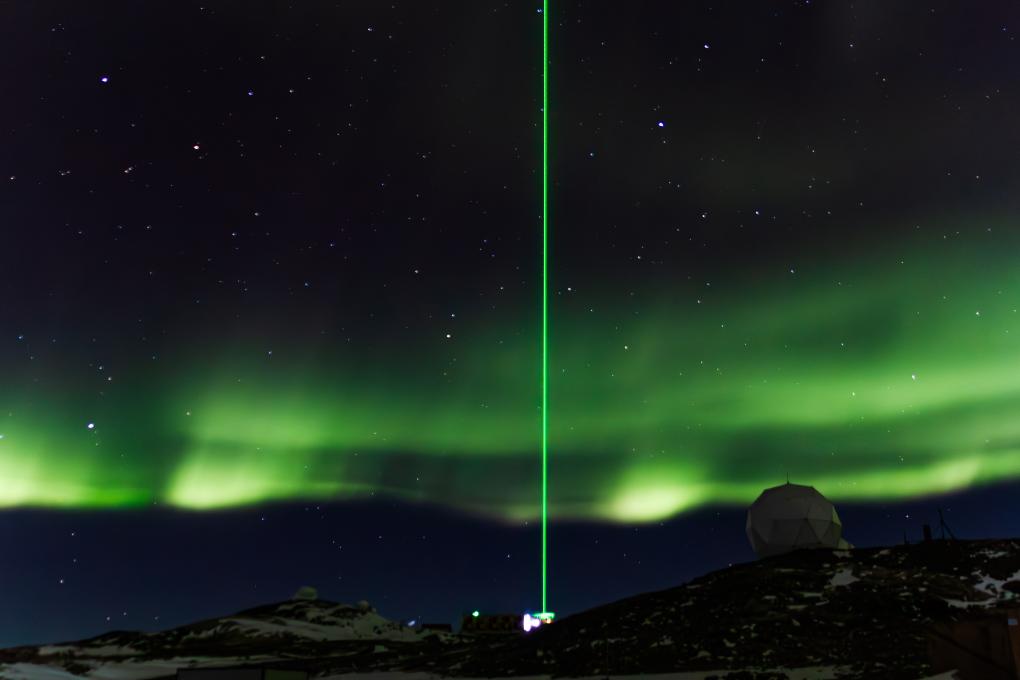
Core Viewpoint - The article highlights China's Antarctic research efforts, focusing on the study of auroras and their implications for understanding space weather and its effects on Earth. Group 1: Aurora Research - Auroras serve as indicators of space weather, resulting from interactions between solar wind and Earth's magnetic field [2][3] - The concept of "auroral ripples" was introduced by Chinese researchers, indicating a new phenomenon observed at the edges of auroral arcs [3] - The research conducted at the Zhongshan Station is crucial for developing space weather models and improving long-distance radio communication [3][7] Group 2: Advanced Observation Techniques - The use of laser radar at Zhongshan Station allows for detailed diagnostics of atmospheric responses during auroral events [4][6] - Laser radar systems can create profiles of temperature, wind fields, and atmospheric composition, contributing to a comprehensive understanding of atmospheric conditions [6] - Collaborative observations between laser radar and aurora monitoring enhance the development of a "solar wind-magnetosphere-ionosphere-atmosphere" coupling model [6] Group 3: Importance of Antarctic Research - The Antarctic region is critical for global atmospheric circulation and is directly affected by space weather phenomena [7] - Data from aurora monitoring at Zhongshan Station can be utilized for space weather warnings, safeguarding satellite navigation, communication, and power grids [7][10] - Since 2010, China has established an advanced atmospheric observation system at Zhongshan Station, contributing to significant research outcomes in auroras and space plasma waves [10]

科学与健康|中国科学家在南极“追光”
Xin Hua She· 2026-02-03 14:17
Core Viewpoint - The article discusses China's Antarctic research efforts, particularly focusing on the study of auroras and their implications for understanding space weather and its effects on Earth [2][4][9]. Group 1: Aurora Research - Auroras are described as a result of interactions between solar wind and Earth's magnetic field, particularly near the magnetic poles where more solar particles enter [3]. - The Chinese Polar Research Center has proposed the concept of "aurora ripples," which refers to a newly discovered green glowing structure at the edges of auroral arcs, potentially caused by plasma gradient drift instability [4]. - The research conducted at the Zhongshan Station is crucial for developing space weather models and improving long-distance radio communication and satellite orbit determination [4][9]. Group 2: Observation Techniques - The use of all-sky imaging and spectrometers at Zhongshan Station allows for comprehensive monitoring of auroras and the analysis of particle energy through light wavelength [4]. - Laser radar systems are employed to diagnose atmospheric responses during aurora events, capturing subtle changes in temperature and wind patterns, akin to an "electrocardiogram" of the atmosphere [5][6]. - The integration of laser radar with aurora observations aims to create a comprehensive model of the coupling between solar wind, magnetosphere, ionosphere, and atmosphere [8]. Group 3: Importance of Research - The Antarctic region is identified as a critical area for global atmospheric circulation and is significantly impacted by space weather, which can affect satellite navigation, communication, and power grids [9]. - Since 2010, China has established an advanced atmospheric observation system at Zhongshan Station, contributing to international research efforts in auroras and space plasma [11]. - The challenging conditions of the Antarctic environment, including extreme cold, highlight the dedication of researchers in maintaining and operating observation equipment [11].

1.76亿元!内蒙古气象局2026年2月采购大批仪器
仪器信息网· 2026-01-08 09:00
Core Insights - The Inner Mongolia Meteorological Bureau has announced three procurement intentions for meteorological instruments, with a total budget of 176 million yuan [1][2]. Procurement Details - The procurement includes: - A national operational aircraft (modified Xinzhou 60) for artificial weather modification projects [3]. - Mobile millimeter-wave cloud radar, ground-based microwave radiometer, mobile X-band dual-polarization Doppler radar, mobile low-level wind profiler, and dual-wavelength four-channel Raman laser radar, with a total budget of 13.4 million yuan [3]. - Two-dimensional imaging precipitation particle spectrometer, micro-rain radar, all-sky imaging system, drone testing platform, and ice nucleus sampling and analysis equipment, with a total budget of 6.14 million yuan [3]. Timeline - The expected procurement time is set for February 2026 [2][3].

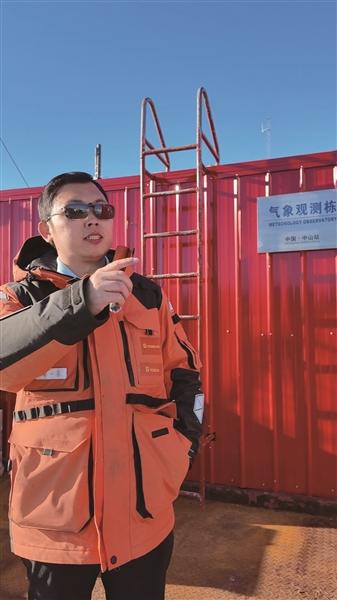
在南极中山站,他们测风、追光、寻碳
Huan Qiu Wang Zi Xun· 2025-12-28 01:19
Core Viewpoint - The article highlights the ongoing scientific research and monitoring activities at China's Zhongshan Station in Antarctica, showcasing the dedication of the research team in various fields such as meteorology, atmospheric composition, and aurora studies [2][4][5]. Group 1: Meteorological Observations - The meteorological team at Zhongshan Station conducts continuous weather observations, including parameters like wind speed, temperature, humidity, and solar radiation, operating 24/7 since March 1989 [4][5]. - The highest recorded wind speed at the station reached 15 levels, and during the Antarctic summer, sunlight is available for over 20 hours a day [4]. - Meteorological observations are crucial for providing foundational data for scientific research and improving global and regional weather models [5]. Group 2: Aurora Research - The research team is also focused on studying auroras, with specialized equipment like all-sky imaging systems and spectrometers to analyze the dynamics of this phenomenon [7]. - The concept of "aurora ripples" was introduced by Chinese researchers, describing a specific pattern observed in auroras, which may be linked to plasma dynamics [7]. Group 3: Carbon Cycle Research - A researcher from Hong Kong is studying the biogeochemical processes of organic carbon in the Antarctic ecosystem, which is sensitive to global climate changes [9]. - The research involves collecting samples from various environments to understand the carbon cycle and its response to climate change [9]. Group 4: Agricultural Initiatives - Zhongshan Station has established a greenhouse to grow fresh vegetables, providing essential nutrition for the wintering team, as fresh supplies from the mainland last only a few months [11]. - The greenhouse serves as a source of comfort for the team during the long Antarctic winter, with vegetables cultivated in a specially designed environment [11].