碳循环

Search documents
气候越暖,南极冰间湖越“吸碳”?
Ren Min Wang· 2026-01-30 22:23
Core Insights - Antarctic ice lakes have significant carbon sequestration capabilities, contributing approximately 42% of the total organic carbon burial in the Southern Ocean despite occupying only about 3% of its area [2][3] - The carbon absorption capacity of these ice lakes has increased ninefold over the past 12,000 years due to climate warming [2] Group 1: Research Findings - A research team from Peking University and various institutions analyzed 86 sediment core samples from multiple Antarctic regions, creating a high-resolution carbon burial record from 12,000 years ago to the present [2] - The study published in the Proceedings of the National Academy of Sciences reveals that warming climate leads to reduced sea ice cover, which in turn expands the area and duration of open water in ice lakes, enhancing phytoplankton growth and carbon absorption [2] Group 2: Implications of Climate Change - The research indicates that under current warming rates, which are approximately twice the global average in Antarctica, the carbon burial rate in ice lakes could reach nearly three times the current level by the end of the century [3] - The findings suggest that the Antarctic ice lake system may act as a natural "buffer" for the Earth's climate system, potentially offsetting some of the increases in atmospheric CO2 due to human activities [3] Group 3: Future Considerations - It is essential to incorporate changes in ice lake area, biogeochemical processes, and their feedback on warming into next-generation Earth system models to accurately predict ocean carbon absorption capacity and climate change trajectories [3] - Understanding the regulatory capacity of natural systems like Antarctic ice lakes is crucial for a comprehensive understanding of Earth's system complexity and for promoting sustainable development [3]


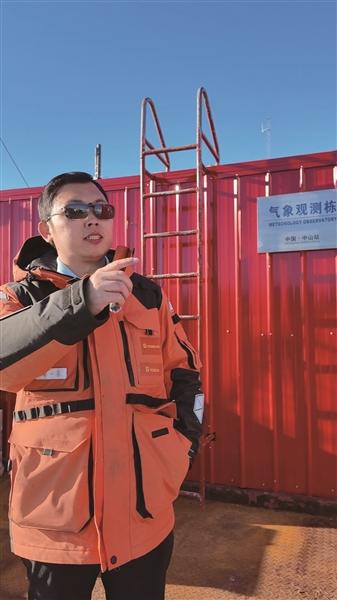
在南极中山站,他们测风、追光、寻碳
Huan Qiu Wang Zi Xun· 2025-12-28 01:19
Core Viewpoint - The article highlights the ongoing scientific research and monitoring activities at China's Zhongshan Station in Antarctica, showcasing the dedication of the research team in various fields such as meteorology, atmospheric composition, and aurora studies [2][4][5]. Group 1: Meteorological Observations - The meteorological team at Zhongshan Station conducts continuous weather observations, including parameters like wind speed, temperature, humidity, and solar radiation, operating 24/7 since March 1989 [4][5]. - The highest recorded wind speed at the station reached 15 levels, and during the Antarctic summer, sunlight is available for over 20 hours a day [4]. - Meteorological observations are crucial for providing foundational data for scientific research and improving global and regional weather models [5]. Group 2: Aurora Research - The research team is also focused on studying auroras, with specialized equipment like all-sky imaging systems and spectrometers to analyze the dynamics of this phenomenon [7]. - The concept of "aurora ripples" was introduced by Chinese researchers, describing a specific pattern observed in auroras, which may be linked to plasma dynamics [7]. Group 3: Carbon Cycle Research - A researcher from Hong Kong is studying the biogeochemical processes of organic carbon in the Antarctic ecosystem, which is sensitive to global climate changes [9]. - The research involves collecting samples from various environments to understand the carbon cycle and its response to climate change [9]. Group 4: Agricultural Initiatives - Zhongshan Station has established a greenhouse to grow fresh vegetables, providing essential nutrition for the wintering team, as fresh supplies from the mainland last only a few months [11]. - The greenhouse serves as a source of comfort for the team during the long Antarctic winter, with vegetables cultivated in a specially designed environment [11].
未来产业的现在进行时
Ren Min Ri Bao· 2025-11-20 01:05
Quantum Technology - China has established the world's largest quantum communication network, comprising 8 core sites and 159 access stations [4] - The third-generation superconducting quantum computer "Benyuan Wukong" is set to officially operate in January 2024, with over 80% domestic components [9] - "Benyuan Wukong" has been accessed over 37 million times by users from 163 countries, completing 740,000 quantum computing tasks across various fields [11] Biological Manufacturing - Biological manufacturing combines traditional fermentation and synthetic biology, opening new industrial spaces [12] - China holds over 70% of global biological fermentation capacity, leading in the production of amino acids and organic acids [12] - Challenges include the need for core strains and key enzymes, as well as the development of a robust biological information database [13] Nuclear Fusion Energy - Controlled nuclear fusion, known as "artificial sun," is advancing with significant breakthroughs in technology [14][15] - The "China Circulation No. 3" has achieved record ion and electron temperatures of 120 million and 160 million degrees Celsius, respectively [15] - By 2027, "China Circulation No. 3" is expected to conduct burning plasma experiments, moving towards commercial fusion power generation by mid-century [15] Brain-Computer Interface - Brain-computer interface technology is expanding into various fields, including medical rehabilitation and consumer electronics [17][18] - The industry is supported by a collaborative ecosystem involving research, industry, and policy frameworks [18] - Key focus areas include core technology development, innovation ecosystem enhancement, and ethical regulatory frameworks [18] Humanoid Robotics - Humanoid robots are evolving rapidly, with advancements in joint modules and motion control [19][20] - The Shenzhen area is developing a "embodied intelligence port," fostering a complete industrial chain from R&D to application [20] - The local government has introduced action plans to promote technological innovation and industry development in humanoid robotics [20] 6G Technology - 6G technology aims to enhance connectivity and integrate various technologies, supporting the development of a smart society [21][22] - It is expected to achieve 10 to 100 times the speed and reliability of 5G, covering all domains of connectivity [21] - China is advancing in 6G research and aims for commercial implementation by 2030 [22]

5600万年前北极海洋加剧全球变暖谜底揭开
Ke Ji Ri Bao· 2025-09-27 08:06
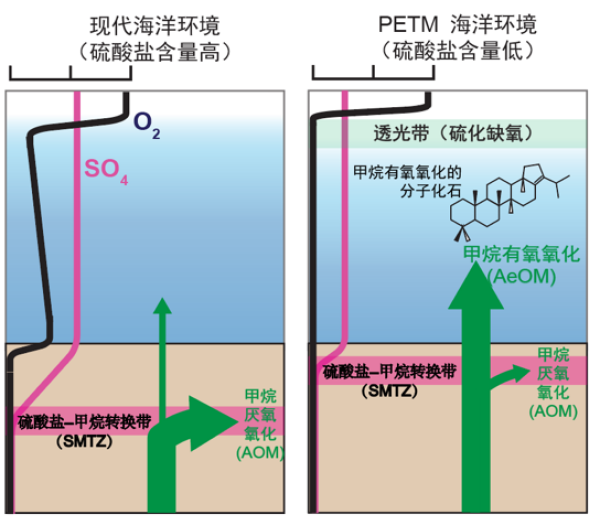
Core Insights - The research reveals that subtle changes in ocean sulfate concentrations can act as a "chemical switch" affecting methane consumption, which has significant implications for global climate change [1][2]. Group 1: Methane and Climate Change - Methane is the second-largest greenhouse gas after carbon dioxide, with a significant amount stored as hydrates on the ocean floor [1]. - In modern oceans, approximately 90% of methane is utilized by microorganisms in sediments under anoxic conditions, using sulfate as a "fuel" and producing alkaline substances that mitigate ocean acidification [1]. - During the Paleocene-Eocene Thermal Maximum (PETM) around 56 million years ago, the sulfate concentration in Arctic seawater was less than one-third of modern levels, leading to a shift in methane decomposition processes [2]. Group 2: Microbial Activity and Methane Oxidation - A lack of sulfate during the PETM resulted in the activation of oxygen-loving bacteria that rapidly "burned" methane, contrasting with the slow-burning process seen in modern oceans [2]. - The research team successfully reconstructed the methane oxidation process from 56 million years ago by detecting specific molecular traces left by ancient bacteria [2]. - The study indicates that during the PETM, the concentration of CO2 in Arctic seawater was 200-700 ppm higher than the global average, transforming the Arctic from a carbon sink to a carbon source [2]. Group 3: Geological Influences on Climate - Geological activities such as crustal movements, rock formation, continental weathering, and volcanic eruptions directly influence ocean sulfate levels, thereby affecting methane decomposition methods [3]. - The research suggests that the historical low sulfate levels in ancient oceans may have significantly impacted global carbon cycles and climate [3]. - With the rapid warming and freshening of modern Arctic waters, similar methane oxidation mechanisms could be reactivated, potentially leading to a shift from efficient methane utilization to rapid burning [3].
【科技日报】海水硫酸盐含量揭开5600万年前北极海洋加剧全球变暖谜底
Ke Ji Ri Bao· 2025-09-26 01:25
Core Insights - The research reveals that subtle changes in ocean sulfate concentrations during the Paleocene-Eocene Thermal Maximum (PETM) 56 million years ago acted as a "chemical switch" that altered methane consumption, significantly impacting global climate change [1][2] Group 1: Methane Dynamics - Methane, the second-largest greenhouse gas after carbon dioxide, is primarily stored in the ocean floor as hydrates [1] - In modern oceans, approximately 90% of methane is utilized by microorganisms in sediments under anoxic conditions, using sulfate as a "fuel" to efficiently convert methane while producing alkaline substances that mitigate ocean acidification [1][4] - During the PETM, the concentration of sulfate in Arctic seawater was less than one-third of modern levels, leading to a shift in methane oxidation pathways [2][4] Group 2: Microbial Activity - A significant increase in the activity of methane-oxidizing bacteria that prefer oxygen was observed during the PETM, indicating a transition from slow combustion to rapid burning of methane [2] - The research team successfully reconstructed the methane oxidation process from 56 million years ago by detecting specific molecular traces left by ancient bacteria [2] Group 3: Carbon Cycle Implications - The study found that CO2 levels in Arctic seawater during the PETM were 200-700 ppm higher than the global average, indicating a shift from being a carbon sink to a carbon source [4] - Geological activities such as tectonic movements and volcanic eruptions directly influence ocean sulfate levels, which in turn determine methane decomposition methods [4] Group 4: Modern Relevance - The research highlights the potential for similar methane oxidation mechanisms to be reactivated due to rapid warming and freshening of modern Arctic waters, which could lead to a shift from efficient methane utilization to rapid burning [4] - This study serves as a crucial warning regarding the potential risks of greenhouse gas emissions in the context of modern Arctic climate changes [4]
中国科学院院士张人禾:1.5℃温控目标下 气候变化加快行业格局重塑
2 1 Shi Ji Jing Ji Bao Dao· 2025-09-19 06:34
Core Insights - Extreme weather is becoming a new economic variable, with 2024 projected to be the first year to exceed the 1.5℃ target set by the Paris Agreement [1][6] - Human activities are directly linked to the significant rise in carbon dioxide concentrations and climate warming over the past century, necessitating stronger emission reduction measures to meet climate goals [3][6] Group 1: Climate Change and Human Activity - The rapid increase in carbon dioxide levels over the last century is unprecedented in Earth's history, confirming a direct correlation with human activities [3][4] - Distinguishing between natural climate variability and human-induced changes is crucial for accurate climate assessments and effective policy decisions [5][6] Group 2: Impact on Industries - The energy sector is most affected by climate change, with fossil fuel combustion accounting for over 80% of total carbon emissions, driving a shift towards clean energy [8][9] - Other sectors like transportation, retail, and manufacturing are also significantly impacted, particularly by extreme weather events that alter demand patterns [9][10] Group 3: Risk Management and Opportunities - Companies can mitigate risks from climate change by transitioning to clean energy and utilizing weather forecasts to adjust production and supply chain strategies [10][12] - Enhanced weather prediction capabilities are essential for industries to anticipate extreme weather and optimize resource allocation [10][12] Group 4: Technological Advancements - Key technological developments in monitoring and forecasting are necessary to accurately assess atmospheric carbon levels and predict extreme weather events [11][12] - Improved forecasting for renewable energy sources like solar and wind is critical for optimizing energy production and usage [13]

21专访丨中国科学院院士张人禾:1.5℃温控目标下 气候变化加快行业格局重塑
2 1 Shi Ji Jing Ji Bao Dao· 2025-09-17 23:21
Group 1 - Extreme weather is becoming a new economic variable, with 2024 projected to be the first year to exceed the 1.5℃ target set by the Paris Agreement [1] - The energy sector is the most directly impacted by climate change, as fossil fuel combustion accounts for over 80% of total carbon emissions, prompting a shift towards clean energy [8][9] - The retail and manufacturing sectors are also significantly affected, particularly due to increased demand for cooling products in response to extreme heat [9] Group 2 - Effective risk management strategies for energy companies include accelerating the transition to clean energy to mitigate climate change impacts and reduce their own emissions [10] - For retail and manufacturing sectors, accurately predicting extreme weather can create opportunities, such as preemptively adjusting production and supply chains based on weather forecasts [10] - The development of monitoring and forecasting technologies is crucial for accurately assessing carbon levels and predicting extreme weather events, which is vital for the clean energy sector [12][13]

中外青年团队获得2025年全球“青年发明家奖”——创新固碳方案 助力可持续发展
Ren Min Ri Bao· 2025-06-29 21:48
Group 1 - The European Patent Office recently held the 2025 "Young Inventors Award" ceremony, recognizing ten global innovators or teams, including a team from China led by Wenrou Jia and her partner Alisa Fredriksson [1] - The award targets innovators or teams aged 30 and below, aiming to honor contributions towards the United Nations Sustainable Development Goals [1] - This year's winners proposed innovative solutions in various fields such as electronic waste, rare element recycling, aviation, artificial intelligence, nanotechnology, carbon capture, food safety, and environmental protection [1] Group 2 - Wenrou Jia and Alisa Fredriksson's team developed a carbon capture system for ships, which can capture CO2 from exhaust gases and convert it into solid limestone for storage [1][2] - The shipping industry is a major source of global carbon emissions, facing challenges such as high costs and inefficiencies in retrofitting existing vessels [1] - The designed system allows for CO2 to be solidified and transported like regular cargo, simplifying unloading and processing without the need for complex port facilities [2] Group 3 - The modular design of the system facilitates installation on existing ships, avoiding high replacement costs and providing a scalable solution for emissions reduction in the shipping industry [2] - The system has been tested on a commercial cargo ship, successfully capturing 78% of CO2 and 90% of sulfur emissions, attracting interest from several international shipping companies [2] - The solidified CO2 can be utilized in the construction materials market or sent to specialized facilities for carbon recycling, contributing to a true carbon cycle [2] Group 4 - Wenrou Jia emphasized the importance of sustainable development for future generations and the role of technology in driving positive change [2] - She highlighted the collaborative potential between China and Europe in addressing global challenges, noting that both regions possess complementary strengths in manufacturing and technology ecosystems [2]
浙江大学发表最新Science论文
生物世界· 2025-06-07 06:00
碳 (C) 和 氮 (N) 是全球生物地球化学循环中的核心元素。为了有效管理中国的碳和氮,研究团队开发了一个综合模型,用于量化碳和氮的通量,并研究它 们在 16 个人类和自然子系统中的相互作用。 撰文丨王聪 编辑丨王多鱼 排版丨水成文 人类的活动极大地扰乱了地球的 碳循环 和 氮循环 ,带来了明显的生态后果。成功地加以管理以将这些影响降至最低,对于维护环境网络和人类社会的可持续性 至关重要。 2025 年 6 月 5 日,浙江大学环境与资源学院 谷保静 教授团队在国际顶尖学术期刊 Science 上发表了题为: Integrated carbon and nitrogen management for cost-effective environmental policies in China 的研究论文。 该研究开发了一个综合模型, 用于量化碳和氮的通量及其相互作用,通过以综合方式共同管理它们,与分别处理相比,可以以更低的减排成本实现碳和氮的大幅 减少,并带来更大的社会效益。 https://www.science.org/doi/10.1126/science.ads4105 设置 星标 ,不错过精彩推文 ...