
全新全方位低空经济保险服务体系

Search documents
广东推金融十二条,“放飞”低空经济!投融资规模占全国六成
Nan Fang Du Shi Bao· 2025-12-25 06:38
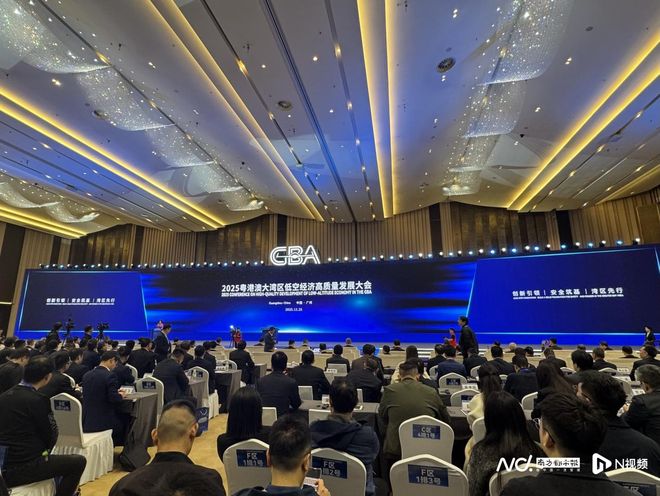
Group 1 - The Guangdong-Hong Kong-Macao Greater Bay Area Low Altitude Economy High-Quality Development Conference was held on December 25, 2025, focusing on the development of the low altitude economy, which is expected to inject strong momentum into a trillion-level new sector [1] - The Guangdong Financial Regulatory Bureau and six other departments introduced twelve financial support measures for the development of low altitude economic clusters, aiming to meet the financial needs of the low altitude economy [1][5] Group 2 - The low altitude economy in Guangdong has rapidly developed, with its output value surpassing 100 billion yuan, and the investment and financing scale of core enterprises reaching nearly 50 billion yuan, accounting for about 60% of the national total [3] - The insurance scale for the low altitude economy has exceeded 325 billion yuan, with compensation expenditures nearing 150 million yuan, covering various application scenarios such as urban air transport and emergency rescue [4] Group 3 - The twelve measures introduced by the Guangdong Financial Regulatory Bureau emphasize a systematic support system focusing on mechanism construction, product service supply, collaborative linkage, and supporting guarantees to enhance the quality and efficiency of financial supply [5][6] - The measures aim to create a specialized financial service system, support the entire lifecycle of low altitude enterprises, and encourage financial institutions to develop targeted financial products [6][7] Group 4 - The initiative encourages collaboration among financial institutions to shift from single service models to comprehensive service models, enhancing cooperation with Hong Kong and Macao financial institutions [7] - The implementation of the "Twelve Measures for Low Altitude Finance" is expected to provide strong financial momentum for the growth of the low altitude economy in Guangdong [8]

保险业为低空经济织密“安全网”
Jin Rong Shi Bao· 2025-06-04 07:24
Core Viewpoint - The low-altitude economy in China is rapidly developing, with an annual growth rate exceeding 30%, creating a trillion-yuan market in the airspace below 1,000 meters. The insurance industry is evolving from a passive risk bearer to an active architect of the industry ecosystem, focusing on comprehensive risk management for the low-altitude economy [1]. Group 1: Industry Development - The low-altitude economy has established a complete industrial chain structure, including upstream research and manufacturing, midstream operation services, and downstream application scenarios. Any risk in these segments could lead to systemic impacts [2]. - The demand for low-altitude detection services has surged, with business volume in Chongqing increasing nearly twofold since 2025. However, equipment damage incidents remain a significant challenge [2]. - The introduction of the first "low-altitude aircraft onboard detection equipment loss compensation insurance" serves as a critical breakthrough in establishing a safety net for low-altitude equipment monitoring [2]. Group 2: Insurance Product Innovation - The "new comprehensive low-altitude economy insurance service system" has been developed, expanding coverage to include cargo transport, loss during downtime, and extended warranty responsibilities, thus creating a multi-scenario, full lifecycle risk protection system around eVTOL [3]. - The new insurance products aim to enhance the lifecycle and value retention of eVTOLs, providing significant support for the stability of low-altitude economy enterprises [3]. Group 3: Collaborative Ecosystem - The sustainable development of low-altitude economy insurance relies on deep collaboration in technology empowerment, data sharing, and institutional innovation. Recent developments indicate a shift from "single-point innovation" to "ecological co-construction" [4]. - The establishment of the "Bay Area Low Altitude Economy Research Institute" aims to create a unified low-altitude flight data platform and develop risk assessment models suitable for various scenarios [5]. - The collaboration between Zhongcai Property Insurance and Ping An Property Insurance to form a "New Emerging Risk Research Institute" will integrate resources to create innovative insurance products and service models for the low-altitude economy [5]. Group 4: Market Trends and Challenges - The current trends in low-altitude economy insurance include extending coverage upstream to encompass research, detection, and manufacturing, accelerating technology empowerment through big data and AI, and deepening ecological collaboration [7]. - National policies have been introduced to support the development of the low-altitude economy, with projections indicating that the market size could reach 1.5 trillion yuan by 2025 and 3.5 trillion yuan by 2035 [8]. - Challenges such as slow infrastructure development, weak core technologies, and an underdeveloped market system need to be addressed to enhance the insurance coverage and commercial applicability of low-altitude economy products [9][10].

