全氟质子交换膜

Search documents
未来材料科创板IPO:独立性、成长性与时间检验的多重审视
Sou Hu Cai Jing· 2026-01-09 03:12
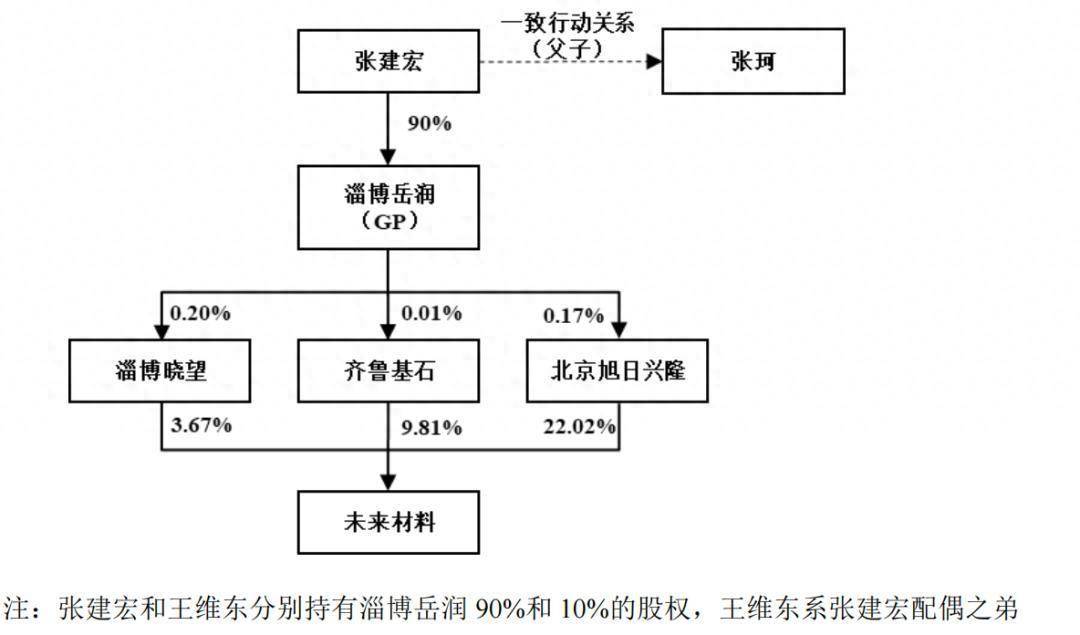
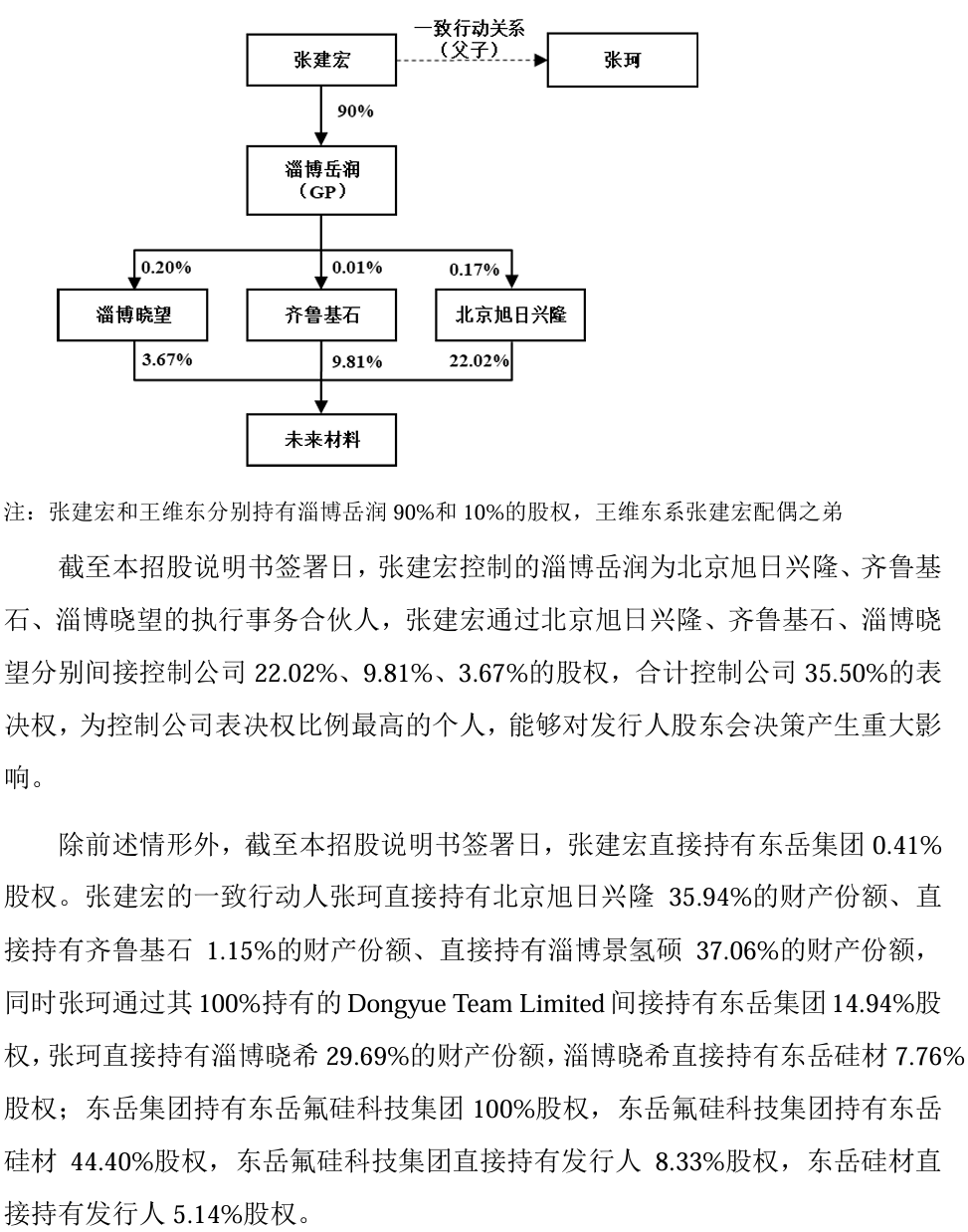
Core Viewpoint - Shandong Dongyue Future Hydrogen Energy Materials Co., Ltd. (referred to as "Future Materials") is undergoing a substantive review by regulatory authorities regarding its governance structure, financial quality, reliance on related parties, and technological independence as part of its IPO application process [1] Governance Structure and Control - The actual controller, Zhang Jianhong, indirectly controls 35.50% of the voting rights through multiple partnership enterprises and has signed a concerted action agreement with his son, Zhang Ke [2] - The control structure is set to be finalized in 2024, involving share transfers and adjustments in partnership structures [2] - Future Materials emphasizes its independence from Dongyue Group, which has a dispersed shareholding and no actual controller, creating a firewall to avoid issues related to competition and related transactions [4] - Analysts express concerns that this structure may allow Future Materials to be used as a tool for profit adjustment and cost transfer by Dongyue Group, lacking institutional protection for minority shareholders [5] Financial Performance and Inventory Pressure - Future Materials' revenue increased from 5.24 billion in 2022 to 7.21 billion in 2023 but fell to 6.40 billion in 2024, marking an 11.23% year-on-year decline [6] - Net profit attributable to shareholders decreased from 2.30 billion in 2023 to 1.65 billion in 2024, a decline of 28.26% [6] - The company's total assets rose to 211.36 billion in 2024 from 198.00 billion in 2023, while the debt-to-asset ratio improved to 31.72% [7] - Inventory levels doubled over three years, with a significant increase in finished goods, raising concerns about inventory turnover and impairment provisions [7][8] Related Transactions and Independence - Future Materials has a long-standing relationship with Dongyue Group, with related party purchases accounting for 66.74% and 67.65% of total costs in 2022 and 2023, respectively [10] - In 2024, the company reduced related party purchases to 30.15% by introducing external suppliers, although analysts question the sustainability of this change [10] - The company has a significant reliance on related parties for patents and other resources, raising concerns about the independence of its operations [12] Market Position and Expansion Constraints - Future Materials is often labeled as a leader in hydrogen energy materials, but its current revenue is still heavily reliant on fluorinated functional membranes and derivatives [15] - The company plans to raise 24.46 billion, with over 80% allocated for expansion projects, but the necessity and market absorption of this expansion are questioned given the low current capacity utilization [18] - The hydrogen energy sector faces challenges such as increased competition and uncertain demand, which may impact profitability [15][20]

“失落”的淄博:从“鲁C”第三城到“万亿城市俱乐部”旁观者
Xin Lang Cai Jing· 2025-12-16 04:40
Core Viewpoint - The city of Zibo, once a prominent industrial hub in Shandong, is facing significant economic challenges and has been overshadowed by other cities in the region as it struggles to adapt to changing economic landscapes [1][3][4]. Historical Context - Zibo was historically a strong industrial city, recognized for its contributions to the chemical, building materials, and machinery sectors, achieving a GDP ranking of 23rd nationally in the early 1990s [3][4]. - By 2011, Zibo became the third city in Shandong to surpass a trillion yuan in industrial output, showcasing its industrial strength [3]. Economic Challenges - In 2018, Zibo's GDP dropped by nearly 150 billion yuan due to statistical adjustments and the elimination of outdated production capacity, causing its ranking within Shandong to fall to 7th place [4]. - The city's GDP for 2023 and 2024 is projected at 456.18 billion yuan and 488.41 billion yuan, respectively, with growth rates lagging behind the provincial average for two consecutive years [4]. - Zibo's economic position is further threatened by neighboring cities like Linyi and Jining, which have shown stronger growth rates and are closing the gap in GDP [5]. Demographic and Regional Pressures - Zibo is experiencing a population decline, with a net outflow of 37,000 residents in 2024, contributing to an aging population with a senior citizen rate of 23.24% [7]. - The "strong provincial capital" strategy in Shandong is enhancing the competitive pressure on Zibo, particularly from Jinan, which is geographically close and easily accessible [7]. Industrial Transformation - Zibo is actively pursuing industrial transformation, focusing on new industrialization with an emphasis on "new materials, smart equipment, new pharmaceuticals, and electronic information" [8]. - By 2024, these four key industries are expected to account for 59.8% of the city's industrial output, reflecting a significant increase from 2020 [8]. - The city is also seeing positive developments in its listed companies, with total revenue of approximately 147.77 billion yuan and a notable profit increase from Inke Medical [8]. Cultural and Economic Development - Zibo is attempting to transition from a "barbecue economy" to a more integrated cultural and tourism economy, with significant revenue growth in key tourist attractions [8]. - The city is developing cultural projects that blend traditional culture with modern experiences, aiming to create new economic growth points [8][9]. Conclusion - Zibo's ongoing transformation is not only crucial for its own development but also serves as a reference for other cities facing similar challenges in transitioning from traditional industrial bases to modern industrial systems [9].
经济大省挑大梁 | 由大到强 山东十万亿经济体量的高质量发展跃迁
Zhong Guo Xin Wen Wang· 2025-12-08 02:18
Economic Growth and Transformation - Shandong Province's GDP is projected to exceed 10 trillion yuan by 2025, showcasing its role as a major economic province with a focus on stable growth, transformation, and overall benefits [1] - The province is enhancing its manufacturing sector through "chain thinking," implementing over 12,000 technological transformation projects valued at over 5 million yuan each, revitalizing traditional industries [1][2] Manufacturing and Innovation - Shandong has established itself as a leader in manufacturing, with 235 national-level "single champion" enterprises exporting products to over 190 countries, including notable companies like Jinan Second Machine Tool and Yantai Wanhua Chemical [2] - The province is advancing in green transformation, achieving a 14.5% reduction in energy consumption per unit of GDP over three years, while maintaining an average economic growth rate of 5.2% [2] Agricultural Development and Digital Transformation - Shandong is leveraging digital technology to reshape agriculture, with innovations like AI-powered harvesting robots and agricultural drones enhancing productivity [3] - The province's agricultural exports have maintained the highest national value for over 20 years, with a total export value of 121.74 billion yuan in the first three quarters of 2025, accounting for 22.8% of the national total [3] Technological Innovation and Collaboration - Shandong's innovation landscape is characterized by collaborative platforms and open ecosystems, with significant achievements in smart manufacturing recognized at the 2025 World Intelligent Manufacturing Conference [4] - Companies like Shandong Xinhua Medical Equipment and Inspur are making strides in high-end markets, with certifications and operational advancements in AI and medical technology [4][5] Overall Development Strategy - Shandong's development strategy focuses on upgrading manufacturing, promoting rural revitalization, and stimulating technological innovation, reflecting its commitment to being a leading economic province [5]
未来材料三闯IPO遇“现场抽检” “东岳系”第三家上市公司恐难产
Sou Hu Cai Jing· 2025-10-15 07:23
Core Viewpoint - The company Future Materials is making its third attempt to list on the STAR Market, aiming to become the third listed company under the "Dongyue System," led by Zhang Jianhong, despite facing significant challenges in the process [1][2]. Group 1: IPO Attempts and Challenges - Future Materials initiated its IPO process in October 2020 but faced interruptions due to the debt issues of its former controlling shareholder, leading to a change in actual control and a halt in the listing plan [2]. - After changing its actual controller to Dongyue Group in September 2023, Future Materials resumed its IPO efforts but faced setbacks due to incomplete application materials and regulatory misunderstandings, resulting in a second withdrawal of its application [2]. - The company submitted its prospectus to the Shanghai Stock Exchange in June 2023 and is currently undergoing the inquiry phase, but it has been included in the 2025 second batch of IPO on-site inspections by the China Securities Association [2][3]. Group 2: Financial Performance and Operational Issues - Future Materials reported a revenue of 640 million yuan in 2024, a decline of 11.23% year-on-year, and a net profit of 165 million yuan, down 28.26%, primarily due to a downturn in the chemical materials industry and increased market competition [5]. - The company's production capacity utilization rates are notably low, with the utilization rate for perfluorinated proton exchange membranes at 45.25% and other key materials at 35.44%, raising questions about the rationale behind its planned fundraising of 2.446 billion yuan for capacity expansion [5]. - The company has also faced challenges in product quality and customer relationship management, with the return and exchange rate of products increasing from 1.41% of revenue in 2022 to 6.18% in 2024, attributed to ongoing product development and quality standard issues [6]. Group 3: Dongyue System Influence - Zhang Jianhong, the founder of Future Materials, is a key figure in the "Dongyue System," which includes Dongyue Group, listed in Hong Kong, and Dongyue Silicon Materials, listed in A-shares, indicating a strong capital network [8]. - The company has a complex ownership structure with Zhang controlling 35.50% of the voting rights through various partnerships, despite a relatively low direct shareholding, which poses risks of diluted control [8]. - Future Materials has significant transactions with related parties, with procurement from Dongyue Group companies accounting for over 65% of its operating costs in recent years, raising concerns about the authenticity of its financial performance and potential conflicts of interest [9].
未来材料IPO:能否从现场检查中安全返回?
Sou Hu Cai Jing· 2025-08-05 22:46
Core Viewpoint - Shandong Dongyue Future Hydrogen Energy Materials Co., Ltd. (Future Materials) has been selected for an IPO site inspection, which is considered one of the strictest IPO reviews, raising concerns about its IPO prospects [1][2]. Group 1: IPO Process and Challenges - Future Materials' IPO application was accepted on June 27, 2023, and it was selected for the second batch of IPO site inspections in 2025 [1]. - The new regulations state that even if a company selected for site inspection withdraws its application, the inspection will still proceed, and regulatory penalties may apply for any issues found [2]. - As of July 18, 2023, Future Materials' IPO review status was updated to "inquiry," indicating that the process is ongoing despite the site inspection [2]. Group 2: Company Performance and Financials - Future Materials has shown overall revenue growth during the reporting period, but 2024 is projected to see a decline in both revenue and net profit compared to 2023 [3]. - Revenue figures for 2022, 2023, and 2024 are 524 million, 721 million, and 640 million respectively, with a year-on-year growth of 37.60% in 2023, but a decline of 11.23% in 2024 [3]. - Net profit for the same years is 143 million, 230 million, and 165 million, with a growth of 60.84% in 2023 and a decline of 28.26% in 2024 [3]. Group 3: Production Capacity and Utilization - The company faces challenges with low capacity utilization rates for its main products, which are critical for its IPO success [6]. - For example, the capacity utilization rates for perfluorinated proton exchange membranes were 9.00%, 10.29%, and 45.25% for 2022, 2023, and 2024 respectively [6]. - Other products also show low utilization rates, such as perfluorinated ion exchange resins at 42.00%, 71.72%, and 53.11% [6]. Group 4: Fundraising and Investment Plans - Future Materials plans to raise 2.446 billion for various projects, including a 3 million m²/a perfluorinated proton membrane project and a 5,000 t/a melt-processable polytetrafluoroethylene (PFA) project [10][12]. - The company aims to significantly increase the production capacity of its high-performance fluorinated functional membranes to meet growing market demand [10]. - However, the necessity of expanding capacity is questioned due to the current low utilization rates of existing production [10][13].

吴江开发区“链”接氢能产业未来
Xin Hua Ri Bao· 2025-08-01 00:36
Core Insights - The hydrogen energy industry is gaining significant attention in China, with the Wujiang Economic and Technological Development Zone hosting a meeting to foster collaboration among 28 hydrogen enterprises from Suzhou, Shanghai, and Jiaxing, indicating a strategic focus on the hydrogen sector [1][2] - Hydrogen energy has been legally recognized in China as a key component of the energy transition strategy, with local government plans emphasizing its development as a priority area [1][2] - Wujiang Development Zone is positioned as a crucial growth hub for the hydrogen industry, housing nearly 100 hydrogen-related enterprises and achieving an industry scale close to 10 billion yuan [2][3] Industry Development - The hydrogen energy industry in Wujiang is characterized by a complete supply chain, from production to application, with significant advancements in technology and product offerings [3][4] - Companies like Suzhou Qingqi Technology are leading in catalyst production and have developed high-efficiency alkaline electrolyzers, showcasing the region's technological capabilities [3] - The integration of various hydrogen applications, such as hydrogen-powered bicycles and energy storage systems, is being facilitated through collaboration among local enterprises [4][5] Government Support and Policies - The Wujiang Development Zone has established a 2 billion yuan new energy fund to support the growth of hydrogen enterprises, with a focus on early-stage investments and technological innovation [5] - Talent attraction initiatives include financial support for startups and research facilities, demonstrating the local government's commitment to fostering the hydrogen industry [5] - The development of the hydrogen industry is seen as a strategic choice for Wujiang to enhance its production capabilities and secure a competitive edge in future markets [2][5]
张建宏15年后夺回控制权,未来材料IPO被抽中现场检查
Sou Hu Cai Jing· 2025-07-18 08:49
Core Viewpoint - Shandong Dongyue Future Hydrogen Energy Materials Co., Ltd. (Future Materials) has restarted its IPO process and submitted its application to the Shanghai Stock Exchange, marking its third attempt to go public after previous failures due to various issues. The company aims to raise 2.446 billion yuan for R&D, expansion, and working capital, with a significant portion allocated for production expansion despite rising inventory levels and declining turnover rates [1][2][3]. Financial Performance - Future Materials has experienced fluctuating financial performance, with revenues increasing initially but then declining. For the years 2022 to 2024, the company reported revenues of 524 million yuan, 721 million yuan, and 640 million yuan, respectively, with net profits of 143 million yuan, 230 million yuan, and 165 million yuan. The revenue for 2024 is projected to decrease by 11.23%, and net profit is expected to drop by 28.26% [2][3][4]. Product Pricing and Market Pressure - The company faces market price pressures for several products, particularly the perfluorinated proton exchange membrane, which saw its price drop from 909.68 yuan per square meter in 2022 to 655.41 yuan in 2024, a decrease of 27.95%. The overall revenue contribution from high-performance fluorinated functional membranes has also declined from 93.99% in 2022 to 60.20% in 2024 [4][5][6]. Key Customer Relationships - Future Materials has established a significant partnership with Dalian Rongke, a leading vanadium flow battery company, which has become its largest customer, contributing 66.45% of the sales revenue from perfluorinated proton exchange membranes in 2024. This relationship is crucial for maintaining stable order sources amid declining overall revenue [6][7][8]. Inventory and Production Capacity - The company has a production capacity of 625,000 square meters for perfluorinated proton exchange membranes, with a utilization rate of 45.25% and a sales-to-production ratio of 84.98%. Future Materials plans to invest 559 million yuan in expanding its production capacity significantly [11][12]. Related Party Transactions - Future Materials has frequent related party transactions, with significant sales and purchases involving its major customer and supplier, Dongyue Fluorosilicon Technology Group. The company has taken steps to reduce the scale of these transactions by engaging third-party suppliers [14][16][17]. Control and Ownership Structure - The ownership structure of Future Materials is complex, with control shifting among shareholders over the years. As of now, Zhang Jianhong is the controlling shareholder, holding the highest voting rights, while the previous controlling parties have seen their influence diminish due to financial difficulties and restructuring [20][22][24].