全球营销AI Agent

Search documents
OpenAI画的饼,这家中国公司先吃上了
Sou Hu Cai Jing· 2025-10-27 23:22
Core Insights - The article emphasizes the shift from AI as a conversational tool to AI as a productivity tool, specifically in the context of marketing and sales [6][7][11] - It highlights the emergence of AI-driven systems that can autonomously handle various aspects of marketing, including content creation, audience targeting, and performance analysis [3][5][17] Group 1: AI in Marketing - A new system called "Global Marketing AI Agent" automates the entire marketing process, from script generation to data analysis, without human intervention [3][5] - The AI system is developed by a Chinese SaaS company, Taitong Technology, which is known for its "growth black technology" in the overseas market [6][26] - The focus is on delivering measurable business outcomes, such as ROI and GMV, rather than just engaging in conversational AI [10][11] Group 2: Features of the AI System - The AI system, Navos, offers four key features: market insights generation, content analysis for viral trends, simplified ad monitoring, and customizable data reporting [18][19][21][22] - Navos can generate comprehensive market reports from simple user queries, significantly reducing the time and effort required for traditional market research [18] - It includes algorithms for identifying high-performing content and optimizing ad strategies based on real-time data [19][21] Group 3: Industry Challenges and Solutions - The article discusses three major challenges faced by brands in overseas marketing: high content costs, localization difficulties, and fragmented advertising platforms [41][42][43] - The AI Agent addresses these challenges by streamlining processes that previously required large teams and extensive time, thus making overseas marketing more accessible to smaller brands [46][47] - The system is positioned as a transformative tool that can enhance efficiency and reduce costs in the marketing process, potentially democratizing access to global markets [47][48] Group 4: Competitive Advantage - Taitong Technology's extensive experience with over 100,000 enterprises has allowed it to build a comprehensive knowledge base that informs the AI's decision-making [26][28] - The company has established a robust infrastructure that integrates various marketing tools and data analytics, enabling the AI to function effectively in real-world scenarios [30][31] - The team behind the AI system consists of industry veterans who understand marketing dynamics, which contributes to the system's effectiveness [34]

我在WAIC看见的十大趋势
量子位· 2025-07-30 02:29
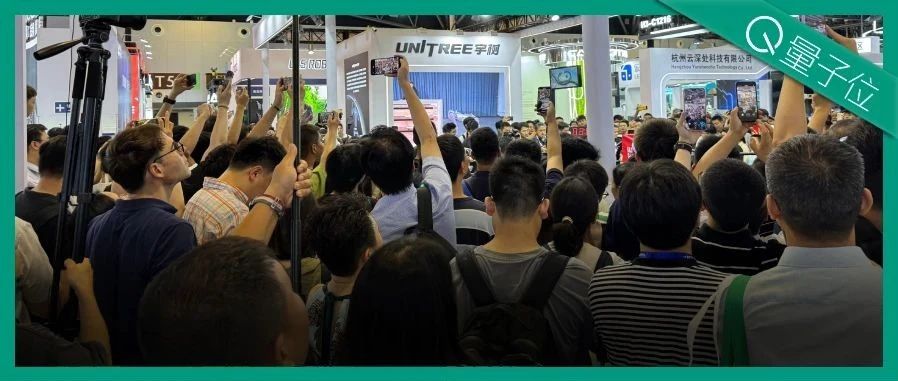
Core Viewpoint - The article highlights the unprecedented enthusiasm and advancements in the AI industry showcased at the Shanghai World Artificial Intelligence Conference (WAIC), emphasizing the transformative impact of DeepSeek and the emergence of various trends in AI technology and applications [3][4]. Group 1: Key Trends in AI - Trend 1: DeepSeek has fundamentally changed the perception of AI in China, with a growing belief in the potential for achieving AGI (Artificial General Intelligence) [6][7]. - Trend 2: New foundational large models are not only focused on state-of-the-art (SOTA) performance but also on reasoning, multimodality, and cost-effectiveness [8][11]. - Trend 3: Open-source large models have entered a new phase in China, with significant players like Tongyi Qianwen leading the way [17][18][28]. Group 2: Integration of Hardware and Software - Trend 4: The integration of chips and models is creating a fully domestic AI ecosystem, with a focus on collaboration between hardware and software [32][34]. - Trend 5: AI infrastructure is rapidly developing, with vertical industry models providing direct productivity benefits, as seen in sectors like energy and finance [50][60]. Group 3: Consumer-Focused Innovations - Trend 6: AI innovation is shifting towards consumer-facing products, with AI agents becoming a new focal point in various applications [66][81]. - Trend 7: The first wave of commercial AI terminals includes automobiles, headphones, and glasses, indicating a growing market for AI-integrated hardware [88][99]. Group 4: Robotics and Non-Transformer Architectures - Trend 8: The field of embodied intelligent robots is experiencing rapid growth, with advancements in capabilities and applications [112][134]. - Trend 9: Non-Transformer architectures are emerging from research into practical applications, showcasing innovative approaches in AI development [144][146]. Group 5: Competitive Landscape - Trend 10: The gap between China's AI capabilities and those of Silicon Valley has narrowed to approximately six months, highlighting China's unique advantages in resources and talent [150][155].