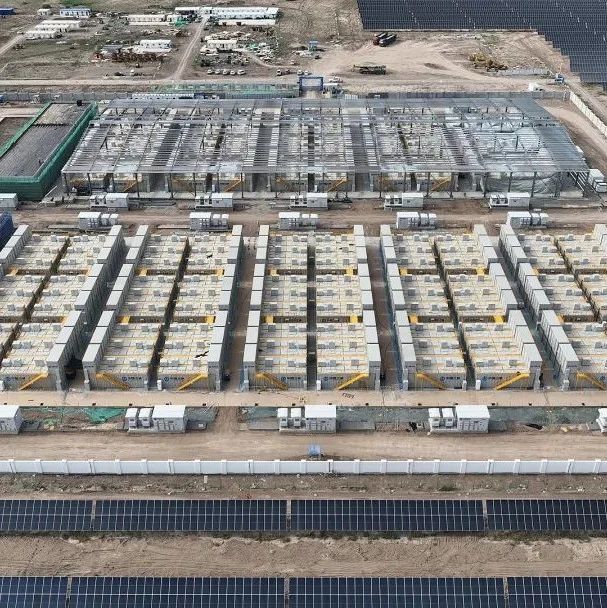
全钒液流储能一体化项目

Search documents
我国能源开发实现“飞天遁地”突破 沙、戈、荒与高空能量不断聚集
Yang Shi Wang· 2025-10-10 08:17
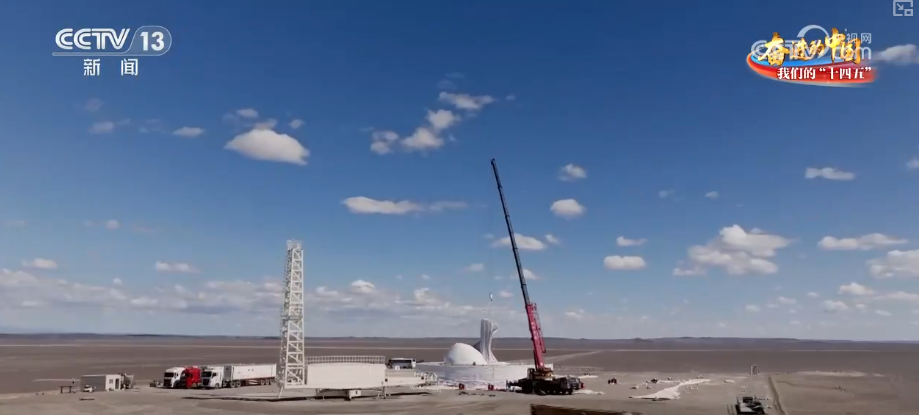
Core Insights - During the "14th Five-Year Plan" period, Xinjiang's energy industry is experiencing rapid development, particularly in wind and solar energy sectors, achieving breakthroughs in energy development [1][5]. Renewable Energy Development - By the end of the "14th Five-Year Plan," Xinjiang's installed capacity for wind and solar power is expected to reach 112 million kilowatts, with green electricity accounting for over 55%, ranking first in Northwest China and third nationally [5]. - The region is home to the world's largest single photovoltaic power station and advanced floating wind power stations, continuously harnessing energy from its vast deserts and high altitudes [7]. - A new high-altitude floating wind power device, capable of capturing wind energy at approximately 1500 meters, has been successfully tested, marking a significant advancement in wind energy technology [18]. Energy Transmission and Storage - The "Xinjiang Power Transmission to Chongqing" ultra-high voltage transmission line has been established, enabling rapid long-distance electricity transmission, with power reaching Chongqing in just 7 milliseconds [9]. - Xinjiang plans to construct and operate 218 new energy storage stations during the "14th Five-Year Plan," positioning itself among the leaders in the western region for energy storage capacity [11]. - The largest all-vanadium flow battery energy storage project in China, located in Xinjiang, is expected to provide stable green electricity to the grid, sufficient for approximately 197,000 households annually [13]. Traditional Energy Development - Xinjiang is also enhancing its traditional energy sector, with plans to drill over 200 ultra-deep oil wells in the Taklamakan Desert, reaching depths of over 8000 meters by the end of the "14th Five-Year Plan" [14]. - The successful drilling of the Deep Taka 1 well, reaching 10,910 meters, has set multiple world records, showcasing Xinjiang's potential in oil and gas development [14]. - Xinjiang is projected to contribute over 150 million tons of crude oil and more than 250 billion cubic meters of natural gas to the national market, maintaining its position as a leading energy supplier in Western China [16].

全国最大全钒液流储能项目在吉木萨尔县建成
中关村储能产业技术联盟· 2025-07-01 03:30
Core Viewpoint - The completion of the Jimsar Beiting 1 million kW + 200,000 kW/1 million kWh all-vanadium flow energy storage integrated project marks a significant advancement in clean energy, with a total investment of 3.8 billion yuan and an annual average power generation of approximately 1.72 billion kWh, contributing to substantial CO2 emission reductions [1][4]. Group 1 - The project is the largest all-vanadium flow energy storage project in the country, featuring a total installed capacity of 1,000 MW and a storage scale of 1 million kWh, with a storage duration of 5 hours [3][4]. - The project is expected to reduce CO2 emissions by over 1.6 million tons annually compared to traditional thermal power plants, equivalent to the annual emissions of a medium-sized country over a 25-year operational period [1][4]. - The successful construction of the project validates the feasibility of all-vanadium flow storage technology, which is characterized by strong stability and long lifespan, supporting the development of clean energy in resource-rich regions like Xinjiang [4]. Group 2 - The project includes components such as electrolytes, stacks, thermal management systems, and auxiliary facilities, demonstrating a comprehensive approach to energy storage solutions [3]. - The project aligns with national goals for carbon neutrality, enhancing the utilization of solar and wind energy resources [4].