
特高压输电

Search documents
【早报】伊朗新任最高领袖发表首次声明;国际油价飙升,再次突破100美元
财联社· 2026-03-12 23:07
Industry News - China's passenger car retail sales for January-February reached 2.602 million units, a year-on-year decline of 19.1% [3] - The retail sales of new energy passenger cars in China for the same period totaled 1.06 million units, down 25.7% year-on-year [3] - The National Industrial Information Security Development Research Center issued a risk warning regarding OpenClaw applications, highlighting potential security vulnerabilities that could lead to control loss and sensitive information leakage [3][5] - The cement market demand is steadily recovering as construction activities ramp up, with companies showing a strong willingness to raise prices due to low current prices and rising production costs [6] Company News - Cambrian announced a net profit of 2.059 billion yuan for 2025, turning a profit compared to previous losses, and proposed a dividend of 15 yuan per share along with a bonus issue of 4.9 shares for every 10 shares held [7] - Huadian announced the signing of a 13.962 billion yuan EPC contract for a solar-storage project in Abu Dhabi [11] - Micro LED light source chips developed by Zhaochi have completed R&D and are currently in the sample verification testing phase [10] - Baichuan announced a recent increase in market prices for some chemical products, but the impact on performance is currently uncertain [10]



未知机构:长江电新神马电力复合绝缘材料全球稀缺标的深度受益于美国输电网750亿美元-20260304
未知机构· 2026-03-04 02:25
Summary of Conference Call Notes Company and Industry Involved - **Company**: Shenneng Electric (神马电力) - **Industry**: High Voltage Transmission and Composite Insulation Materials Core Points and Arguments 1. **U.S. Power Grid Expansion**: The U.S. has approved a total of $75 billion for transmission expansion projects, focusing on the construction of 765 kV ultra-high voltage lines due to increased electricity demand from data centers and aging power grids [1] 2. **High Voltage Insulation Demand**: The ultra-high voltage transmission requires high safety and insulation standards, while local high voltage production in Europe and the U.S. is significantly hollowed out, creating substantial opportunities for domestic companies with top-tier technology [1] 3. **Shenneng Electric's Unique Position**: As a global leader in composite external insulation, Shenneng Electric's innovative ultra-high voltage composite insulators can significantly reduce construction costs and offer over 30 years of maintenance-free operation, aligning with U.S. needs for cost reduction and efficiency [2] 4. **Market Penetration**: Shenneng Electric is one of the few domestic companies capable of entering the U.S. high voltage transmission supply chain at scale, currently providing services for MISO's 765 kV transmission line and engaging with several power companies [2] 5. **Dual Growth Drivers**: The company is positioned to benefit from both global grid upgrades and increased penetration of new composite insulation products, with expectations of high-margin long-term overseas orders due to its strategic positioning in North America [2] 6. **Profit Forecast**: Projected net profits for Shenneng Electric are expected to reach 570 million yuan and 780 million yuan in 2026 and 2027, respectively, with corresponding price-to-earnings ratios of 46x and 34x [2] Other Important but Possibly Overlooked Content 1. **Operational Challenges**: The core pain points in ultra-high voltage transmission include insulation flashover prevention and high operational maintenance costs [1] 2. **Investment Recommendation**: Given the company's unique position in the U.S. high voltage transmission sector and its high growth potential, it is recommended as a key investment opportunity [3]

春节期间这一幕,让西方彻底绝望!
Sou Hu Cai Jing· 2026-02-18 17:10
Core Viewpoint - China has achieved a remarkable capacity in electricity generation, ensuring power supply for its 1.4 billion population and millions of enterprises, with a projected generation of 10 trillion kilowatt-hours by 2025, surpassing the combined output of several major countries [1][3]. Group 1: Electricity Generation Capacity - By 2025, China's electricity generation is expected to exceed 10 trillion kilowatt-hours, accounting for approximately one-third of global production, significantly higher than the United States (4.6 trillion), India (2 trillion), Japan (1 trillion), and others combined [3]. - The vast majority of China's electricity (about 65%) is directed towards industrial production, supporting over 600 industrial sectors and contributing to the global supply chain [3][5]. Group 2: Historical Context and Development - Two decades ago, China faced severe electricity shortages, with significant limitations on power supply leading to blackouts and industrial slowdowns [5]. - The transition to a more reliable power supply was achieved through three main strategies: hydropower, wind and solar energy, and nuclear power, with hydropower alone generating 1.46 trillion kilowatt-hours annually [5][7]. Group 3: Technological Advancements - China has developed advanced high-voltage transmission technology, reducing transmission losses to 2% per 1,000 kilometers, enabling efficient power delivery from resource-rich areas to industrial hubs [9][11]. - The country has invested heavily in this technology, with over 5,000 researchers and significant financial resources dedicated to overcoming technical challenges, resulting in a leading position in global high-voltage transmission standards [9]. Group 4: Strategic Importance of Electricity - Electricity is increasingly viewed as a strategic resource in international competition, with implications for geopolitical relations, as seen in the U.S.-Canada electricity trade dynamics [11][13]. - The future of competition is anticipated to revolve around electricity networks and computational power, with clean energy becoming a critical asset in technological advancements [13].

合州换流站500千伏交流系统一次送电成功
Zhong Guo Jing Ji Wang· 2026-02-13 04:13
Core Insights - The ±800 kV Hezhou Converter Station has successfully completed a 24-hour trial operation and has been integrated into the Anhui main grid, marking the official launch of the Shaanxi-Anhui ±800 kV UHVDC project [1] - Hezhou Converter Station is the first UHV converter station to be put into operation during the 14th Five-Year Plan period of the State Grid [1] Group 1: Project Management and Quality Control - The construction of Hezhou Converter Station implemented comprehensive quality control, reviewing over 30 relevant standards and regulations, and creating a task list covering 332 specific works [1] - An innovative equipment owner system was established for full-process supervision, identifying and rectifying 443 construction issues [1] - The team utilized a "numbering and positioning method" for precise management of nearly 40,000 flow joints, ensuring all loop resistances were within required limits [1] Group 2: Testing and Safety Measures - During the commissioning phase, the testing team executed 183 operation tickets and 5,582 operational items, maintaining a zero-error record [2] - To address the complexities of concurrent testing, construction, and operation, safety measures included hard isolation barriers, warning signs, daily safety briefings, and dynamic inspections [2] - The current focus of Hezhou Converter Station has shifted to the acceptance and testing of DC field equipment, leveraging the experience gained from the initial success [2]
瞒不住了,中国10万亿度电不止是用电多,核心底牌让老美无力抗衡
Sou Hu Cai Jing· 2026-02-10 11:04
Core Insights - China's total electricity consumption surpassed 10 trillion kilowatt-hours in 2025, marking a significant milestone as the first country to achieve this level, reflecting the country's industrial and technological advancements [2][4] - The growth from 1 trillion kilowatt-hours in 1996 to 10 trillion in 2025 demonstrates an unprecedented increase in electricity demand, driven by industrial upgrades and infrastructure improvements over the past 30 years [4] - China's electricity consumption in July and August 2025 exceeded 1 trillion kilowatt-hours per month, equivalent to the annual consumption of Japan or Southeast Asian countries, underscoring China's manufacturing capabilities [4] Industry and Technological Development - The substantial electricity demand is supported by a comprehensive industrial system, including mining, energy management, and advanced manufacturing technologies [6] - While overall electricity consumption in the manufacturing sector grew by only 3% in 2025, sectors like new energy equipment and high-tech manufacturing experienced significantly higher growth rates [6] - The U.S. has struggled with its energy policies, which have hindered its transition to new energy sources, contrasting with China's advancements in renewable energy and manufacturing [6][10] Energy Independence and Supply Chain - China's electricity generation is self-sufficient, relying on domestic resources such as solar and wind energy, which enhances energy security [8] - The U.S. faces increasing dependency on China for solar panels, wind turbines, and battery materials, complicating its energy strategy and increasing costs [8][10] - The development of electric vehicles in the U.S. is stagnating due to high production costs and reliance on Chinese technology and equipment [10][11] Infrastructure and Energy Management - China's high-speed rail network, exceeding 50,000 kilometers, is fully electrified, reducing reliance on fossil fuels and enhancing energy security [13] - The country has implemented a sophisticated national electricity dispatch system, allowing efficient energy distribution across regions [18][20] - New energy storage technologies have become standard, enabling better management of electricity supply and demand, and enhancing the overall efficiency of the power system [18][22] Global Implications - The achievement of 10 trillion kilowatt-hours not only reflects China's capabilities but also positions it as a significant player in global energy dynamics, influencing how other countries manage their energy needs [22][24] - The contrast between China's unified energy strategy and the fragmented approach in the U.S. highlights the challenges the latter faces in maintaining energy stability and competitiveness [20][22]
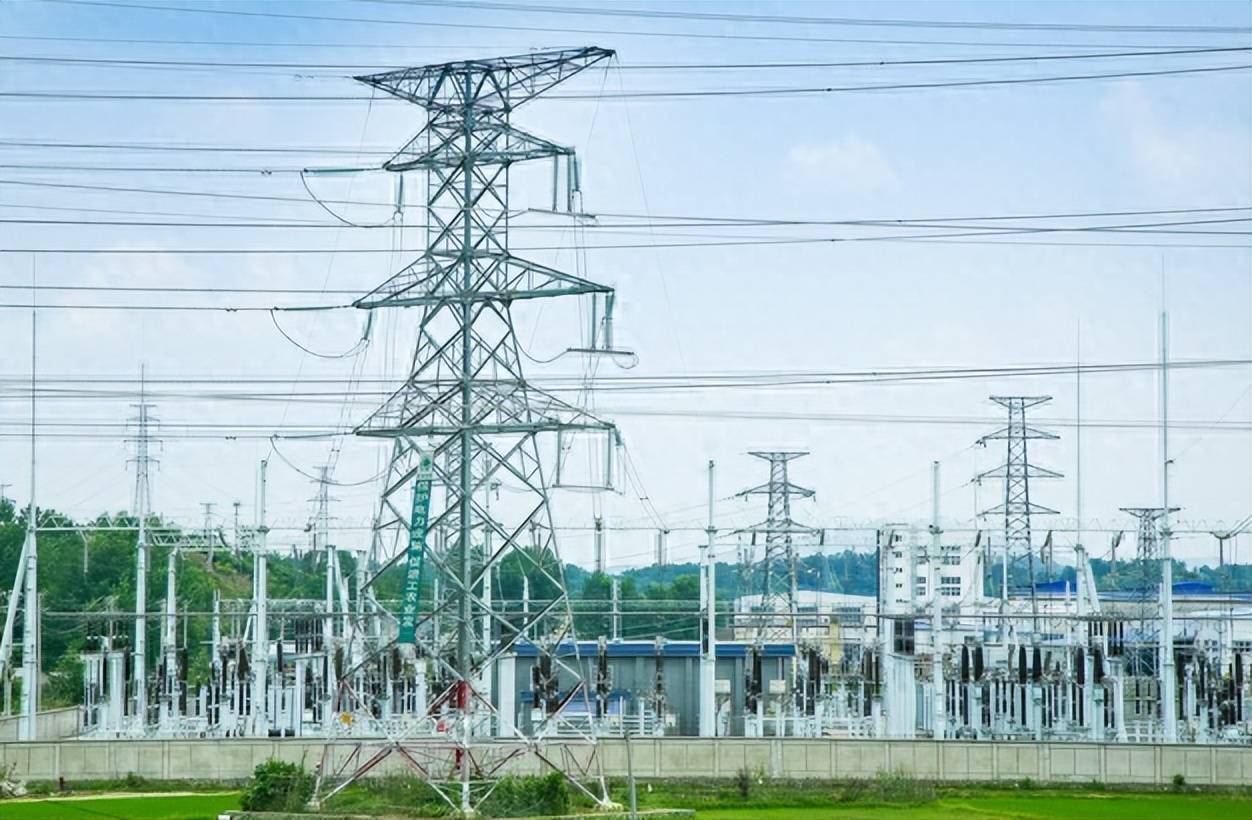
达拉特—蒙西1000千伏特高压交流输变电工程获得核准
Zhong Guo Neng Yuan Wang· 2026-02-09 08:25
Core Viewpoint - The approval of the "Dalat-Inner Mongolia West" 1000 kV AC transmission and transformation project is a significant step in China's "14th Five-Year Plan" for electricity, enhancing the power transmission capacity from Inner Mongolia to the Beijing-Tianjin-Hebei region [1] Group 1: Project Details - The project involves the construction of a new 1000 kV substation at Dalat, with the installation of two sets of 3 million kVA main transformers [1] - A new double-circuit 1000 kV line will be built, with a total length of 2×124.6 kilometers, and the total investment for the project is 4.374 billion yuan [1] - The project aims to meet the power transmission needs of the ±800 kV UHVDC project connecting Inner Mongolia and Beijing-Tianjin-Hebei, thereby extending the North China UHV grid [1] Group 2: Economic and Environmental Impact - The construction of the project is expected to generate multiple benefits, including driving investment, creating jobs, and restoring the ecosystem [1] - It plays a crucial role in converting resource advantages in western regions into clean energy consumption and supports coordinated development in the Beijing-Tianjin-Hebei area [1] Group 3: Implementation Timeline - State Grid Inner Mongolia East Power will expedite the preliminary procedures and land acquisition under the unified organization of the State Grid Corporation, aiming for construction to start in April 2026 [1] - The project is planned to be completed and put into operation simultaneously with the ±800 kV UHVDC project [1]
中国银河证券曾韬:海外AI产业链电力瓶颈显现 国内电力系统升级正当时
Zhong Guo Zheng Quan Bao· 2026-02-03 23:33
Core Insights - The global AI industry is experiencing rapid growth, leading to an explosive increase in computing power demand, which is straining electricity supply and grid stability in key regions like North America and Europe [1][2] - China's new energy system construction is advancing, with significant investments in grid upgrades, energy storage, and digitalization, positioning the electricity sector as a crucial investment focus under the dual guidance of stable growth and energy transition [1] Group 1: AI Power Demand Surge - The expansion of AI computing power in North America and Europe is causing regional electricity shortages, impacting the construction progress of large data center projects [2] - This issue is not a short-term bottleneck but a long-term structural contradiction, as AI data centers exhibit exponential energy consumption while the backup capacity of European and American grids is nearing exhaustion [2] - The geographical layout of the industry is shifting towards regions with more abundant electricity resources, and companies are transitioning to integrated models of self-built green power generation and storage to ensure stable power supply [2] Group 2: China's Advantages in Power Supply - China possesses significant advantages in electricity supply stability, scale, green power allocation capabilities, and infrastructure construction efficiency [3] - The "East Data West Computing" national strategy effectively connects the computing demand in the east with renewable energy-rich areas in the west [3] - Global electricity tension is driving the restructuring of the energy infrastructure industry chain, with a shift from reliance on traditional grids to "green power direct supply + local storage" [3] Group 3: New Power System Development - The construction of a new power system in China is entering a critical phase, with the main systemic bottleneck being insufficient "carrying capacity" and "flexibility" of the power system [4] - The inherent randomness and volatility of renewable energy generation create significant challenges for grid stability, leading to structural issues such as "abandoned wind and solar" alongside "electricity shortages" [4] - Future focus areas include the development of "active distribution networks" capable of massive resource integration and intelligent control, as well as the promotion of flexible DC transmission technologies [4] Group 4: Transformative Role of Energy Storage - Energy storage has transitioned from an optional component to a necessary element of the new power system, crucial for solving renewable energy consumption and ensuring grid safety [5] - The commercial model for energy storage in China is evolving from a single supporting model to a diversified revenue system comprising market revenue, capacity compensation, auxiliary service revenue, and special subsidies [5] Group 5: International Opportunities for Chinese Energy Technology - China's energy technology and solutions are gaining broad opportunities on the international stage, particularly in addressing global energy transition and electricity tension [6] - The country can enhance cooperation with regions like Europe, Southeast Asia, and the Middle East through equipment technology exports, capacity cooperation, and integrated investment, construction, and operation [6] Group 6: Investment Opportunities in the Energy Sector - Under the dual policy guidance of "stabilizing growth" and "energy transition," the investment focus in the electricity and new energy sector is becoming clearer [6][7] - In the short to medium term, opportunities exist in the export of grid equipment, domestic ultra-high voltage projects, and the storage sector, with global grid investment entering a high prosperity cycle [7] - Long-term prospects remain strong in wind power, AI data center energy infrastructure, energy digitalization, and advanced fields like space photovoltaics [7] Group 7: Focus on Leading Companies - Investment strategies should prioritize leading companies in various sub-sectors, as they possess comprehensive advantages in technology development, brand strength, cost control, and overseas capabilities [7] - The advantages of leading companies are expected to strengthen further in the context of the industry's pursuit of high-quality development and "anti-involution" [7]

海外AI产业链电力瓶颈显现国内电力系统升级正当时
Zhong Guo Zheng Quan Bao· 2026-02-03 20:27
Core Insights - The global AI industry is experiencing rapid growth, leading to an explosive increase in computing power demand, which is straining electricity supply in key regions like North America and Europe [1][2] - The construction of a new power system in China, focusing on renewable energy, is advancing, with significant investments in grid upgrades, energy storage, and digitalization [1][3] Group 1: AI Power Demand Surge - The expansion of AI computing power is causing regional electricity shortages in North America and Europe, impacting the construction progress of large data center projects [1] - This issue is seen as a long-term structural contradiction, with AI data centers exhibiting exponential energy consumption while the backup capacity of European and American grids is nearing exhaustion [1][2] Group 2: Global AI Industry Chain Impact - The electricity supply challenges are prompting a geographical shift in the industry, with data center operations moving to regions with more abundant power resources, such as the Midwest of the U.S., Canada, and Southeast Asia [2] - Companies are transitioning from relying solely on public power grids to integrated models of self-built green power generation and storage to ensure stable electricity supply [2] - Technological advancements are accelerating, with a rise in the adoption of 800V high-voltage direct current power supply systems and liquid cooling technologies for high-density computing [2] Group 3: China's Advantages in Power Supply - China possesses significant advantages in electricity supply stability, scale, green energy allocation capabilities, and infrastructure construction efficiency [2] - The country has the world's largest unified power grid, ensuring ample electricity supply, and the "East Data West Computing" strategy effectively connects eastern computing demand with western renewable energy resources [2] Group 4: Energy Infrastructure Restructuring - Global electricity shortages are driving a restructuring of the energy infrastructure industry, shifting from traditional grid reliance to "green electricity direct supply + local storage" models [3] - The evolution of electricity technology is moving towards higher voltage, efficiency, and intelligence, with regionalization trends in supply chains due to local policy pushes [3] Group 5: New Power System Development - The construction of a new power system in China is entering a critical phase, with challenges in the system's capacity and flexibility due to the inherent randomness and volatility of renewable energy generation [4] - Intelligent and flexible upgrades to the grid are essential, focusing on developing active distribution networks and promoting flexible direct current transmission technologies [4] Group 6: Storage's Evolving Role - Energy storage has transitioned from an optional component to a necessity in the new power system, crucial for addressing renewable energy consumption and ensuring grid safety [4] - The commercial model for storage is evolving from a single support model to a diversified revenue system, incorporating market earnings, capacity compensation, and auxiliary service revenues [4] Group 7: International Opportunities for Chinese Energy Technology - China's energy technology and solutions are gaining significant international opportunities, particularly in addressing global energy transitions and electricity shortages [5] - The country can enhance cooperation with regions like Europe, Southeast Asia, and the Middle East through technology exports, capacity collaboration, and integrated investment, construction, and operation [5] Group 8: Investment Opportunities in High-Growth Sectors - Under the dual policy guidance of "stabilizing growth" and "energy transition," the investment focus in the power and renewable energy sector is becoming clearer [6] - In the short to medium term, opportunities exist in the export of grid equipment, domestic ultra-high voltage projects, and the storage sector, with a global increase in demand for energy storage [6] Group 9: Long-Term Growth Areas - Long-term growth areas include wind power, energy infrastructure for AI data centers, energy digitalization, and advanced technologies like space photovoltaics [6] - The demand for energy infrastructure driven by AI computing is currently seen as highly valuable for investment, with rapid updates in technologies like 800V high-voltage direct current and liquid cooling [6] Group 10: Investment Strategy Focus - The current investment strategy should prioritize leading companies in various segments, as they possess comprehensive advantages in technology development, brand strength, cost control, and international expansion capabilities [7] - Companies achieving breakthroughs in disruptive technologies are also worthy of attention and continuous tracking [7]
“陕电入皖”再提速!千里“能源大动脉”关键节点落地
Xin Hua She· 2026-02-02 01:24
Core Viewpoint - The commencement of the 500 kV AC field live testing at the Shaanxi-Anhui ±800 kV UHVDC project marks a significant transition from static installation to dynamic verification, laying a solid foundation for the subsequent live testing of the ±800 kV DC section [1] Group 1 - The Shaanxi-Anhui ±800 kV UHVDC project is a major initiative under the national "14th Five-Year Plan" [1] - The initiation of the 500 kV AC field live testing signifies progress in the project, indicating readiness for further testing phases [1] - This development is crucial for the overall success and operational readiness of the UHVDC project [1]
沪铝或维持高位震荡
Qi Huo Ri Bao· 2026-01-27 00:06
Group 1 - The Trump administration's internal and external challenges have led to a significant weakening of the US dollar index [2] - Guinea's AGB2A-GIC aluminum alliance has received approval to resume production, with expectations to contribute approximately 40 million tons of bauxite supply by 2026 [2] - China's alumina production is projected to reach 92.45 million tons in 2026, with a net export volume of 2 million tons, indicating a loose global supply-demand situation for alumina [2] Group 2 - Global electrolytic aluminum production is expected to reach 76.58 million tons in 2026, with China's production at 45.44 million tons [3] - The demand for electrolytic aluminum in 2026 is projected to be 76.51 million tons globally, with China's demand at 47.33 million tons, suggesting a slightly loose supply-demand balance [3] - The recent cancellation of export tax rebates for photovoltaic products and seasonal demand growth in the aluminum foil sector have led to an increase in operating capacity for aluminum processing enterprises [3] Group 3 - In the short term, the weakening of the US dollar index may suppress downstream demand, keeping aluminum prices stable [4] - In the medium to long term, expectations of interest rate cuts by the Federal Reserve and slow production ramp-up of new electrolytic aluminum capacity may provide upward price potential for aluminum [4]