养老储蓄产品

Search documents
城商行三十年|承德银行:从城市信用社到区域支柱的跨越之路
Jin Rong Jie· 2025-12-10 08:40
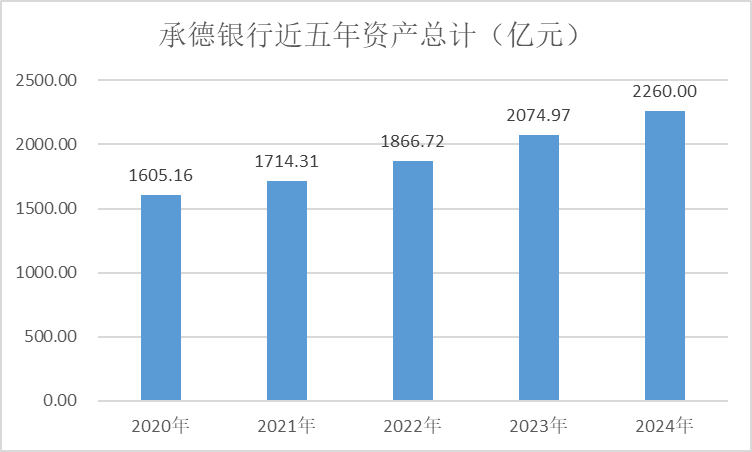
Core Viewpoint - The article highlights the transformation of Chengde Bank from a local credit union to a significant regional financial institution over the past 30 years, emphasizing its role as a pillar of the local economy and its adaptation to market changes [1]. Group 1: Historical Development - Chengde Bank originated from the Chengde City Urban Credit Cooperative, established to meet the financing needs of local small and medium-sized enterprises [2]. - In 2001, the cooperative faced bankruptcy but was restructured with government support, leading to its official opening as a city credit cooperative in 2002 [2]. - The bank underwent significant reforms, including a name change to Chengde City Commercial Bank in 2006 and to Chengde Bank in 2009, achieving regional operations and ranking second in national competitiveness among city commercial banks by 2010 [3]. Group 2: Management Transition - In October 2024, the long-serving president Zhang Lei retired, and a smooth transition of leadership occurred with Wang Yong becoming the new chairman and Zhang Jianjun the new president, both of whom have extensive experience within the bank [3]. Group 3: Shareholding Structure - Chengde Bank has a relatively dispersed shareholding structure, with the largest shareholder being the Chengde Municipal Finance Bureau, holding 8.84% of the shares [4]. Group 4: Regional Opportunities - National policies have been introduced to support small and medium-sized banks in focusing on local operations and serving the real economy, aligning with Chengde Bank's market positioning [5]. - The bank has launched green credit and ecological compensation financial products in response to national policies, capitalizing on its unique regional advantages [5]. Group 5: Economic Development and Financial Demand - Chengde City has implemented policies to promote economic transformation, focusing on industries such as cultural tourism and clean energy, which has created numerous financing opportunities for Chengde Bank [6]. - The city's strategic location and ecological advantages have led to significant tourism and clean energy developments, further diversifying the bank's financial service offerings [6][7]. Group 6: Performance Metrics - As of the end of 2024, Chengde Bank's total assets reached 2260 billion, marking an 8.92% increase from the previous year, with deposits and loans also showing significant growth [9]. - The bank's net profit exceeded 15 billion in both 2023 and 2024, although interest income faced pressure due to lower loan rates [11]. - The bank maintained a non-performing loan ratio of 1.71% as of the end of 2024, with a noted increase in loan concentration among a few clients, particularly in the real estate sector [11]. Group 7: Future Outlook - Chengde Bank's development is closely tied to the prosperity of the regional economy and the improvement of public welfare, with expectations for continued growth and enhanced service quality [12].

广发银行济宁关帝庙金融街小微支行“保障金融权益,助力美好生活”走进任城红西菜市场宣传活动报告
Qi Lu Wan Bao· 2025-09-19 12:25
Core Viewpoint - The article emphasizes the importance of protecting financial rights for both market vendors and consumers in the context of a local vegetable market, aiming to enhance awareness and practical skills in financial safety [1][3][6] Group 1: Financial Rights Protection Initiatives - The initiative focuses on creating a dedicated promotional environment within the market to foster an immersive atmosphere for financial protection [3] - The campaign includes distributing informational materials that cover topics such as payment safety, personal information protection, and awareness of high-interest loan traps [3][5] Group 2: Targeted Outreach for Market Vendors - Specific sessions are held for market vendors to address issues related to the safety of their operating funds, including risks associated with payment scams and delayed transactions [5] - Vendors are educated on managing their operating funds, emphasizing the importance of using legitimate banking products and safeguarding their financial information [5][6] Group 3: Consumer Protection Efforts - The outreach also targets consumers, particularly older adults and homemakers, focusing on safe payment practices and recognizing fraudulent financial inducements [5] - Consumers are warned against using unfamiliar payment codes and are advised to confirm transactions before leaving the vendor [5][6] Group 4: Impact and Future Plans - The campaign successfully reached over 80 vendors and 300 consumers, highlighting common financial risks such as scams and information leaks [6] - The bank plans to extend this financial rights protection model to more community markets, integrating financial safety into everyday life [6]