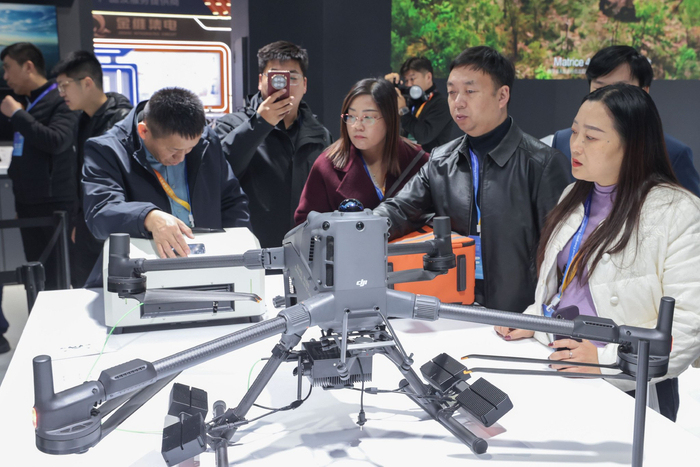
农业无人机T100S

Search documents
大疆市场策略转舵 多线出击打响价格阻击战
Zhong Guo Jing Ying Bao· 2025-12-05 20:20
Core Insights - DJI Agriculture has launched three new agricultural drones with improved performance and reduced prices, interpreted as a competitive move against XAG Technology's upcoming IPO [3][4][5] - DJI's aggressive pricing strategy across various sectors, including smart imaging and consumer drones, has raised concerns about a price war in the industry [3][8] - The shift in DJI's strategy reflects a dynamic evolution in its business approach, moving from a focus on technological superiority to a combination of technology innovation and aggressive pricing to expand market share [3][12] Agricultural Drone Pricing Strategy - The new agricultural drones T100S, T70S, and T55 are priced at 48,999 yuan, 43,999 yuan, and 36,999 yuan respectively, with discounts of up to 8,000 yuan for early orders [4][5] - The flagship T100S has a maximum takeoff weight of 149.9 kg and a payload capacity of 95 kg, featuring significant technological upgrades [4] - The market share for agricultural drones is dominated by DJI and XAG, with DJI holding 59% and XAG 17.1% as of 2024 [5] Market Dynamics and Competition - DJI's pricing strategy is seen as a move to solidify its market position ahead of XAG's IPO, indicating a clear intent to maintain dominance in the agricultural sector [5][6] - The trend of decreasing prices has shifted the user demographic from professional agricultural teams to individual farmers, with the ratio of professional users to individual users changing from 9:1 to 5:5 [7] - XAG has also responded with competitive pricing, indicating a mutual recognition of the need to adapt to market pressures [6][7] Broader Price War Context - DJI's price competition extends beyond agricultural drones, impacting the smart imaging market where it faces competition from companies like YI Technology [8][9] - The aggressive pricing tactics have led to significant price reductions across various DJI products, including handheld imaging devices and consumer drones [9][10] - Industry experts suggest that while price competition can expand the market, it may also dilute brand value and innovation potential in the long term [12][14] Strategic Shift and Future Considerations - DJI's historical strategy focused on high margins through technological innovation, but recent actions indicate a shift towards aggressive pricing to capture market share [12][13] - The company aims to balance its pricing strategies with ongoing technological advancements to avoid potential risks associated with over-reliance on price competition [14] - Industry analysts emphasize the importance of maintaining innovation and brand integrity while navigating competitive pricing pressures [14]