
T70S

Search documents
大疆市场策略转舵 多线出击打响价格阻击战
Zhong Guo Jing Ying Bao· 2025-12-05 20:20
Core Insights - DJI Agriculture has launched three new agricultural drones with improved performance and reduced prices, interpreted as a competitive move against XAG Technology's upcoming IPO [3][4][5] - DJI's aggressive pricing strategy across various sectors, including smart imaging and consumer drones, has raised concerns about a price war in the industry [3][8] - The shift in DJI's strategy reflects a dynamic evolution in its business approach, moving from a focus on technological superiority to a combination of technology innovation and aggressive pricing to expand market share [3][12] Agricultural Drone Pricing Strategy - The new agricultural drones T100S, T70S, and T55 are priced at 48,999 yuan, 43,999 yuan, and 36,999 yuan respectively, with discounts of up to 8,000 yuan for early orders [4][5] - The flagship T100S has a maximum takeoff weight of 149.9 kg and a payload capacity of 95 kg, featuring significant technological upgrades [4] - The market share for agricultural drones is dominated by DJI and XAG, with DJI holding 59% and XAG 17.1% as of 2024 [5] Market Dynamics and Competition - DJI's pricing strategy is seen as a move to solidify its market position ahead of XAG's IPO, indicating a clear intent to maintain dominance in the agricultural sector [5][6] - The trend of decreasing prices has shifted the user demographic from professional agricultural teams to individual farmers, with the ratio of professional users to individual users changing from 9:1 to 5:5 [7] - XAG has also responded with competitive pricing, indicating a mutual recognition of the need to adapt to market pressures [6][7] Broader Price War Context - DJI's price competition extends beyond agricultural drones, impacting the smart imaging market where it faces competition from companies like YI Technology [8][9] - The aggressive pricing tactics have led to significant price reductions across various DJI products, including handheld imaging devices and consumer drones [9][10] - Industry experts suggest that while price competition can expand the market, it may also dilute brand value and innovation potential in the long term [12][14] Strategic Shift and Future Considerations - DJI's historical strategy focused on high margins through technological innovation, but recent actions indicate a shift towards aggressive pricing to capture market share [12][13] - The company aims to balance its pricing strategies with ongoing technological advancements to avoid potential risks associated with over-reliance on price competition [14] - Industry analysts emphasize the importance of maintaining innovation and brand integrity while navigating competitive pricing pressures [14]

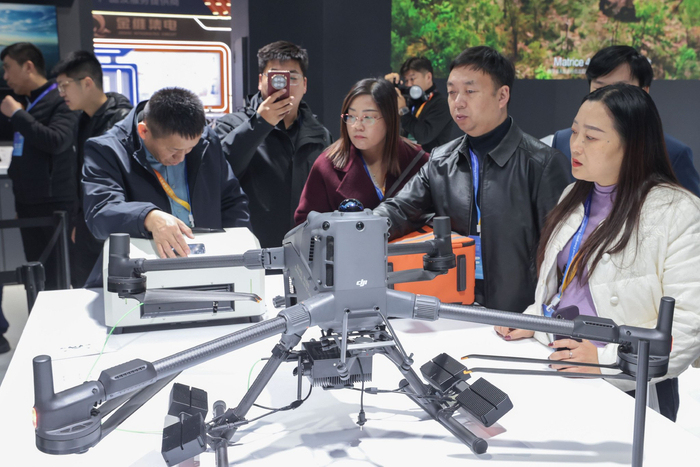
大疆农业多款新品亮相植保双交会
Zheng Quan Shi Bao Wang· 2025-11-21 09:11
Core Insights - The 39th China Plant Protection Information Exchange and Pesticide Machinery Trade Fair showcased DJI Agriculture's new agricultural drones, including T100S, T70S, T55, and T100 dual battery version [1] - DJI Agriculture reported that over 320,000 agricultural drones have been deployed nationwide this year, with a 52% year-on-year increase in operational units, covering 3.2 billion acres and transporting 3.5 million tons of materials [1][2] - The flagship model T100S has a maximum takeoff weight of 149.9 kg, a spraying system capacity of 85 liters, and can carry 90 kg for seeding and 95 kg for transport, making it suitable for large fields and various agricultural tasks [1] Company Developments - DJI Agriculture emphasizes the integration of intelligent safety features in its drones, allowing for autonomous operation in complex terrains through multi-sensor fusion technology [2] - By October 2025, DJI Agriculture aims to achieve cumulative global sales of over 500,000 agricultural drones, marking a significant milestone in the industry [2] - The penetration rate of agricultural drones in major rice-producing areas in China has exceeded 90%, with a national rice penetration rate of approximately 60% [2] Market Trends - The global shipment of agricultural drones has increased from 2,000 units in 2015 to 200,000 units by 2025, indicating a hundredfold growth [2] - DJI Agriculture's overseas market presence has expanded to over 100 countries, with rapid growth in key markets such as Brazil and Mexico [2]
大疆亮剑,农业无人机迈入智驾时代
雷峰网· 2025-11-19 00:35
Core Viewpoint - The agricultural drone industry is transitioning from manual control to intelligent driving, driven by changes in user demand and the expansion of operational scenarios [1][15]. Group 1: DJI's Agricultural Drone Business - DJI's agricultural drone segment, while not widely recognized, is a significant part of its business puzzle, with a projected shipment of 200,000 units by 2025, leading to an estimated annual revenue exceeding 10 billion [2][3]. - DJI's agricultural drones hold a market share of nearly 90% in China, with 62,332 units out of a total of 69,427 units reported in the subsidy system [3][5]. - The agricultural drone sector is crucial for honing flight technology, contributing 98% of flight time in China's drone industry, enhancing DJI's overall technological capabilities [5][6]. Group 2: Cost Reduction and Market Activation - The past decade has focused on cost reduction, with the price of agricultural drones dropping significantly from 100,000 for a 10-liter payload drone to around 10,000, a 90% decrease [8][10]. - This price drop has transformed agricultural drones from tools for professional pest control teams to accessible equipment for ordinary farmers, with the user ratio shifting from 90% small B users to 50% self-use users [10][13]. - The decline in costs is attributed to various factors, including the optimization of design and the decreasing prices of lithium batteries, which account for about one-third of the drone's cost [9][12]. Group 3: Transition to Intelligent Driving - The introduction of laser radar in DJI's T100S and T70S models marks the beginning of the intelligent driving era for agricultural drones, enabling fully automated operations in specific scenarios [6][17]. - The multi-sensor intelligent driving solution combines millimeter-wave radar, vision, and laser radar, significantly enhancing obstacle detection capabilities [18]. - DJI's commitment to user safety is evident in its new policy offering free repairs for drones that collide with obstacles during operation, reflecting confidence in its intelligent driving technology [19]. Group 4: Future Developments and Industry Trends - The future of agricultural drones includes advancements towards L4 level autonomous operations, with capabilities for real-time monitoring of crop health and pest identification using AI [20][22]. - The industry is moving towards a model where agricultural drones serve as intelligent assistants, providing comprehensive agricultural solutions rather than just operational tools [20][23]. - The evolution of agricultural drones is reshaping perceptions of modern agriculture, emphasizing efficiency and technological integration in farming practices [22][23].
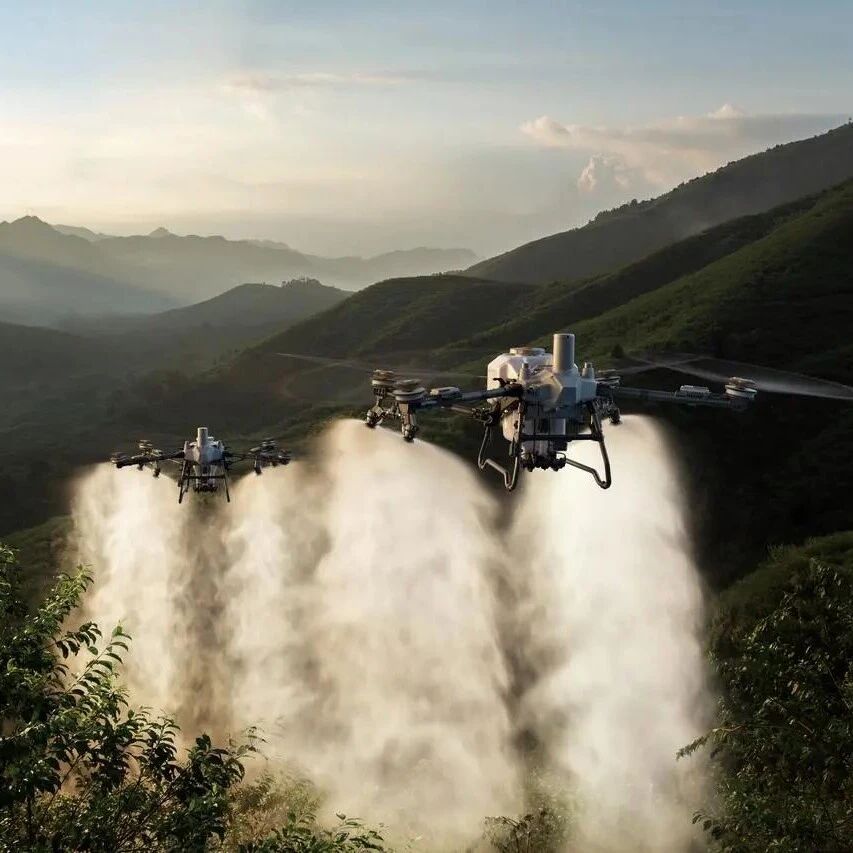
大疆农业:今年农业无人机全球发货量超20万台
Xin Hua Cai Jing· 2025-11-18 14:52
Core Insights - DJI Agriculture has achieved significant growth in global drone shipments, with over 200,000 units shipped by 2025, and domestic operational units exceeding 320,000, completing 3.2 billion acres of agricultural tasks [1][2] Group 1: Product Launch and Features - DJI Agriculture officially launched three new agricultural drones: T100S, T70S, and T55, designed for various agricultural applications including large-scale operations and ease of use for new users [1] - The T100S is a flagship model featuring high payload capacity and comprehensive safety systems, while the T70S offers a cost-effective solution for medium-sized farms, and the T55 focuses on lightweight design for single-user operations [1] Group 2: Market Expansion and Training - DJI's sales network now spans over 100 countries, with a focus on key agricultural regions such as Brazil, Mexico, Thailand, and Japan, utilizing a "sales + training + service" model to enhance local farming efficiency [2] - Over 70,000 local operators have been trained, contributing to the modernization of agriculture in their respective regions [2] Group 3: Technological Advancements - The company is advancing drone technology towards higher levels of automation, achieving L3 level automation, which allows for conditional autonomous operation in various environmental conditions [3] - This advancement is supported by a fully self-developed multi-sensor fusion solution, enhancing operational safety and efficiency [3]
大疆农业推出三款农业无人机
Zhong Zheng Wang· 2025-11-18 12:59
Core Insights - DJI Agriculture launched three new agricultural drones (T100S, T70S, T55) aimed at enhancing precision and intelligence in agricultural practices, transitioning from professional tools to "smart aerial driving" [1] - The new models cater to a wide range of agricultural needs, from large-scale farms to individual farmers, addressing diverse production scenarios [1] - The potential demand for agricultural drones in China could reach 500,000 units, indicating significant growth potential [1] Industry Overview - The global agricultural drone market is experiencing rapid growth, with a projected market size of $2.71 billion in 2024 and expected to reach $31.88 billion by 2033 [2] - China is not only a major manufacturing hub for agricultural drones but also a market with substantial growth potential, with forecasts suggesting the market could reach $11.74 billion by 2035 [2] - Current global penetration of agricultural drones is estimated at 5%-10%, with expectations of entering a rapid growth phase [1]