分立器件引线框架

Search documents
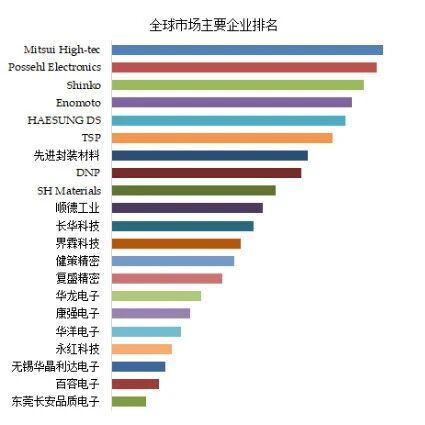
行业聚焦:全球分立器件引线框架行业头部企业市场份额及排名情况(附厂商名单)
QYResearch· 2025-12-01 04:22
Core Viewpoint - The discrete device lead frame market is driven by strong demand from high-growth end applications such as electric vehicles, photovoltaic energy storage, 5G communication, and industrial control, maintaining a stable growth momentum. The market is expected to grow from USD 931 million in 2024 to USD 1.25 billion by 2031, with a compound annual growth rate (CAGR) of 4.3% from 2025 to 2031 [4][10]. Market Overview - The lead frame is a critical structure and conductive component for discrete semiconductor devices, made primarily from copper alloys or iron-nickel alloys, and is essential for the performance and reliability of these devices [2]. - The Asia-Pacific region, particularly China, has become a core market and production center, with domestic companies accelerating import substitution through enhanced technical capabilities [4][10]. Industry Development Trends - High precision and high-density upgrades are being driven by the miniaturization and high integration of semiconductor devices, requiring breakthroughs in precision stamping, etching, and plating technologies [9]. - Material innovation is shifting towards high-performance copper and silver alloys, with environmental regulations promoting the use of lead-free and halogen-free materials [9]. - Smart manufacturing and industry integration are being adopted widely, enhancing production efficiency and stability through automated production lines equipped with AI visual inspection and manufacturing execution systems [9]. Industry Opportunities - The rapid development of downstream applications such as electric vehicles and 5G communication devices is significantly increasing the demand for discrete semiconductors, with the share of lead frame demand in the electric vehicle sector expected to grow from 27% in 2024 to 35% by 2030 [10]. - National policies supporting the development of key semiconductor materials are creating substantial market space for domestic companies to replace imported products [10]. - The global semiconductor supply chain restructuring is leading to capacity shifts towards the Asia-Pacific region, providing new market opportunities for Chinese companies through mergers, acquisitions, and joint ventures [10]. Industry Challenges - High technical and process barriers exist, requiring precise molds and complex chemical processing, making it difficult for new entrants to achieve breakthroughs quickly [11]. - Domestic companies are heavily reliant on imported high-purity copper alloys and advanced stamping equipment, which limits technological progress [11]. - High customer certification thresholds create long validation cycles for suppliers, making it challenging for new suppliers to enter the market [11]. Industry Chain Analysis - The upstream includes raw materials such as copper, copper-based alloys, and precious metals, with key suppliers being international giants and domestic producers focusing on mid-to-low-end copper alloy production [13]. - The core manufacturing processes involve precision rolling, mold manufacturing, forming, plating, and quality inspection, with copper-based alloy frames being the mainstream product [13]. - The downstream applications include automotive electronics, industrial control, and emerging fields like 5G communication and IoT, driven by the commercialization of advanced packaging technologies and domestic substitution policies [13].