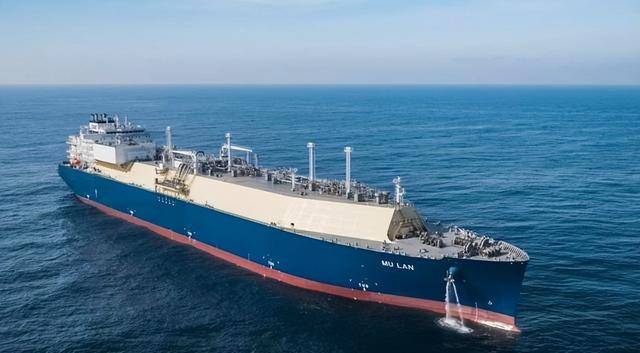
北极液化天然气2号项目天然气

Search documents
俄为何宁愿亏上百亿也要卖石油给中国,普京很清楚:这生意很划算
Sou Hu Cai Jing· 2025-12-19 06:53
Core Insights - In 2025, Russia opted to supply oil and gas to China at significant discounts in response to increased Western sanctions, indicating a strategic pivot rather than merely an economic concession [1] - This shift allowed Russia to maintain energy exports and find a reliable geopolitical ally in China, while China benefited from stable, low-cost energy resources [1] Group 1: Oil Supply Dynamics - By October 2025, U.S. financial isolation of two major Russian oil companies severely restricted international settlement channels, leading to a drop in Russian crude oil prices to approximately $59 per barrel, significantly below Brent benchmark prices [3] - India's oil purchases from Russia decreased from 1.8 million barrels per day to 1.1 million barrels due to high tariffs, while China continued to purchase Russian ESPO crude at $7 to $8 below market prices [3][5] - The discount mechanism for Russian oil expanded by an additional 10% in 2025, reflecting adjustments made to ensure cash flow [5] Group 2: Natural Gas Supply Adjustments - Russia reduced natural gas prices to China by 30% to 40%, with prices at $7 to $8 per million British thermal units, significantly lower than the Asian market price of $11 [7] - The value of each gas shipment dropped from $44 million to between $28 million and $32 million, with over 20 vessels delivered, ensuring China remained a stable buyer [7] - The annual gas supply through the Power of Siberia pipeline stabilized at 38 billion cubic meters, with a new agreement signed in September 2025 to supply an additional 50 billion cubic meters annually at approximately $247 per thousand cubic meters, nearly 30% lower than European market prices [7] Group 3: Economic and Strategic Implications - By November 2025, Russia's total fossil fuel export revenue fell to $11 billion, a decrease of $3.6 billion from peak levels, with China accounting for 44% of this revenue [9] - The shift to using the Chinese yuan for settlements and reliance on third-party fleets for transportation, despite a 20% increase in shipping costs, helped maintain export momentum [9] - The active participation of Chinese private enterprises in receiving Russian energy has led to a diversification of Russia's export model, with annual transaction volumes increasing by 10% [11] Group 4: Long-term Energy Cooperation - In 2025, China imported over 100 million tons of crude oil and 38 billion cubic meters of natural gas from Russia, driving bilateral trade growth despite adverse conditions [13] - The construction of the Far East gas route is expected to significantly enhance supply to China's northeastern industrial regions, with an investment exceeding $10 billion [13] - Russian exports to China increased by 28%, reflecting both quantity and quality improvements, as private refineries in China expanded their processing capacity from 50,000 barrels to 420,000 barrels per day [15] Group 5: Geopolitical Context - The EU's permanent ban on Russian gas accelerated the shift towards China, enhancing China's energy security and reducing reliance on Middle Eastern energy by lowering import costs by 10% [16] - Despite challenges from sanctions, Russia successfully navigated restrictions through Chinese channels, maintaining stable energy exports and contributing to global market stability [16] - Russia's willingness to incur short-term losses in favor of long-term strategic partnerships with China underscores the importance of economic resilience in the face of increasing Western sanctions [16][18]

不必结盟了,普京已跟中方谈妥,俄能源打折卖中国,新的情况出现
Sou Hu Cai Jing· 2025-11-20 16:54
Core Insights - The Arctic LNG 2 project in Russia has faced significant challenges due to U.S. sanctions, leading to no sales from its launch in December 2023 until August 2024 [1] - The project, operated by Novatek, was expected to produce 19.8 million tons annually, but sanctions have severely impacted its profitability [1] - In August 2024, Novatek began selling sanctioned cargoes at discounts of 30% to 40% to Chinese buyers, with prices dropping to between $28 million and $32 million per shipment [1] - The shift in energy exports from Europe to Asia, particularly China, has become a critical strategy for Russia amid ongoing sanctions [3] Group 1: U.S. Sanctions and Their Impact - U.S. sanctions on the Russian energy sector have intensified since the Ukraine conflict began in 2022, with significant measures announced in January 2025 [3] - Despite sanctions, Chinese buyers have continued to import LNG from the Arctic project, as they are not included in the U.S. sanctions list [3] - The sanctions have led to a slowdown in Russia's economic growth, with a projected growth rate of only 1.3% in 2024 [3] Group 2: Russia-China Energy Cooperation - The energy cooperation between Russia and China has strengthened, with both countries emphasizing that their relationship is not a military alliance [5] - During a meeting in November 2025, Russian President Putin and Chinese Premier Li Qiang discussed enhancing cooperation in investment, energy, and agriculture [5] - By 2024, 40% of Russia's natural gas exports were directed towards Asia, indicating a significant shift in export strategy [5] Group 3: Market Adjustments and Future Outlook - The Arctic LNG 2 project's modules were assembled in a Chinese shipyard, which has also faced U.S. sanctions, highlighting the ongoing energy trade dynamics among the U.S., China, and Russia [8] - Despite new sanctions from the UK in October 2025, the trade of Russian LNG appears to remain largely unaffected, leading to slight adjustments in the global LNG market [8] - The overall impact of sanctions has not completely stifled Russia's economic growth, with a projected growth rate of 1.8% in 2025 [5][7]