
医保影像云服务

Search documents
医保影像云跨省调阅启动,如何守住数据安全底线?
Di Yi Cai Jing· 2025-11-21 02:32
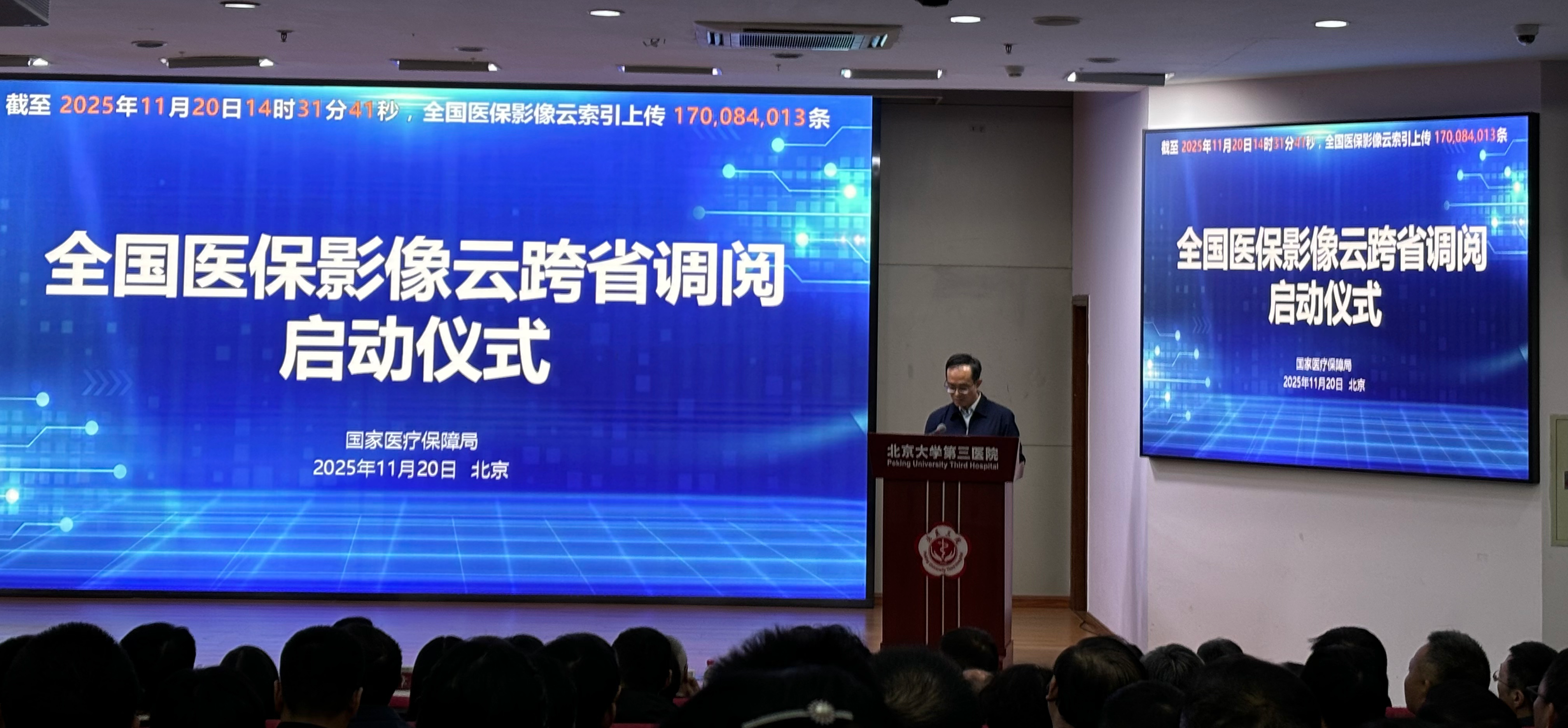
Core Viewpoint - The national medical insurance imaging cloud has officially launched cross-province retrieval, aiming to create a unified network by the end of 2027, allowing patients to access their medical imaging data without carrying physical films [1][4]. Group 1: Launch and Implementation - The cross-province retrieval of the national medical insurance imaging cloud was initiated on November 20, with several hospitals already capable of accessing imaging data from various provinces [1]. - As of now, 24 provinces and regions, including Beijing and Hebei, have completed the deployment of the imaging cloud software, enabling cross-province retrieval capabilities [4]. Group 2: Patient Experience and Benefits - Patients will no longer need to carry physical films, as they can access their historical data through their mobile devices, significantly improving convenience [4]. - The retrieval of historical imaging data will enhance diagnostic accuracy by allowing doctors to track the progression of diseases more effectively [4]. Group 3: Data Security and Privacy - Patient authorization is required for cross-province retrieval of imaging data to ensure privacy, with two methods of authorization available [5]. - The national medical insurance bureau emphasizes data security as a fundamental requirement, with ongoing efforts to establish a robust data security mechanism [5][6]. Group 4: Future Potential - The medical insurance imaging cloud has the potential to empower various stakeholders, including medical institutions and insurance companies, by leveraging vast amounts of medical imaging data [6].

医学影像开始实现全国“漫游”
Ren Min Ri Bao· 2025-11-20 22:21
Core Points - The national medical insurance imaging cloud cross-province retrieval officially launched, allowing more patients to enjoy convenient services when seeking medical care in different locations [1][2] - The National Medical Insurance Administration has promoted the uploading of imaging data to the cloud, enabling centralized storage, management, and sharing of data [1] - As of November 20, 24 provinces and the Xinjiang Production and Construction Corps have completed the deployment of medical insurance imaging cloud software, with 170 million indexed imaging data collected [1] Group 1 - The Beijing University Third Hospital can access medical imaging from five locations, including Fujian Sanming and Hebei Xiong'an New Area [2] - Shanghai Huashan Hospital and Guangdong Provincial People's Hospital can also access medical imaging from various regions, indicating a growing network of cross-regional imaging retrieval [2] - The initiative aims to extend imaging interoperability to more provinces and healthcare institutions, facilitating efficient medical imaging flow across regions [2]
医保影像云跨省调阅启动 医学影像开始实现全国“漫游”
Ren Min Ri Bao· 2025-11-20 21:49
Core Points - The national medical insurance imaging cloud cross-province retrieval has officially launched, allowing more patients to enjoy convenient services when seeking medical care in different locations [1] - The National Medical Insurance Administration has promoted the "cloud" initiative for imaging data, enabling centralized storage, management, and sharing of medical imaging data across various healthcare institutions [1] - As of November 20, 24 provinces and the Xinjiang Production and Construction Corps have completed the deployment of medical insurance imaging cloud software, with 170 million indexed imaging data entries collected by the National Medical Insurance Administration [1] Industry Summary - The initiative aims to address the pain points of patients regarding repeated examinations, which are time-consuming, labor-intensive, and costly [1] - Major hospitals, such as Peking University Third Hospital and Shanghai Huashan Hospital, can now access medical imaging data from various regions, enhancing the efficiency of medical imaging across different provinces and healthcare levels [1] - The imaging data sharing will continue to expand to more provinces and healthcare institutions, facilitating high-efficiency cross-regional medical imaging flow [1]