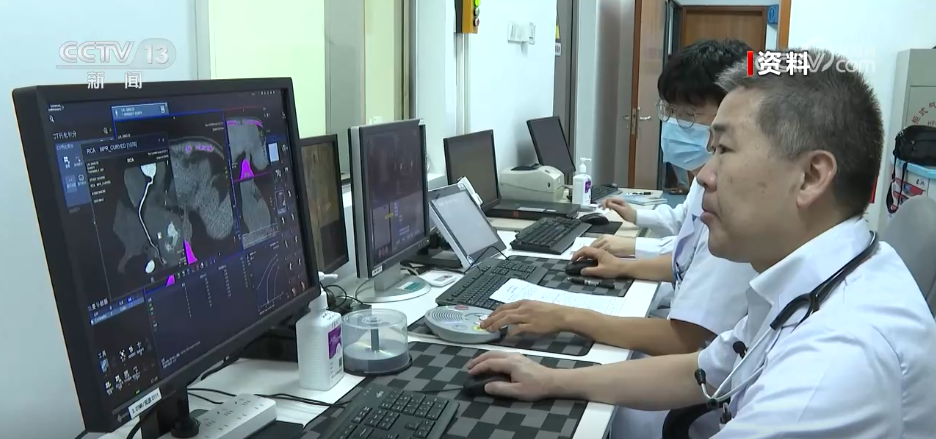
医保影像云

Search documents
我国将组建医保影像云跨省秒调阅医院网络
Bei Jing Shang Bao· 2026-02-09 10:43
Core Viewpoint - The National Healthcare Security Administration (NHSA) is leading the establishment of a cross-province medical imaging cloud network to enhance the efficiency of medical services for patients seeking treatment outside their home provinces, addressing existing challenges in cross-province medical care [1] Group 1 - The NHSA will select pilot areas in regions that have not yet implemented medical imaging cloud procurement and collaborate with designated medical institutions in areas that have met the conditions for such procurement [1] - The initiative aims to create a national unified medical insurance information platform to facilitate the retrieval of patients' medical imaging examination data across the country [1] - As of February 9, 2023, a total of 330 million medical imaging records have been uploaded to the imaging cloud index since the NHSA began this initiative [1]
助力群众就医更便利、医保基金使用更高效 影像上云端 数据加速跑(健康焦点)
Ren Min Ri Bao· 2025-12-25 22:19
Core Insights - The implementation of cloud imaging platforms in healthcare is aimed at reducing redundant medical examinations and lowering patient costs, addressing long-standing issues in the medical system [1][2][3] Group 1: Cloud Imaging Benefits - The cloud imaging system allows for quick access to patient imaging data, significantly reducing the need for repeat examinations and associated costs, potentially saving over 600 billion yuan annually [2][3] - Jiangsu province has become a pioneer by achieving interconnectivity of its health cloud imaging platform, enabling all public medical institutions to share imaging results online [2][3] Group 2: Quality and Standards - The quality of imaging data is crucial for accurate diagnosis and treatment, necessitating the establishment of unified standards for imaging quality, transmission, and storage [8][9] - Efforts are underway to develop standards for imaging quality and to enhance the training of medical staff to improve imaging practices in local healthcare facilities [8][9] Group 3: Technological Challenges and Solutions - Technical issues such as slow data retrieval speeds and varying quality of imaging across different hospitals have been identified as challenges in the cloud imaging system [5][6][7] - Solutions include upgrading network infrastructure and utilizing advanced technologies like 6G to improve data transmission speeds and efficiency [7] Group 4: Data Security and Fraud Prevention - The cloud imaging system is designed to enhance data security and prevent fraudulent activities in medical imaging, which has been a concern in the industry [9][11] - The establishment of centralized cloud storage for imaging data is expected to facilitate better monitoring and analysis of healthcare expenditures [9][10] Group 5: Future Developments - By the end of 2025, the goal is to enable cross-regional access to imaging data in major cities, with a broader aim of creating a nationwide interconnected imaging cloud by 2027 [11][12] - Recent developments indicate that multiple provinces are already initiating cloud imaging procurement projects, reflecting a growing trend towards centralized imaging services [10][11]
晚安郑州|河南下雪了!大风降温登场!这些地方还有弱雨雪
Xin Lang Cai Jing· 2025-12-20 11:52
Group 1 - The "Internet Platform Pricing Behavior Rules" were jointly issued by three departments, emphasizing that automatic deductions must be prominently notified and consumers should be allowed to cancel automatic renewals at any time [2] - The People's Bank of China and other departments released regulations stating that cash payments cannot be refused, effective from February 1, 2026, unless legally mandated to use non-cash payment tools [2] - A crackdown on self-media accounts spreading rumors and illegal stock recommendations has been initiated by the National Internet Information Office and the China Securities Regulatory Commission [2] Group 2 - The "Medical Insurance Imaging Cloud" platform has been launched, allowing nationwide access to imaging examination results, with 27 provinces having completed software deployment as of November 20 [3] - The first self-service terminal for housing transactions in Zhengzhou has been launched, enabling buyers and sellers to complete contracts and queries without long queues [12] - A new "Maternal and Newborn Rescue Map" has been released, integrating information from 228 certified rescue centers across 18 cities in Henan Province [15]


看病将告别胶片,影像数据“上云”
Xin Lang Cai Jing· 2025-12-19 19:25
Core Insights - The National Healthcare Security Administration (NHSA) has released four foundational standards for "Medical Insurance Imaging Cloud" to address the challenges faced by patients in carrying and managing film images during cross-hospital medical visits [1] - The core objective of these standards is to accelerate the high-quality construction of the Medical Insurance Imaging Cloud, creating a digital service platform for nationwide storage, retrieval by institutions, and access by insured individuals [1] - As of now, 20 provinces have uploaded nearly 200 million records to the Medical Insurance Imaging Cloud, with plans to expand cross-province data sharing by the end of 2027 [1] Summary by Categories Standards Released - Four standards include: image quality control, software application, infrastructure technology, and personnel and equipment specifications [1] Data and Implementation Goals - The NHSA aims to establish a unified national network for Medical Insurance Imaging Cloud data by the end of 2027 [1] - Current data shows that nearly 200 million records have been uploaded by 20 provinces [1] Pricing and Cost Structure Changes - The guidelines specify that physical film will be separated from project pricing, allowing patients to purchase it as needed at zero markup [1] - Digital image processing, uploading, and cloud storage will be included in the pricing of radiological examinations, with penalties for institutions unable to provide cloud storage [1]
看病将告别胶片时代
Xin Lang Cai Jing· 2025-12-19 18:23
Core Viewpoint - The National Medical Insurance Administration has released four basic standards for "Medical Insurance Imaging Cloud" to address the challenges of carrying and managing film for patients seeking medical services across hospitals [1] Group 1: Standards and Objectives - The four standards include image quality control, software application, infrastructure technology, and imaging personnel and equipment [1] - The core objective of these standards is to accelerate the high-quality construction of the Medical Insurance Imaging Cloud, creating a digital service platform for nationwide storage, retrieval by institutions, and access by insured individuals [1] Group 2: Current Status and Future Goals - Currently, 20 provinces have uploaded nearly 200 million records to the Medical Insurance Imaging Cloud [1] - The National Medical Insurance Administration aims to expand the cross-province retrieval and sharing of imaging data, with a goal to achieve a nationwide "one network" for Medical Insurance Imaging Cloud data by the end of 2027 [1] Group 3: Pricing and Regulations - The previously issued "Guidelines for the Project Establishment of Radiological Examination Medical Services (Trial)" has clarified that physical films will be separated from the project pricing, allowing patients to purchase them as needed at zero markup [1] - Digital image processing, uploading, and cloud storage will be included in the pricing structure for radiological examinations, and institutions failing to provide cloud storage for imaging will be required to reduce certain fees [1]
直通部委|本周我国流感活动水平出现下降 教育部提醒不要携带违禁品进入考场
Xin Lang Cai Jing· 2025-12-19 10:11
Group 1 - The current influenza activity level in China has decreased, with the H3N2 strain being the predominant virus [1] - The National Health Commission emphasizes the importance of personal protection measures as respiratory infectious diseases remain prevalent [1] - The monitoring report indicates that influenza viruses are the main pathogens in acute respiratory infections, with a high positive rate in flu virus testing [1] Group 2 - The National Healthcare Security Administration is soliciting public opinions on four basic standards for the "Medical Insurance Imaging Cloud" to enhance digital services in healthcare [2] - The aim is to facilitate data sharing among medical institutions and improve patient experience by addressing the challenges of carrying and managing medical imaging [2] Group 3 - The Ministry of Commerce reported that the total retail sales of consumer goods in November reached 4.39 trillion yuan, with a year-on-year growth of 1.3% [4] - Cumulative retail sales from January to November amounted to 45.6 trillion yuan, reflecting a growth rate of 4.0%, which is 0.5 percentage points higher than the same period last year [4] - Sales of essential goods showed stable growth, with significant increases in categories like food and clothing [4] Group 4 - The Ministry of Industry and Information Technology has published the first batch of platforms for the construction of pilot capabilities in biomanufacturing [5] - The platforms are expected to enhance service levels and resource investment in the biomanufacturing sector [5] Group 5 - The Ministry of Foreign Affairs stated that China is conducting export controls on rare earth materials in accordance with international practices, emphasizing compliance with regulations [6] - The export controls are not targeted at specific countries and aim to maintain global supply chain stability [6] Group 6 - The Ministry of Education has reminded candidates not to bring prohibited items, such as smart glasses, into examination venues for the upcoming national graduate entrance exams [7] - Strict penalties will be enforced for violations of examination regulations to ensure fairness [7] Group 7 - The State Administration for Market Regulation has amended the "Provisions on Prohibiting Monopoly Agreements," which will take effect on February 1, 2026 [8] - The new rules clarify conditions under which certain vertical monopoly agreements will not be prohibited, aiming to stabilize market expectations and promote fair competition [8] Group 8 - The National Health Commission announced that the new food safety standard will require labeling of saturated fat and sugar content on pre-packaged foods starting March 16, 2027 [9] - The standard encourages the use of digital labels to provide consumers with detailed product safety and nutritional information [9]

中原期货晨会纪要-20251208
Zhong Yuan Qi Huo· 2025-12-08 02:37
1. Report Industry Investment Rating - No relevant investment rating information provided in the report. 2. Core Viewpoints - The macro - economic environment shows multiple changes, including adjustments to the medical insurance drug catalog, research on "15th Five - Year Plan" industrial policies, stable growth of foreign exchange reserves and continuous increase in gold reserves, and a significant increase in global semiconductor sales. In the market, different varieties in the agricultural, energy - chemical, industrial metal, and option - finance sectors have different trends and investment outlooks [9][10]. 3. Summary by Directory 3.1 Chemicals - On December 8, 2025, among the domestic chemical products, the prices of 20 - number rubber, (PTA), asphalt, styrene, glass, crude oil, fuel oil, soda ash, LPG, caustic soda, and ЬХ increased, with styrene having the largest increase of 0.946%. The prices of coking coal, coke, natural rubber, plastic, polypropylene PP, PVC, methanol, ethylene glycol, and pulp decreased, with coking coal having the largest decrease of 3.158% [6]. 3.2 Macro - economic News - The National Healthcare Security Administration and the Ministry of Human Resources and Social Security issued the drug catalogs, with 114 new drugs added to the medical insurance catalog and 19 drugs included in the first - edition commercial insurance innovative drug catalog. The Ministry of Industry and Information Technology will focus on promoting industrial economic growth and reform. As of the end of November 2025, China's foreign exchange reserves reached 3.3464 trillion US dollars, and the central bank's gold reserve increased for the 13th consecutive month. In October, global semiconductor sales increased by 33% year - on - year. The 2025 Cultivated Diamond Industry Conference was held in Zhengzhou. The US President ordered an investigation into the food supply chain [9][10][11]. 3.3 Morning Meeting Views on Main Varieties 3.3.1 Agricultural Products - Peanut futures: On December 5, the price was slightly up, and the market was in a stalemate between supply and demand. It is expected to consolidate in the short term, with resistance at around 8,120 yuan and support at 8,044 yuan [13]. - Sugar futures: On December 5, the price was down. The supply pressure was high, and the international market was also in a loose supply situation. The short - term support is around 5,200 yuan/ton [13]. - Corn futures: On December 5, the price was up, with tight supply and strong demand. It is recommended to be cautious about chasing high, with support at around 2,280 yuan [13]. - Live pig futures: The spot price was weak last week, with oversupply in the short term. The futures are expected to consolidate at a low level and wait for demand support [13][15]. - Egg futures: The spot price was stable last week. It is expected that the futures will rebound at a low level next week, but there is still pressure from premium [15]. - Cotton futures: On December 5, the price was slightly down. The supply and demand were both uncertain, and it is expected to fluctuate within a range. It is recommended to wait and see for the time being [15]. 3.3.2 Energy - Chemical Products - Urea: The situation is the same as that of live pigs, with oversupply in the short term and the futures expected to consolidate at a low level [14][15]. - Caustic soda: The supply in Shandong is high, the demand is weak, and the price is expected to continue to decline. The 2601 contract should be treated with a bearish view [15][17]. - Coking coal: The production increase is limited, the trading enthusiasm is low, and it is expected to be under pressure and fluctuate weakly in the short term [17][18]. - Logs: The supply is tight, the demand is weak, and the price is expected to fluctuate within the range of 760 - 800 yuan [17]. - Pulp: The supply has support, the demand is weak, and the price has fallen to the middle - lower part of the range. It is recommended to wait and see [17]. - Offset printing paper: The price has broken through the previous range, and a bearish view is recommended, with support at 4,000 yuan [17][18]. 3.3.3 Industrial Metals - Copper and aluminum: The market's expectation of the Fed's interest rate cut has heated up again, and copper and aluminum are running at a high level. Pay attention to macro - risks [18]. - Alumina: The supply is in excess, the 2601 contract is running at a low level, and pay attention to factors such as bauxite [18]. - Rebar and hot - rolled coil: The situation is the same as that of coking coal, with short - term pressure and weak fluctuations [18]. - Ferroalloys: At the end of the year, the supply and demand of ferroalloys are both weak. The price fluctuates weakly following the black series, and the idea of hedging on rebounds in the industry remains unchanged [18][20]. - Lithium carbonate: The supply is expected to increase, the demand is expected to decrease, and a short - term bearish view is taken, with support at 90,000 yuan/ton [20]. 3.3.4 Option - Finance - Stock index options: The A - share market showed a general upward trend on December 5. Trend investors can pay attention to the opportunity of arbitrage between varieties, and volatility investors can buy the straddle strategy to go long on volatility [22]. - Stock index: The rebound of the rising trilogy is about to start. After the Fed's interest rate decision is announced, the market will enter the event - driven stage. It is recommended to pay attention to the IC index, as well as the IF index of pro - cyclical and large - cap stocks [24][25].
力争2027年底前实现全国“一张网”“路路通” 异地就医进入“云”影像时代
Jing Ji Ri Bao· 2025-12-07 23:17
Core Insights - The National Medical Insurance Administration has officially launched the cross-province retrieval service for medical imaging, allowing patients to access their imaging data without the need for physical films [1][3] - The implementation of the medical imaging cloud aims to resolve long-standing issues faced by patients seeking medical care in different provinces, such as difficulties in retrieving and transporting medical images [1][2] Group 1: Implementation and Benefits - The medical imaging cloud provides higher clarity and completeness compared to traditional physical films, facilitating better diagnosis for doctors [2] - By December 2024, the National Medical Insurance Administration plans to fully implement the medical imaging cloud, standardizing and centralizing the management of imaging data such as CT, MRI, and X-rays [2][3] - As of November 20, 2023, the national medical imaging cloud has indexed 170 million records, indicating significant progress in data management [1] Group 2: Challenges and Solutions - Previous challenges in cross-province retrieval included slow access speeds, difficulties in locating specific patient images, high storage costs, and lack of interoperability between different medical institutions [2][3] - The National Medical Insurance Administration has addressed these issues by creating a unified information platform that covers over 1 million designated medical institutions and 1.3 billion insured individuals [3] Group 3: Security and Future Plans - Patient authorization is required for doctors to access imaging data from different medical institutions, ensuring data security and privacy [3] - The goal is to achieve a nationwide medical imaging cloud network by the end of 2027, expanding access to more provinces and medical institutions [4]
告别“胶片袋”、一键直达!影像数据“上云”破解百姓就医痛点
Yang Shi Wang· 2025-11-26 13:08
Core Points - The National Medical Insurance Administration has launched a nationwide medical insurance imaging cloud service to address issues faced by patients seeking medical care across provinces, such as difficulties in accessing and transferring medical imaging results [1][3] - The initiative aims to reduce redundant examinations and alleviate the burden on patients by allowing medical institutions to access imaging data from other designated facilities [1][3] Group 1 - The medical imaging cloud construction began in December 2024, enabling the upload of CT, MRI, and X-ray images to a cloud storage system, which can be accessed for free via mobile devices [3] - The establishment of a national medical imaging cloud data network will facilitate patient access, peer review, and insurance verification, addressing the challenges of redundant examinations [3][8] - Shenzhen has initiated a medical imaging cloud data sharing center, allowing insured individuals to access imaging data with a single click and eventually view data from other pilot cities [4] Group 2 - The storage and transmission of original imaging data require significant resources, and the National Medical Insurance Administration's initiative addresses three major challenges in cross-province data retrieval [6] - Currently, 24 provinces have completed the deployment of medical imaging cloud software, with 170 million indexed imaging data entries collected at the national platform [8] - The successful construction of the cloud platform will enable the sharing of clinical and examination data, reducing the need for repeated examinations for chronic conditions [10] Group 3 - Technological advancements are transforming diagnostic and treatment models, allowing for rapid access to high-quality imaging data and enabling doctors to track disease progression effectively [12] - The National Medical Insurance Administration plans to accelerate the construction of the medical insurance cloud and expand the scope of cross-province imaging data sharing, aiming for a unified national medical imaging cloud by the end of 2027 [14]
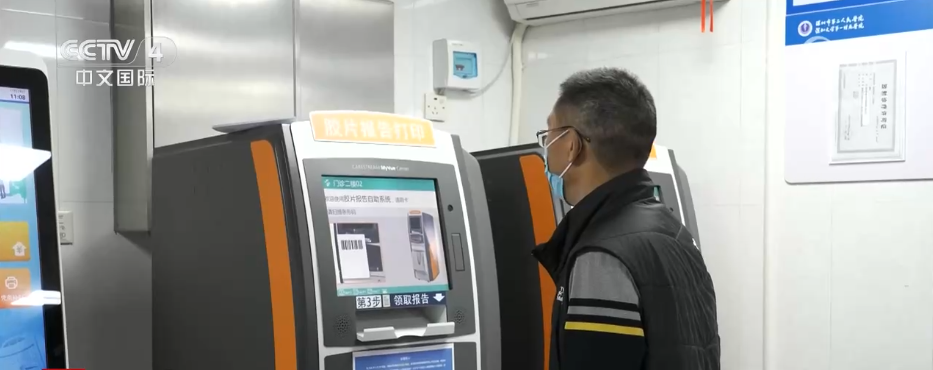
民生一件事 | “小切口”撬动“大民生” 影像“上云”破解“百姓就医痛点
Yang Shi Wang· 2025-11-26 06:11
Core Insights - The National Medical Insurance Administration has launched a nationwide medical insurance imaging cloud service, allowing patients to access their imaging data without carrying physical copies, enhancing convenience for patients and efficiency for doctors [1][2] Group 1: Implementation and Benefits - The pilot program is initiated at Peking University Third Hospital, with five cities including Sanming in Fujian and Xiong'an in Hebei connected for cross-province image retrieval [1] - The imaging cloud addresses the issue of disconnected imaging data across hospitals, facilitating easier access for patients and improving diagnostic efficiency for healthcare providers [2] Group 2: Infrastructure and Future Prospects - The imaging cloud is built on a unified national medical insurance information platform, with efforts since December of the previous year to upload imaging data such as CT, MRI, and X-rays to cloud storage [4] - As of now, 26 provinces and regions, including Beijing and Hebei, have deployed the medical insurance imaging cloud software, with plans to achieve a "national network" by 2027 [4]